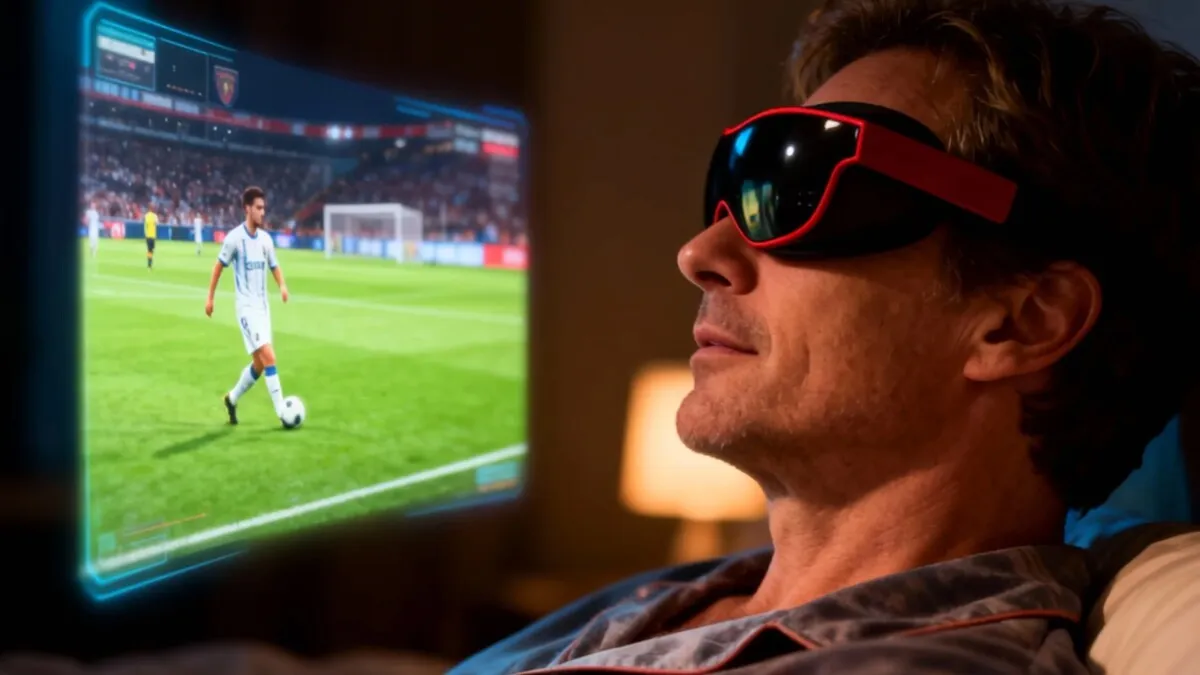
At 95 grams, the Xynavo glasses weigh less than a smartphone—yet they project a cinema-sized display that only you can see. For anyone who's ever wanted to watch a film on a plane without the bulk of a laptop, or turn any coffee shop into a private theater, this is the shift the industry has been circling toward.
The glasses work by pairing dual 4K displays with a 70-degree field of view, creating what amounts to a 300-inch virtual screen. The resolution stays sharp even at that scale, which matters: most AR devices stretch pixels and turn text into mush. Xynavo's approach keeps everything crisp, whether you're streaming a film or using the glasses as a second monitor for work.
The design handles the practical frustrations that sink most wearable tech. There's an adjustable diopter system so you can get a sharp image without prescription glasses. A blackout shield cuts through sunlight glare, so you're not squinting at a washed-out display on a bright day. The in-ear audio modules isolate sound and prevent leakage—meaning you can watch without bothering the person next to you on a flight or train.
We're a new kind of news feed.
Regular news is designed to drain you. We're a non-profit built to restore you. Every story we publish is scored for impact, progress, and hope.
Start Your News DetoxThe glasses connect to smartphones, laptops, tablets, gaming consoles, and streaming devices. Multiple people can pair their devices to the same screen for shared viewing. That flexibility is what pushes this beyond pure entertainment: developers and writers have already spotted the potential as a portable external display, turning a cramped laptop screen into a workspace that actually feels spacious.
Xynavo launched a Kickstarter campaign with early-bird pricing at $269, with retail set at $499. The price still represents a significant investment, but it's positioned at a level that suggests the company is aiming for early adopters and professionals rather than mass-market saturation. What's notable is that the barrier to entry—weight, comfort, actual usability—has finally dropped enough that the idea of carrying a personal cinema doesn't sound like science fiction.
The real test will be how the device performs once it reaches users' hands. But the trajectory here is clear: the bulky headsets that dominated AR and VR for years are giving way to something that might actually fit into how people actually live.