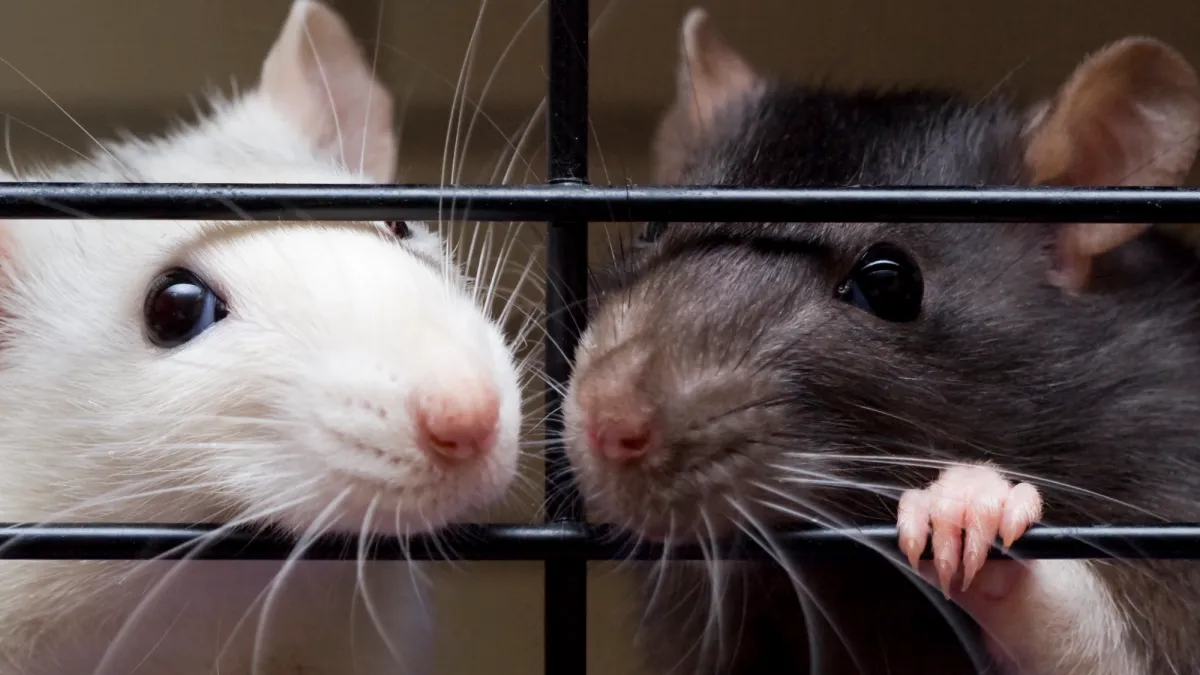
In early February, a single person in northeastern Massachusetts handed over 163 pet rats to the MSPCA-Angell—nearly 60 percent more rats than the organization had placed in homes during the entire previous year. It was a surrender born from someone's difficult circumstances, but it became a test of how shelters actually work together when one facility gets overwhelmed.
"A well-meaning person got into a tough spot, and we were able to help," said Mike Keiley, Vice President of the MSPCA-Angell's Animal Protection Division. The organization's approach—working with the person rather than against them—meant the rats didn't end up abandoned or in worse conditions. Instead, it triggered a regional response.
MSPCA-Angell kept 53 of the rats, pushing their total care load to over 70. But instead of stretching their staff to breaking point, they reached out. Dakin Humane Society, Lowell Humane Society, Berkshire Humane Society, and the Animal Rescue League of Boston stepped in. So did the New Hampshire SPCA and the Animal Rescue League of New Hampshire. The Salem location of MSPCA-Angell, which normally houses only cats and dogs, expanded its mission entirely to accommodate the overflow.
We're a new kind of news feed.
Regular news is designed to drain you. We're a non-profit built to restore you. Every story we publish is scored for impact, progress, and hope.
Start Your News DetoxWhy This Matters Beyond the Rats
This moment reveals something about how animal welfare actually works at scale. A single crisis—one person unable to care for 163 animals—could have been a disaster. Instead, it became a coordinated effort across seven different organizations. Keiley acknowledged the strain: "Taking in so many of one kind of small animal really taxes resources. It pulls our attention to accommodating one species when we're caring for so many at the same time."
But the network held. That matters because it shows how shelters in a region can function as a system rather than isolated operations competing for the same resources. When one facility hits capacity, they have somewhere to turn.
What's less visible in the logistics is the reputation shift Keiley is banking on. Rats have carried cultural baggage for centuries—pests, disease vectors, urban villains. But pet rats are different animals entirely. "They're smart and clean," Keiley noted. "They also form deep bonds with their owners." Anyone who's spent time around rats knows this is true. They recognize people. They play. They're curious in ways that feel genuinely social.
The 163 rats are now scattered across seven adoption websites, waiting for people willing to look past the mythology. For potential adopters interested in a less conventional small pet, the timing is unusual—a sudden influx of animals all needing homes at the same moment. Open hours at any of the participating shelters offer a chance to meet them.
This is how progress on animal welfare sometimes happens: not through grand policy shifts, but through someone's difficult moment creating an opportunity for a community to prove it can respond with coordination and care.