Denmark just flipped the switch on a problem that's been nagging renewable energy systems across Europe: what do you do with all that sunshine when the grid doesn't need it right now.
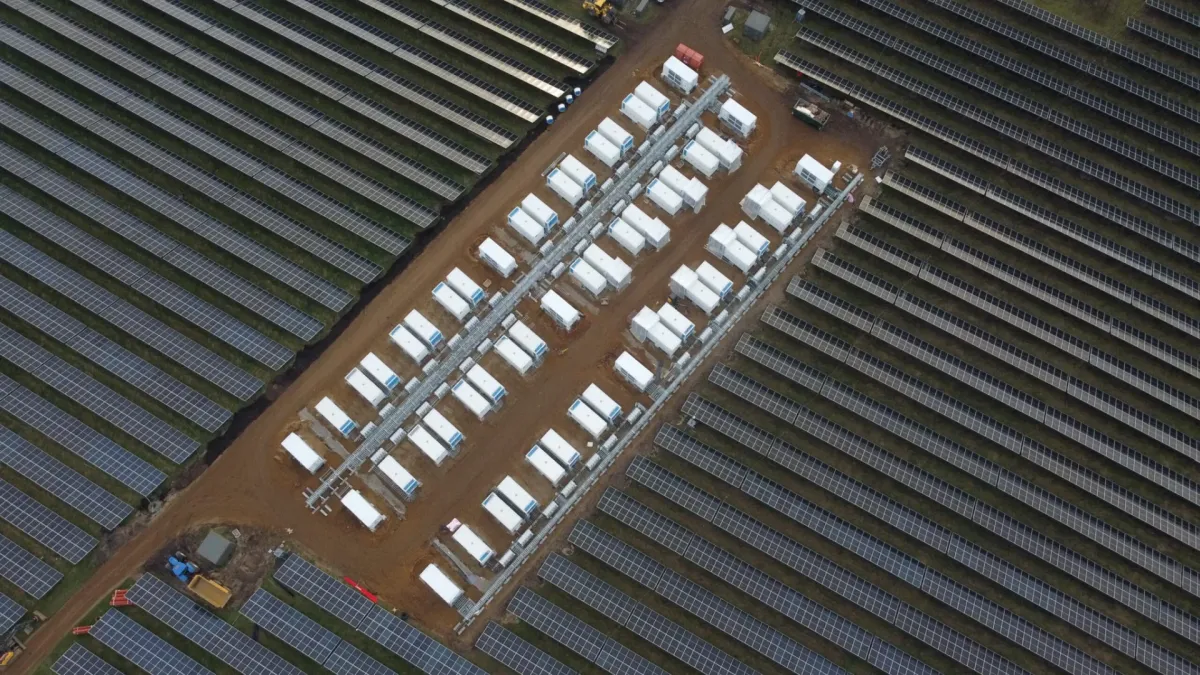
The Kvosted facility in Viborg Municipality is Northern Europe's biggest solar-plus-battery installation—a 200 megawatt-hour (MWh) battery system grafted onto an existing solar park that's been running since 2022. Think of it as a massive rechargeable backup tank. On sunny days when the solar panels are flooding the grid with power, the batteries gulp it down and hold it. When clouds roll in or evening falls, they release it back out. It's elegant infrastructure solving a genuinely thorny problem.
Danmark's renewable energy share has been climbing fast—solar parks alone now supply over 60% of the country's electricity on strong irradiation days. That's impressive. But it also means the grid is increasingly dealing with wild swings in supply. You can't just flip a switch and turn off the sun. The batteries smooth those peaks and valleys, keeping the system stable without scrambling to find alternative power sources.
We're a new kind of news feed.
Regular news is designed to drain you. We're a non-profit built to restore you. Every story we publish is scored for impact, progress, and hope.
Start Your News DetoxWhy This Matters Now
The Kvosted battery can store enough electricity to cover the average daily consumption of around 18,000 households. That's not a theoretical number—it's real capacity doing real work. European Energy, the Danish company behind the project, built the whole thing in seven months. That speed matters. It signals that battery deployment isn't some distant future scenario anymore. It's happening now, at scale, and companies are learning how to do it efficiently.
The company's head of technology development, Mads Lykke Andersen, put it plainly: this approach lets renewable energy be used more efficiently while taking pressure off the grid during peak demand. No mystique, just physics and engineering working as intended.
European Energy has bigger plans. They're targeting over 1 gigawatt of battery capacity across their European portfolio by 2027—roughly five times what Kvosted represents. That's the real signal. One facility is a milestone. A company rolling out batteries at that scale across multiple countries is a trend.
The formal opening happens February 2, 2026, with Denmark's Minister of Climate, Energy and Utilities attending. It's the kind of ceremony that usually feels ceremonial. In this case, it marks a genuine shift: the moment battery storage stopped being the missing piece and started being standard infrastructure.
What comes next is watching whether other European countries follow Denmark's lead—and how quickly the cost of these systems keeps dropping as deployment accelerates.