The Hearst Museum at UC Berkeley holds the largest collection of Etruscan artifacts in the United States. Students helped organize an exhibit in Doe Library, making these ancient items visible to the public for the first time in 125 years.
Uncovering the Etruscans
When we think of ancient civilizations, Greece and Rome often come to mind first. However, before Rome rose to power, the Etruscans laid much of the groundwork for Western culture. They lived in Italy about 2,500 years ago.
Many innovations often credited to the Romans actually came from the Etruscans. For example, Roman numerals are based on Etruscan counting. Iconic Roman arches and advanced aqueduct engineering also originated with Etruscan engineers. Even the toga and English words like "person" and "arena" have Etruscan roots.
We're a new kind of news feed.
Regular news is designed to drain you. We're a non-profit built to restore you. Every story we publish is scored for impact, progress, and hope.
Start Your News DetoxDespite these contributions, the Etruscans are often overlooked. Lisa Pieraccini, a UC Berkeley art historian and archaeologist, explains that history is often written by the victors. The Romans, who conquered the Etruscans, largely destroyed their written records, turning them into a footnote in history. Pieraccini aims to change this.
The Phoebe A. Hearst Museum of Anthropology at UC Berkeley houses the country's largest collection of Etruscan artifacts. This collection is thanks to Phoebe Hearst's passion for ancient cultures and her collaboration with antiquities adviser Alfred Emerson around 1900.
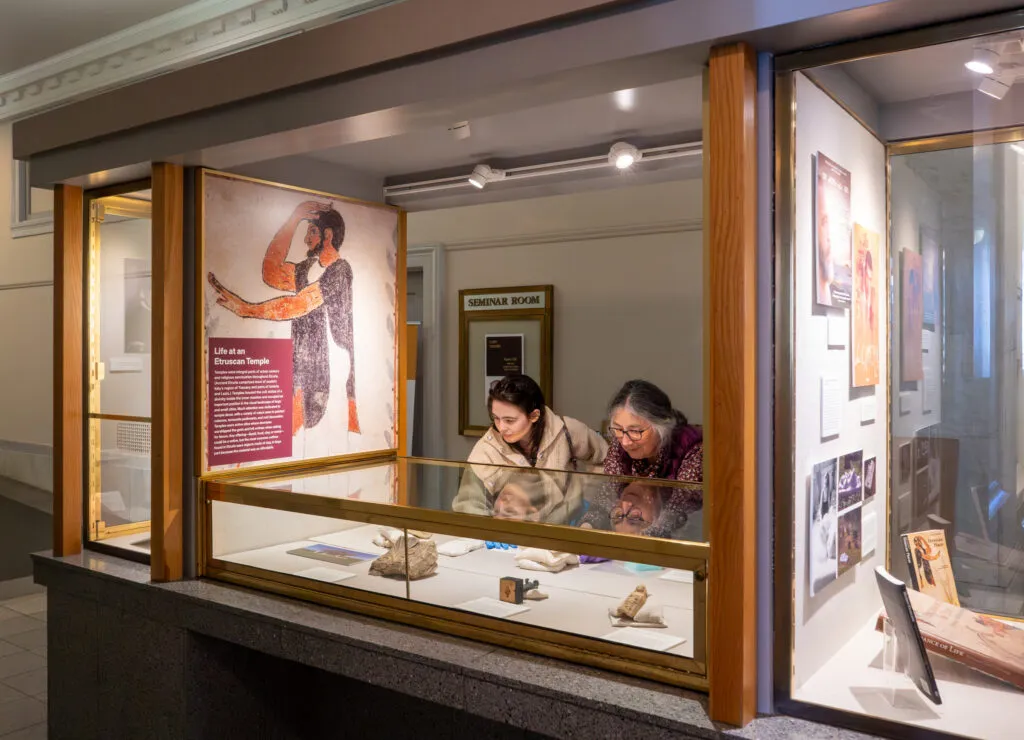
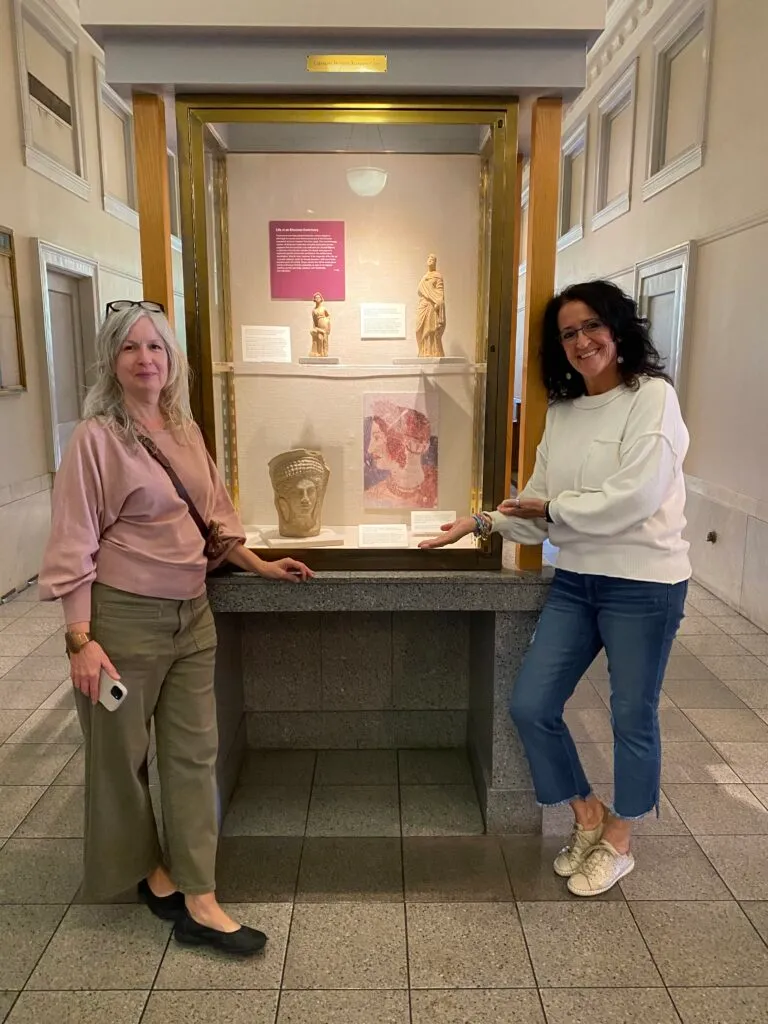
Now, through August 31, small statues, pottery, and jewelry from 2,500 years ago are on display. These items, hidden in the museum for 125 years, are now public in "The Etruscans Uncovered." This pop-up exhibit is in the Bernice Layne Brown Gallery in the Doe Library lobby.
Pieraccini co-curated the exhibit with art librarian Lynn Cunningham and students from her 2025 seminar. A companion exhibit at the Hearst Museum was also co-curated by Pieraccini’s students. These campus exhibits support a larger exhibition at the Legion of Honor in San Francisco, running through September 20. Pieraccini spent a decade consulting on this project, which she calls "the most formidable Etruscan exhibition to ever open in the U.S."
Pieraccini emphasizes that we are deeply connected to our past. She believes it's time to fill the gaps in our understanding of the ancient world.
Debunking the "Mysterious" Label
Many people are surprised by their lack of knowledge about the Etruscans. Pieraccini explains that America has historically focused on Greece and Rome, especially their empires. Scholars often ignored or marginalized cultures that were not empires.
The Romans built upon Etruscan foundations. They borrowed the Etruscan alphabet, engineering, architecture, and art. The Etruscans were highly literate, writing poetry, prose, and histories. However, most of their written records were destroyed when Rome colonized them and imposed Latin as the legal language.
The Etruscans are often called "mysterious," but Pieraccini says this isn't true. Their language was considered strange in the 18th century because it wasn't related to Greek, Sanskrit, or Latin. This difference led to the "mysterious" label. Their funerary practices, which involved burying items with the deceased for the afterlife, also contributed to this idea. Pieraccini believes calling them mysterious reinforces a misleading stereotype.
The Role of Temples and Votives
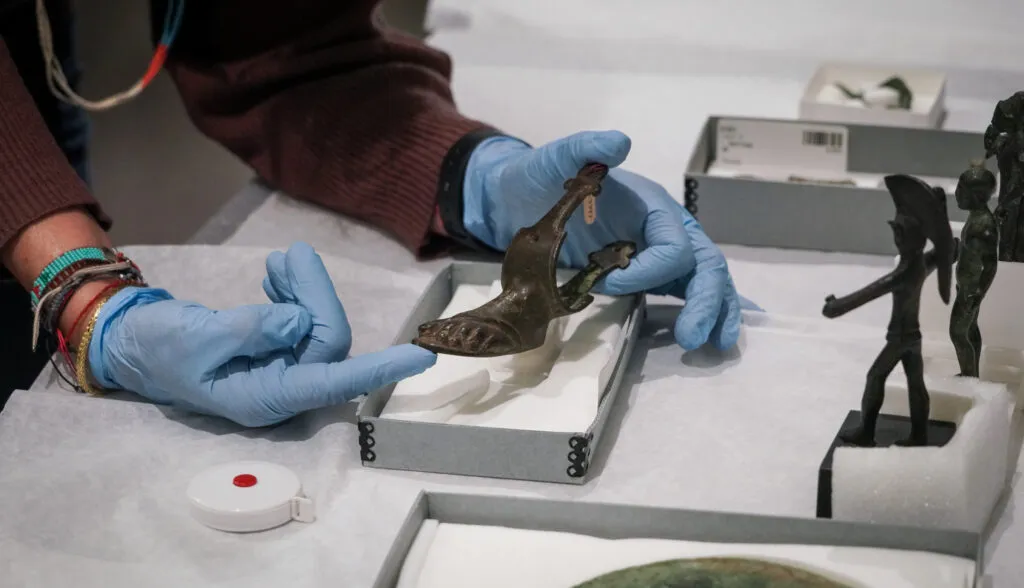
Etruscan, Greek, and Roman temples were built to house cult statues of the gods being worshipped. Archaeologists often find votives, which are offerings left by devotees, rather than the statues themselves. Priests would collect these votives, dig a pit, and bury them on the temple grounds. This was a way to respectfully remove sacred items to make room for new offerings.
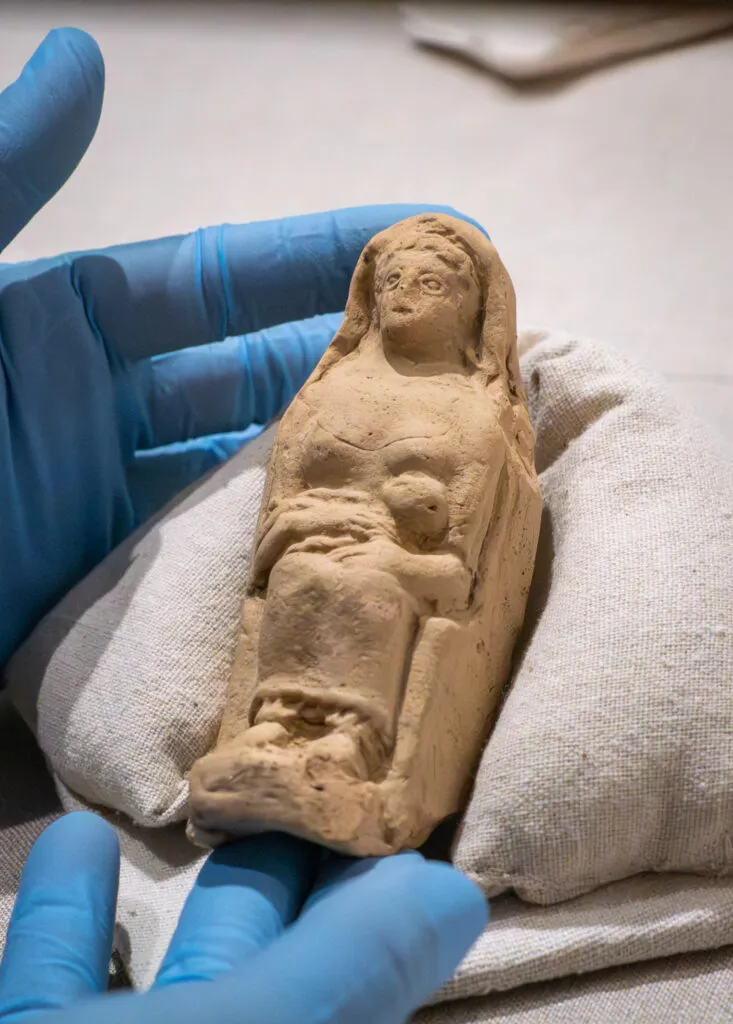
The Hearst Museum has about 800 votives from ancient Caere, now Cerveteri. This sanctuary was dedicated to a female divinity, or divinities, associated with fertility and childbirth. People would bring votives to the temple to thank the divinity for blessings, like a healthy child, or to ask for future blessings.
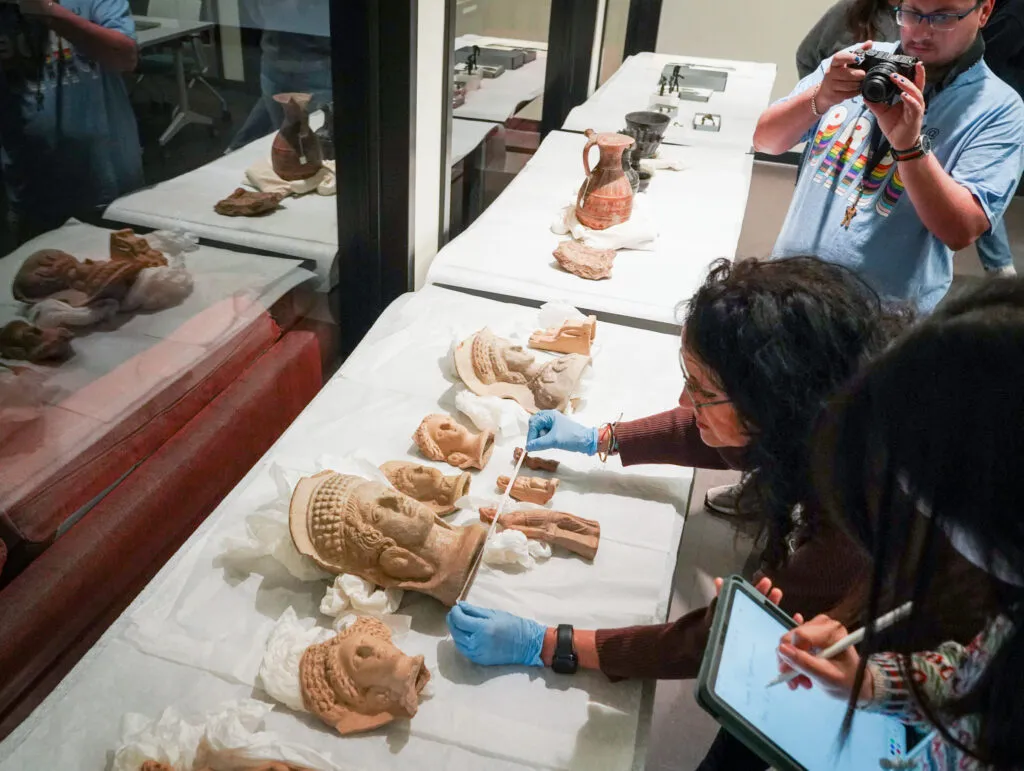
Votives varied based on wealth. Wealthy individuals might offer bronze votives, while middle-class people would offer terracotta. The terracotta votive faces show similar details but also distinct features. Pieraccini notes that we don't know exactly who these women were. They might be personifications of female divinities or even portraits.
These figures were made from molds. Earrings and hair might have been added or embellished. They were originally colorful, but the paint has faded over 2,500 years. Inside the figures, tiny finger marks can sometimes be seen, likely from children working in the workshops who pressed the clay into the molds.
Student Involvement and Learning
Pieraccini's goal is to use the Hearst Museum's collection as a learning lab for students. She wants them to experience ancient cultures firsthand. Students were thrilled to study artifacts, research them, and write museum labels. Defining an object in three concise sentences was a challenge, but a valuable learning experience.
Pieraccini finds it exciting to see students, even those from biology or astrophysics, find this work amazing. She believes it's one of the most memorable things they do in their undergraduate careers. This hands-on approach helps students connect with ancient history in a meaningful way.