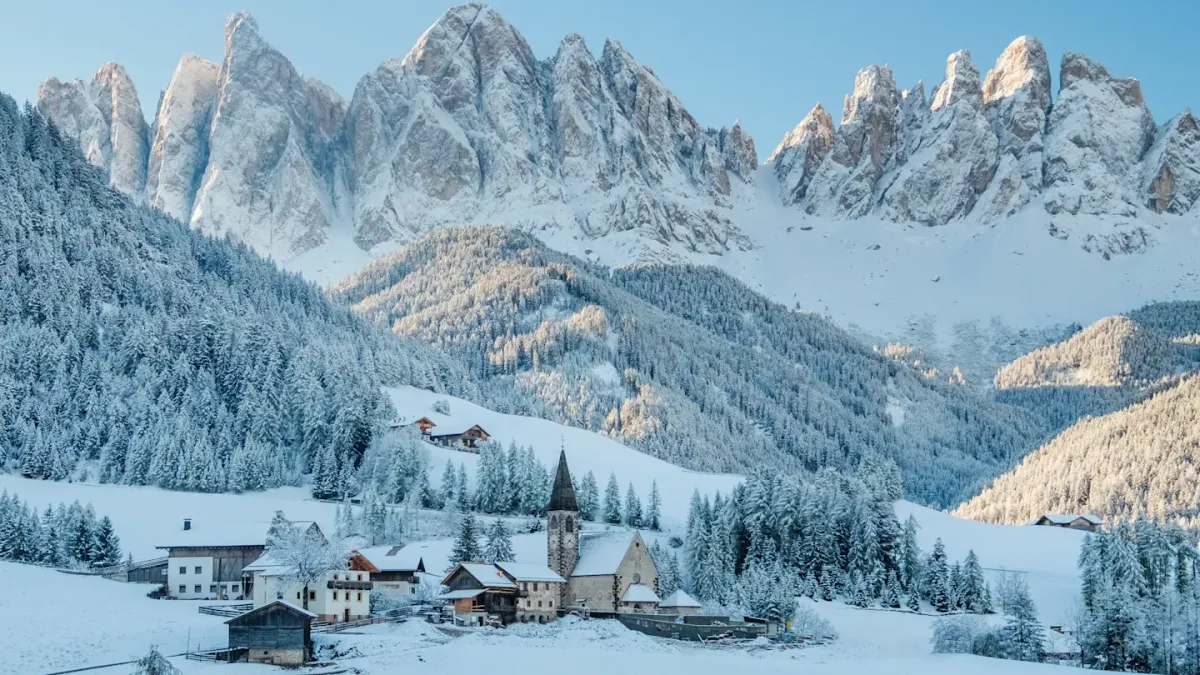
The 2026 Winter Olympics are coming to Northern Italy, and they're shining a spotlight on a region that's been quietly magnetic for centuries. The Dolomites—a stretch of the Alps where Italian and Austrian cultures blend seamlessly—are dotted with villages that feel less like tourist postcards and more like places where people actually live, work, and gather around tables for long meals.
While Cortina d'Ampezzo is getting the Olympic attention, the real story is in the towns around it. These aren't resort-only destinations. They're mountain communities with medieval centers, thermal baths that date back to Roman times, and the kind of local food culture that makes you understand why people choose to live at high altitude.
The towns worth knowing
Bormio sits at the heart of this landscape. Medieval stone towers line its centro storico, and beneath the town, hot springs—used since Roman times—offer the kind of warmth that makes sense after a day on steep ski runs. The town will host men's alpine skiing events during the 2026 Games, but the real draw is how the mountains and thermal culture have shaped the place for generations.
We're a new kind of news feed.
Regular news is designed to drain you. We're a non-profit built to restore you. Every story we publish is scored for impact, progress, and hope.
Start Your News Detox
Livigno sits in a high-altitude valley just 12 kilometers from the Swiss border, which explains why you'll find fondue alongside fresh pasta. The town will host snowboarding and freestyle skiing during the Olympics, but between runs, there are winter walks around Lake Livigno—which freezes solid in the coldest months—and the kind of Alpine-inspired food that comes from living at the intersection of two food cultures.
Alleghe offers something different: a balance between water and peaks. Nestled at the foot of Mount Civetta and overlooking Lake Alleghe, the town is part of the Dolomiti Superski network, but it's also home to the "Wall of Walls" on Civetta's north face, a legendary climbing route that draws people back season after season.
Ortisei feels like stepping into a storybook, with candy-colored buildings and a centuries-old woodcarving tradition you can see at the Museum Gherdëina. The town carries hints of Bavarian charm—traditional Alpine architecture, cozy cafes—and when snow falls, the walkable center becomes especially quiet and contemplative.
Alta Badia takes a different approach entirely. Each winter, the region launches its season with the Gourmet SkiSafari, an on-skis crawl from hut to hut where Michelin-starred chefs serve locally inspired dishes. It's proof that in these mountains, skiing and eating very well aren't separate activities.
What ties these places together isn't the Olympics or the ski runs, though both matter. It's that they're genuine communities where the landscape and culture have shaped how people live. The snow is just part of the story.