Sometimes, an artist records a song, and it's good. Then another artist records the same song, and it's suddenly an entirely different beast. A beast that devours the original, in the best possible way.
Cover songs have been around since someone first realized, "Hey, that tune slaps, but what if I sang it?" And occasionally, these re-imaginings don't just find new life; they become absolute titans, rocketing the original into a new stratosphere of fame (and probably royalties for the original writer). Here are five covers that didn't just stand on the shoulders of giants; they built a whole new skyscraper.
Whitney Houston's "I Will Always Love You"
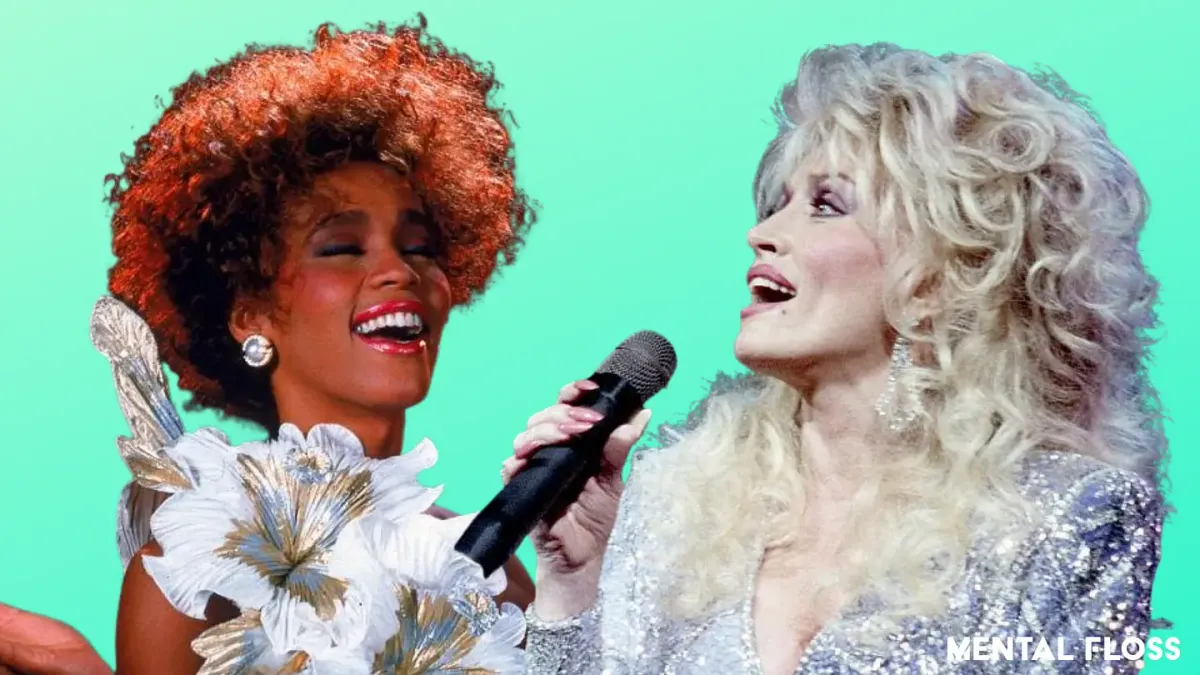
Let's be honest, you already know this one. Whitney Houston needed a power ballad for her 1992 film, The Bodyguard, and she landed on Dolly Parton's 1973 country gem. What followed was 14 weeks atop the Billboard Hot 100, the kind of chart domination usually reserved for entire boy bands.
We're a new kind of news feed.
Regular news is designed to drain you. We're a non-profit built to restore you. Every story we publish is scored for impact, progress, and hope.
Start Your News DetoxDolly Parton herself was driving when she first heard Whitney's version. She apparently had to pull over, because, as she put it, "I couldn’t believe my little country sad song could even be done like that." Which, if you think about it, is both incredibly humble and completely understandable. It was, she said, one of the greatest experiences of her life. Imagine having that effect on Dolly Parton.
Jimi Hendrix's "All Along the Watchtower"
Bob Dylan's original "All Along the Watchtower" was a folk-rock warning of impending doom. Jimi Hendrix, however, heard that warning and decided it needed to be delivered by a guitar solo that could melt faces. A mere month after Dylan's version dropped, Hendrix and his band hit the studio, grinding through 25 takes to forge the blistering masterpiece that landed on Electric Ladyland.
Dylan, never one to mince words, called Hendrix's cover "amazing" in a 1995 interview. He praised Hendrix's uncanny ability to unearth and amplify the hidden elements within a song. Essentially, Dylan wrote the blueprint, and Hendrix built a skyscraper that could also fly.
Johnny Cash's "Hurt"
Trent Reznor's Nine Inch Nails delivered "Hurt" in 1994, a raw, unflinching exploration of pain and depression. Nearly a decade later, the Man in Black, Johnny Cash, picked up the mic. With producer Rick Rubin, Cash transformed the industrial lament into a weary, gravel-voiced meditation on a life lived, regrets accumulated, and the quiet dignity of old age.
Reznor initially found it... odd. "This other person inhabiting my most personal song," he said. But then he saw the music video, a haunting montage of Cash's life and legacy, and his perspective shifted. He called it a "remarkable piece of art." The video, directed by Mark Romanek, even snagged a Grammy in 2004. Because apparently, even the creator of a song can be blown away by someone else's take.
Tina Turner's "Proud Mary"
Creedence Clearwater Revival's "Proud Mary" was a solid, swampy rock anthem. Then Tina Turner got her hands on it. She and her then-husband Ike started playing it live, particularly while opening for the Rolling Stones. They injected it with a dose of pure, unadulterated funk and a whole lot of hip-shaking.
Their 1971 studio version, recorded to complete their Workin' Together album, became one of Tina's signature songs. Even after the Ike and Tina chapter closed, "Proud Mary" remained a cornerstone of her live shows, right up to her farewell tour almost 40 years later. Because some songs, like some performers, just refuse to quit.
Joe Cocker's "With a Little Help From My Friends"
The Beatles' Sgt. Pepper's Lonely Hearts Club Band is a creative marvel, and "With a Little Help From My Friends" was Ringo Starr's moment in the sun. It was a charming, slightly goofy singalong.
Enter Joe Cocker. With a voice like sandpaper and honey, Cocker took the song, twisted it into a blues-rock wail, and unleashed it at Woodstock. Paul McCartney himself recalled Cocker playing his version for him in the studio and calling it "mind-blowing" and a "soul anthem." He was, he said, "forever grateful." Which is about the highest praise you can get when you're covering a Beatle.