Imagine buying a painting for $1.7 million, thinking it's by some unknown 17th-century Dutch artist. Then, a decade later, you find out it's a long-lost Rembrandt, and it's suddenly worth ten times that. Someone's accountant just had a very good day.
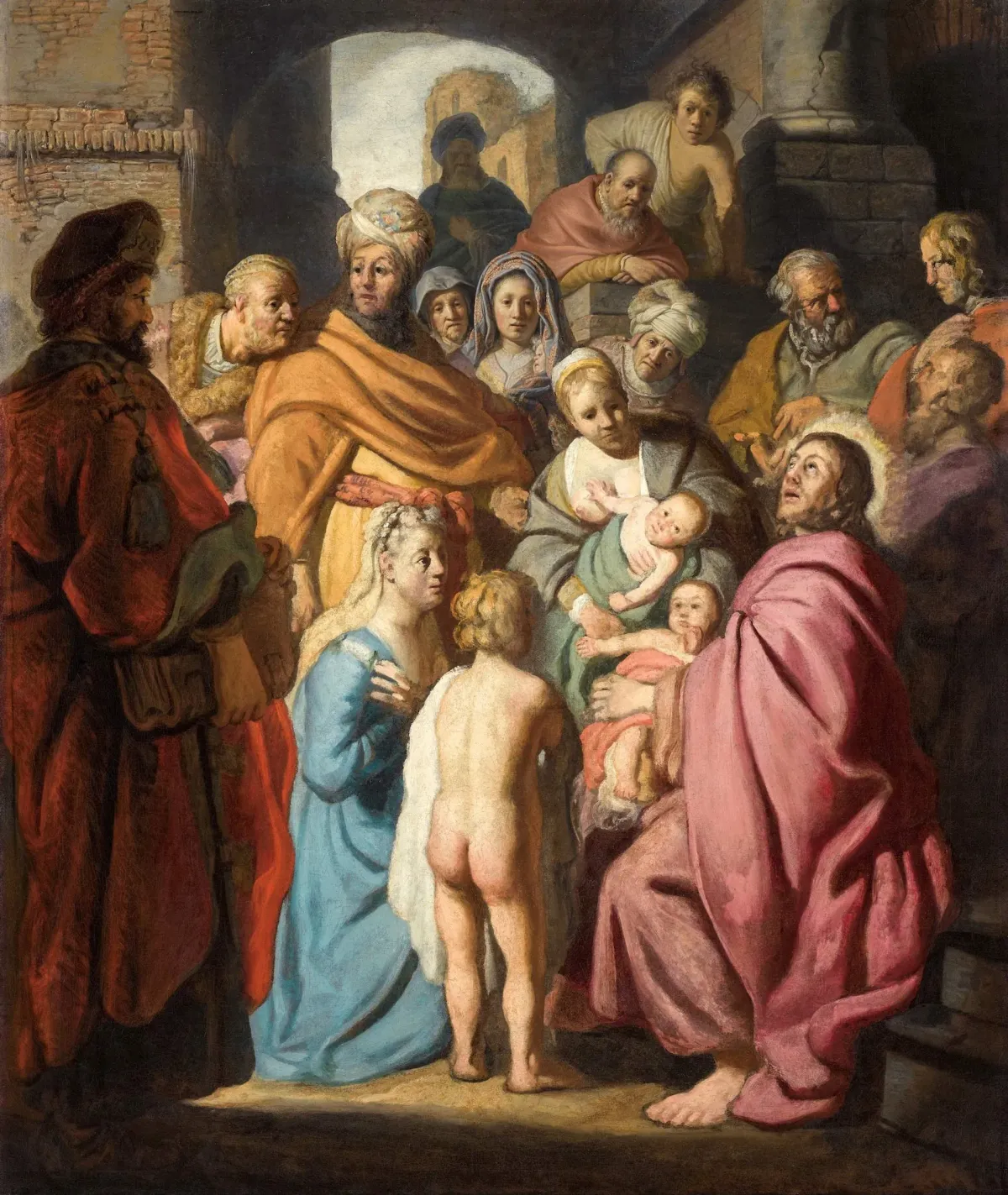
That's the story of Let The Little Children Come Unto Me, a 1627 work by the Dutch master Rembrandt van Rijn, which Sotheby's London will put up for auction on July 1. It's expected to go for anywhere between $10.6 million and $15.9 million. If it hits the high end, it'll be Rembrandt's sixth priciest piece ever sold at auction. His current record stands at a cool $33.3 million for Portrait of a Man with Arms Akimbo.
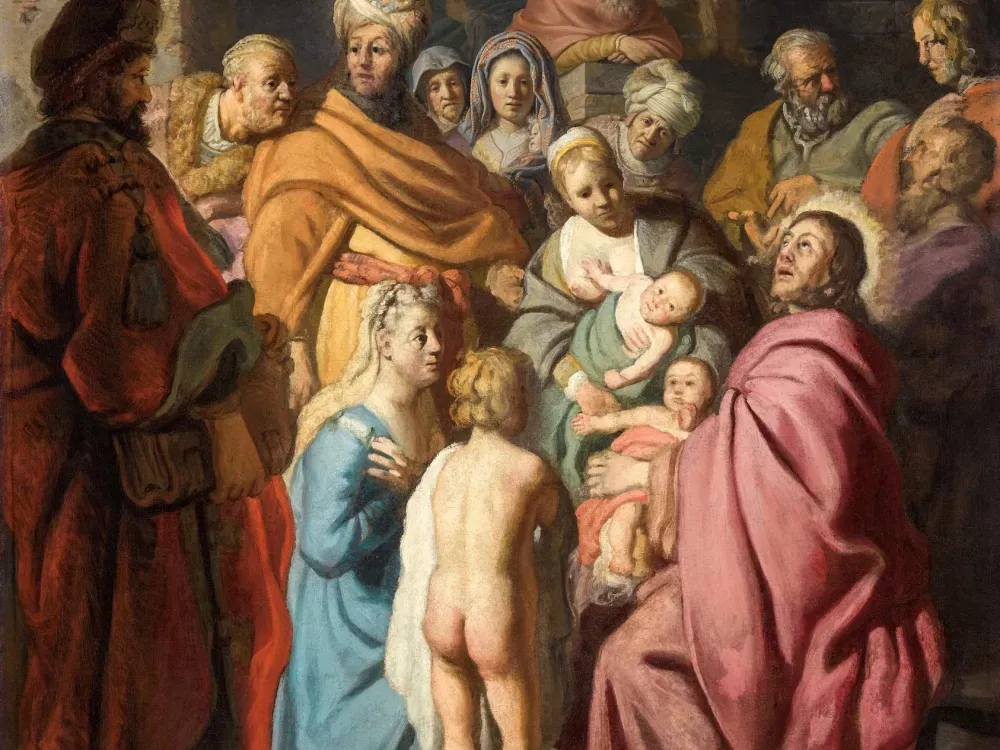
This particular 40-inch canvas was 'rediscovered' by Amsterdam dealer Jan Six (yes, a descendant of a Rembrandt portrait subject — talk about art world lineage). Experts Christopher Brown and Ernst van de Wetering confirmed its authenticity, turning a decent investment into a small fortune.
We're a new kind of news feed.
Regular news is designed to drain you. We're a non-profit built to restore you. Every story we publish is scored for impact, progress, and hope.
Start Your News DetoxUnder the Brush, a Hidden Message
What makes this Rembrandt even more fascinating is what was found during its restoration. The artist had left the foreground unfinished, and another artist later completed it, adding their own… interpretations. These additions were carefully removed, revealing Rembrandt's original vision.
Turns out, the unknown artist had quite the imagination: a child's bare back became clothed, a young girl aged into a woman, and an infant in Christ's arms grew up a bit. Even Christ's face got a makeover. But the most striking change was to a man near the center-left. He went from a white-haired, bearded Dutchman in a cap to a turban-wearing figure in an Eastern-looking costume.
This seemingly small detail completely shifts the painting's message. With Jewish, Christian, and possibly Muslim figures gathered around Christ, art historians like Andrew Graham-Dixon believe the young Rembrandt was making a powerful statement about religious tolerance. This was 1627, remember, during the brutal Thirty Years' War, when religious conflict was literally tearing Europe apart. The Dutch Republic, and Rembrandt's home city of Leiden, were grappling with a massive refugee crisis.
Graham-Dixon suggests that in this painting, Rembrandt, who himself came from mixed Catholic and Protestant roots, was advocating for humanitarian aid and empathy for suffering children — a controversial stance in a city where some didn't want to welcome refugees. It's not just a scene; it's a moral compass pointing towards compassion.
A Family Affair
Beyond its historical weight, the painting is also a family portrait of sorts. It's believed to include Rembrandt's mother, father, and possibly even his godparents and godsister. You can spot Rembrandt's mother to the right of the turbaned man, his father lurking in the shadows above her, and Rembrandt himself, draped in white, looking out at the viewer. It's like a 17th-century Easter egg hunt, but with more emotional depth.
Sotheby's speculates he included his parents as a thank-you for supporting his artistic dreams, even if they probably wished he'd picked a more 'stable' career. Because apparently, even for a genius, parental approval matters.
After its reattribution, this painting was a star in the "Young Rembrandt" exhibition, gracing museums in Leiden and Oxford. Now, it's ready for its next chapter, hitting public display at Sotheby's starting June 27. Just try not to accidentally bid your life savings on it. Or do. It's a Rembrandt, after all.