From a prosthetic designed for Indian life to turning pollution into ink, six Indian innovations show how local ingenuity can solve everyday problems. These solutions are smart and sustainable.
Jaipur Foot
In 1968, orthopaedic surgeon P.K. Sethi and craftsman Ram Chandra Sharma at SMS Hospital in Jaipur created a flexible prosthetic. It was designed for how people in India walk, work, and sit.
The Jaipur Foot moves in three ways. This helps amputees walk on uneven ground, squat, and sit cross-legged. Later, BMVSS shared this technology with users worldwide.
We're a new kind of news feed.
Regular news is designed to drain you. We're a non-profit built to restore you. Every story we publish is scored for impact, progress, and hope.
Start Your News DetoxChakr Shield
In 2016, IIT Delhi alumni Arpit Dhupar, Kushagra Srivastava, and Prateek Sachan patented a device. It captures soot from diesel generators, stopping it from polluting the air.
The Chakr Shield captures 70-90% of tiny particles from generator exhaust. Chakr then turns this soot into pigment for ink and paint. This transforms pollution into a useful resource.
MittiCool
After the 2001 Gujarat earthquake, potter Mansukhbhai Prajapati started developing a refrigerator. His goal was to cool food without electricity.

Made from clay, MittiCool uses water evaporation to lower the inside temperature. It keeps vegetables, fruits, and milk fresh. This brings refrigeration to places with unreliable power.
Fleather
Kanpur-based Phool started in 2017 by using waste temple flowers. The team noticed a fibrous mat growing on discarded flowers and began developing Fleather.

Phool ferments crushed flower petals into a biomaterial that feels like leather. Waste from marigolds, roses, and daisies can become sheets for products like wallets, bags, and furniture covers.
Aloe-E-Cell
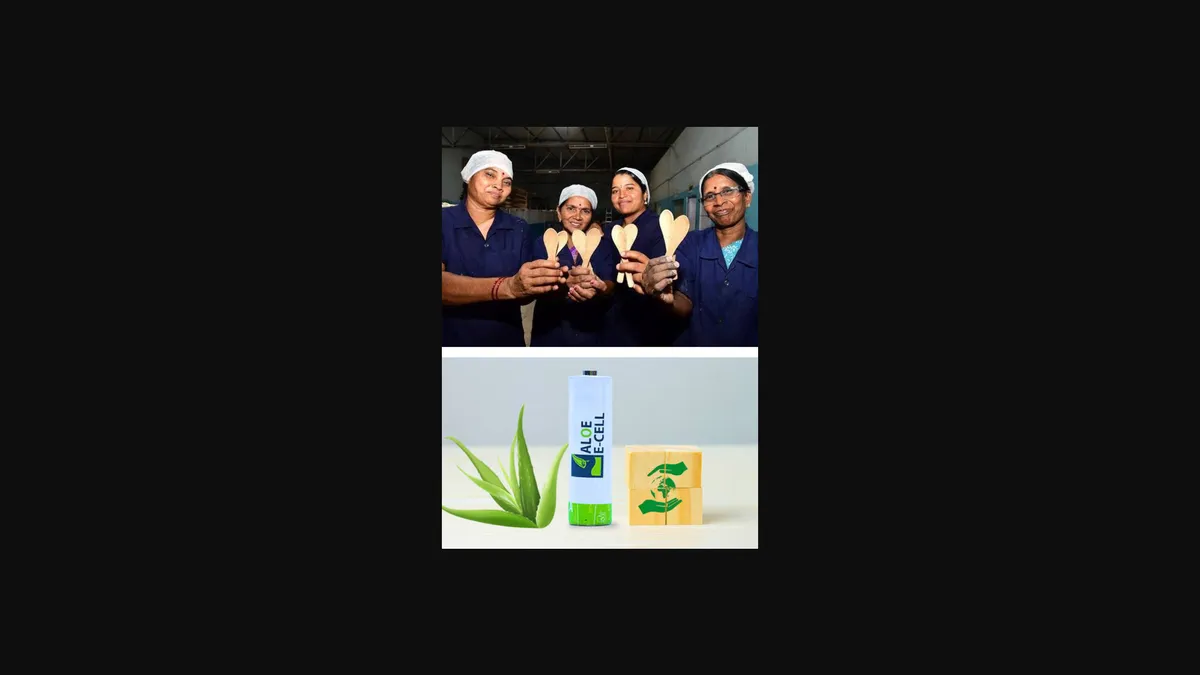
Lucknow startup Aloe E-Cell began in 2019. After testing 21 biomaterials, its team found aloe vera promising for a biodegradable battery.

Their 1.5V AA battery uses an aloe vera-based liquid. It is patented and approved by BIS. In 2023, India’s Technology Development Board supported its move to market.
Bakeys
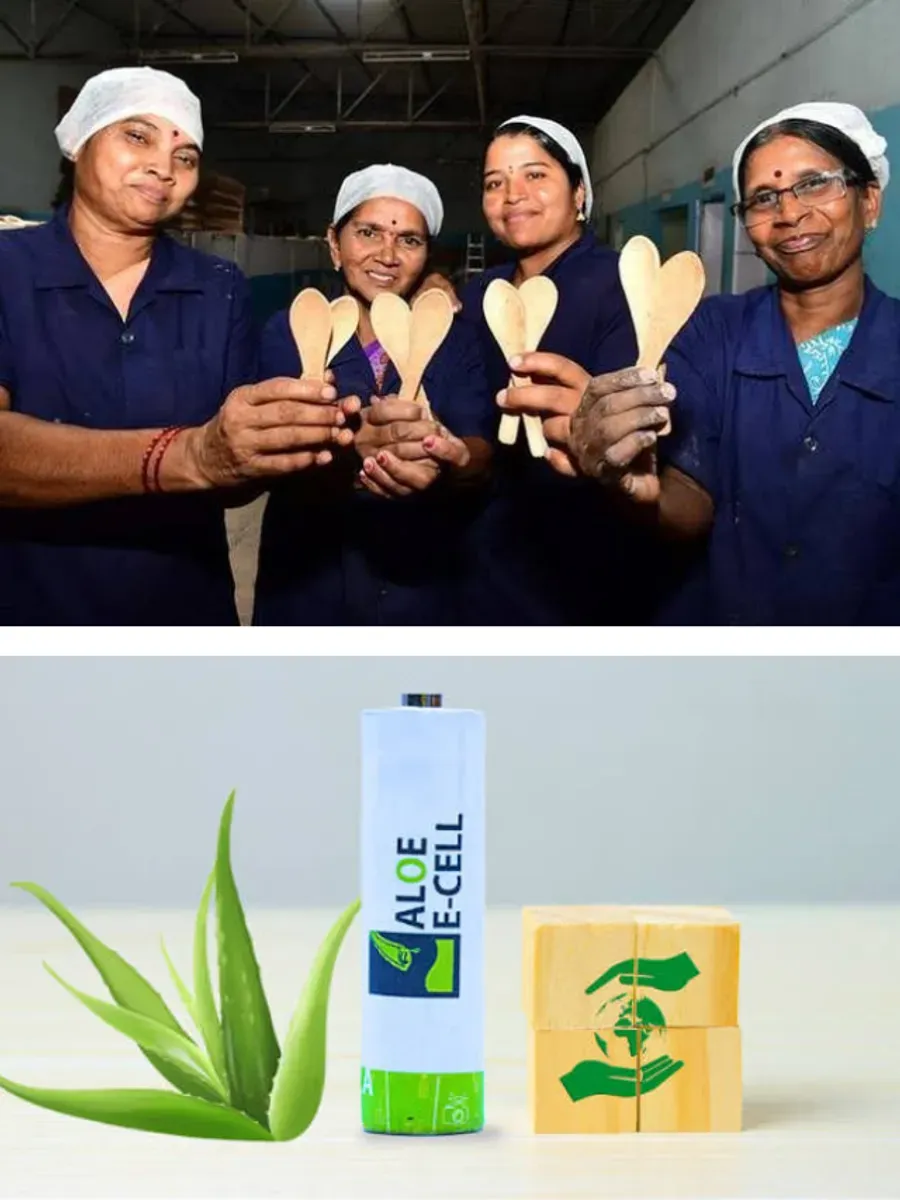
In 2007, Hyderabad researcher Narayana Peesapaty thought of edible cutlery to fight plastic waste. He founded Bakeys Foods in 2010 after years of testing.

Bakeys makes spoons and other disposable cutlery from sorghum, rice, and wheat flour. These baked utensils are strong enough for hot food and can be eaten after the meal.