Europe's space ambitions just got a significant boost, and it came from a private German company that decided the sky wasn't the limit. Isar Aerospace successfully fired its rocket into orbit from a very chilly launchpad in Norway, proving that you don't need a government agency to reach for the stars—just a really good engineering team and a whole lot of ambition.
Orbit Achieved, Sort Of
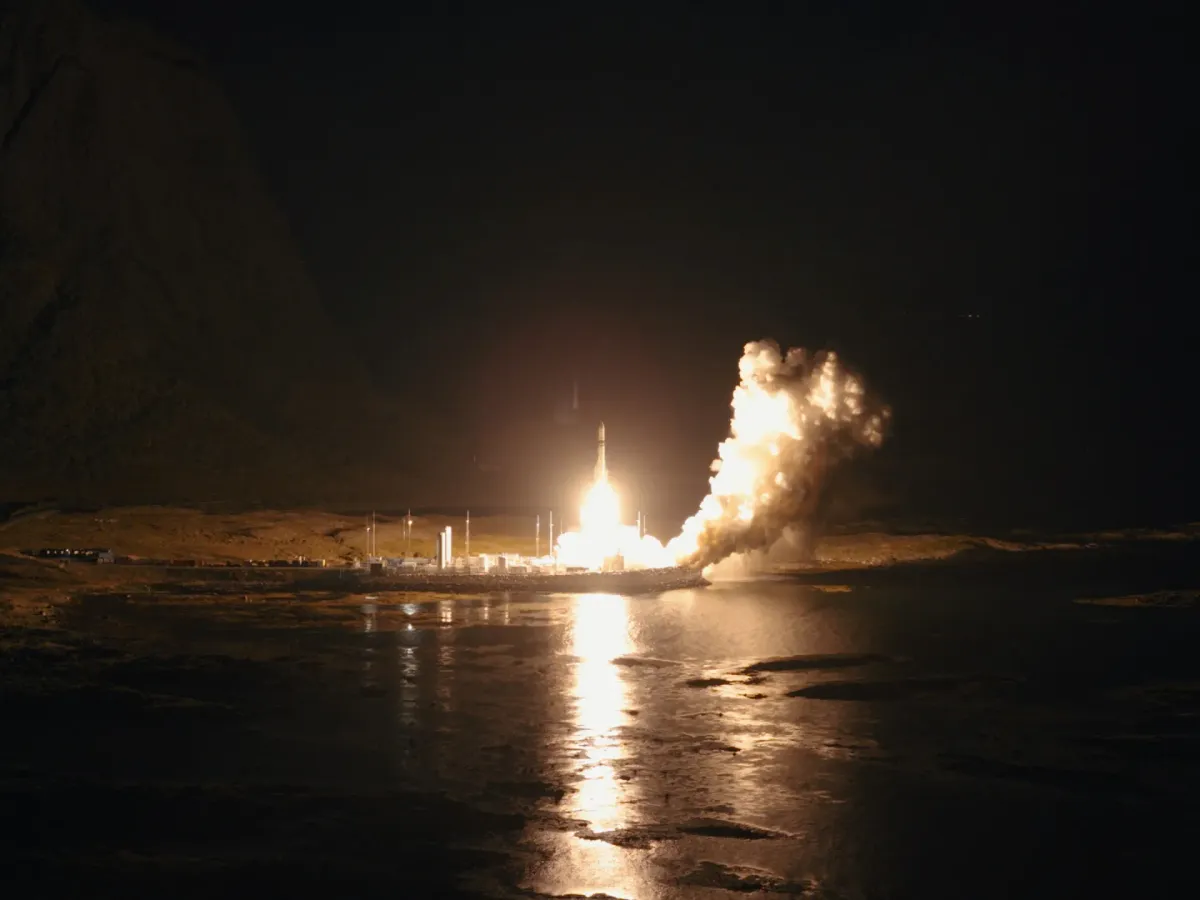
The 28-meter (92-foot) Spectrum rocket, looking like a very determined pencil, shot off from Andoya Spaceport, way up north of the Arctic Circle. Isar Aerospace, clearly thrilled, announced on X just after 8:00 PM GMT that they were "in orbit!" Which, if you think about it, is both impressive and slightly terrifying for anyone who remembers the days of clunky government-funded behemoths.
This wasn't just any launch; it was the first time a privately developed rocket from continental Europe reached orbit. The mission, aptly named "Onward and Upward," even had a video feed that, in classic rocket fashion, cut out after about 10 minutes once it went beyond connection range. The German Ministry for Research, Technology and Space quickly chimed in on X, calling it a "milestone" that showcased Germany's "innovative strength and technical expertise." Because apparently, that's where we are now: private companies making national ministries proud.
We're a new kind of news feed.
Regular news is designed to drain you. We're a non-profit built to restore you. Every story we publish is scored for impact, progress, and hope.
Start Your News DetoxThis triumph follows a few false starts and technical delays, including a test flight in March 2025 where a Spectrum rocket decided to return to Earth a bit too enthusiastically and then exploded. So, you know, third time's the charm, or something like that.
Europe's Space Race Gets an Upgrade
Once it's regularly ferrying things into space, the Spectrum rocket will be delivering about one tonne of civilian and military satellites into low Earth orbit. Isar Aerospace is already planning to churn out over 30 rockets a year from its plant near Munich. Because if you're going to build rockets, you might as well industrialize it.
Europe has been feeling a bit left out of the cheap space-launch game, watching Elon Musk's SpaceX dominate the scene in the U.S. While France's Arianespace has been a long-standing player, Europe wants more options, more competition, and frankly, more independence.
Chancellor Friedrich Merz even popped over to the Andoya facility in March with Norway's prime minister, stressing the need for Europe to stop relying on other nations for its space needs. Space, he declared in June, is crucial for both security and the economy. And with Germany's Defense Minister Boris Pistorius announcing a plan to invest 35 billion euros (over $40 billion) by 2030 to expand Germany's space capacity, it seems Europe is finally ready to launch its own destiny. Literally.