Chasing the Moon's Shadow
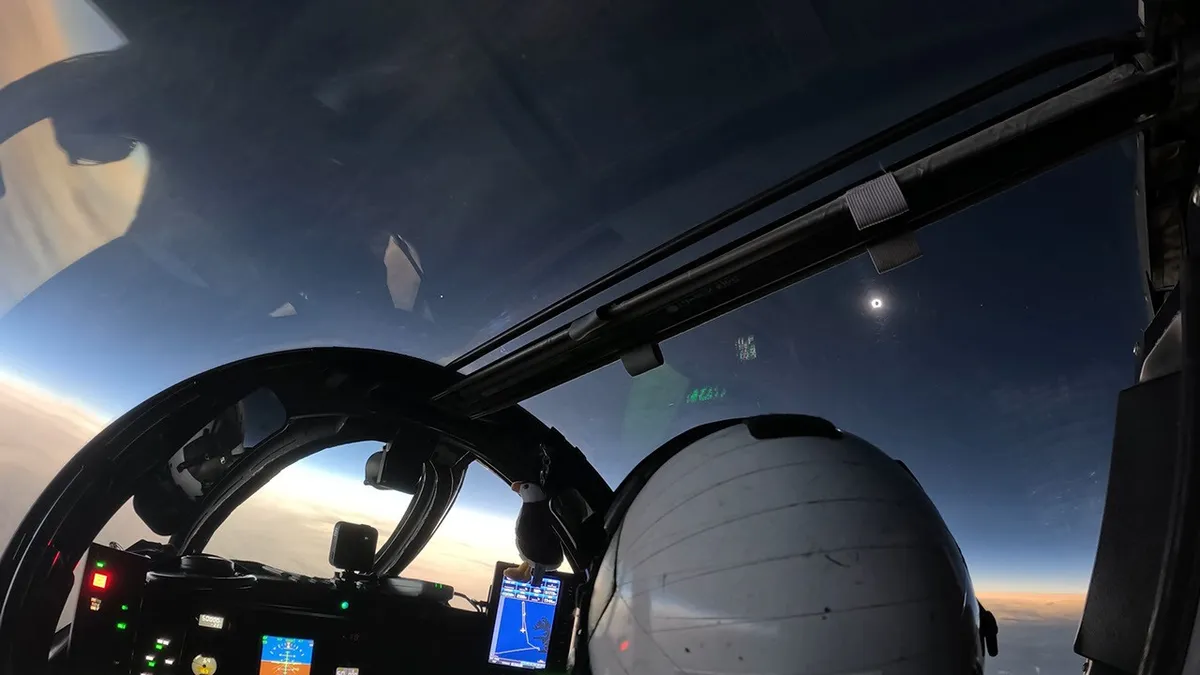
NASA's WB-57F research aircraft flew off the coast of Iceland on August 12 to observe a total solar eclipse. The plane chased the New Moon's shadow.
The aircraft flew at 50,000 feet. Pilots followed a precise path to stay in the Moon's shadow for as long as possible.
High-resolution cameras on board recorded eclipse data. They were above clouds, dust, and water vapor that can block views from the ground.
We're a new kind of news feed.
Regular news is designed to drain you. We're a non-profit built to restore you. Every story we publish is scored for impact, progress, and hope.
Start Your News DetoxThis image is from an inflight video taken from the cockpit. It shows the solar corona appearing as totality began. The sky looks dark inside the Moon's shadow.
Venus shines to the left of the center. Jupiter and Mercury are just visible to the right of the eclipsed Sun. The distant horizon below remains bright, outside the Moon's shadow.
Deep Dive & References
Chasing the Moon's Shadow for Eclipse Science - NASA Johnson, 2026 NASA Shares Views of August Solar Eclipse from Ground, Air, Space - NASA Science, 2026