A new biodegradable wash could help remove pesticide residues from fruit and keep it fresh longer. This dual-function solution combines cleaning with preservation. While more testing is needed, it offers a promising way to reduce food waste and improve food safety.
Many people wash their produce at home, but fresh fruits and vegetables still spoil quickly. Grapes shrivel, apples brown, and berries go bad fast. Shoppers also worry about pesticide traces on their food.
The U.S. Food and Drug Administration suggests rinsing produce with water. They advise against using soap or commercial washes. Water helps, but it doesn't solve every problem.
We're a new kind of news feed.
Regular news is designed to drain you. We're a non-profit built to restore you. Every story we publish is scored for impact, progress, and hope.
Start Your News DetoxA New Approach to Produce Care
Researchers have developed a wash that tackles both issues at once. It removes pesticides and creates a thin protective layer. This layer helps fruit stay fresh longer.
Food waste is a big problem. About one-quarter of fruits and vegetables are lost globally each year. Even small improvements after harvest can make a difference. This is because quality can drop quickly during shipping, storage, and home use.
How the Wash Works
The wash uses starch nanoparticles, tannic acid, and iron. Starch, a plant material, forms the base. Tannic acid, found in many plants, adds useful chemistry. Iron helps connect the tannic acid into a network on the starch particles.
When rinsing, this structure interacts with pesticide molecules on the fruit. It helps wash them away.
The wash also forms a very thin coating. This isn't a heavy wax. It's a light film that slows water loss and helps fruit look good. People often decide to eat or throw away fruit based on its appearance.
Effective Cleaning and Preservation
The cleaning results were impressive. On apples, the wash removed over 85% of thiabendazole. Tap water removed 48%, baking soda 65%, and native starch 61%. Thiabendazole is a fungicide used after harvest.
The wash also removed 93% of acetamiprid and 89% of imidacloprid from apple surfaces. This shows it works on different types of pesticides.
It's important to note that this wash targets surface residues. Some pesticides can get into the plant tissue as it grows. These are much harder to remove after harvest. The wash helps reduce surface exposure, but it's not a complete solution for all pesticide concerns.
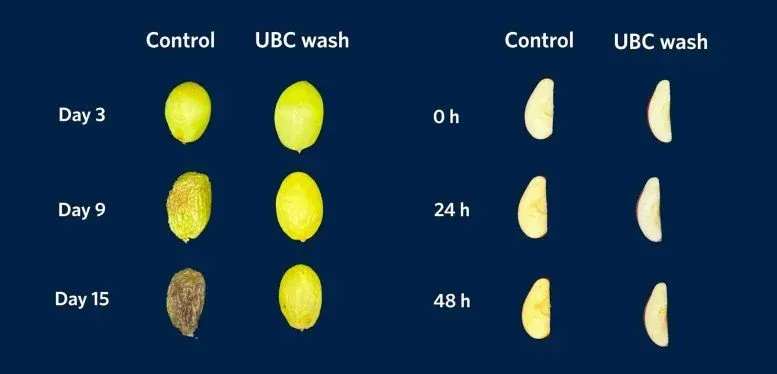
The study also looked at freshness. Over 15 days, untreated grapes lost about 45% of their weight. Grapes treated with the wash lost only 21%. Fresh-cut apples also lost less weight. Untreated apples lost 17% over 48 hours, while treated ones lost 9%.
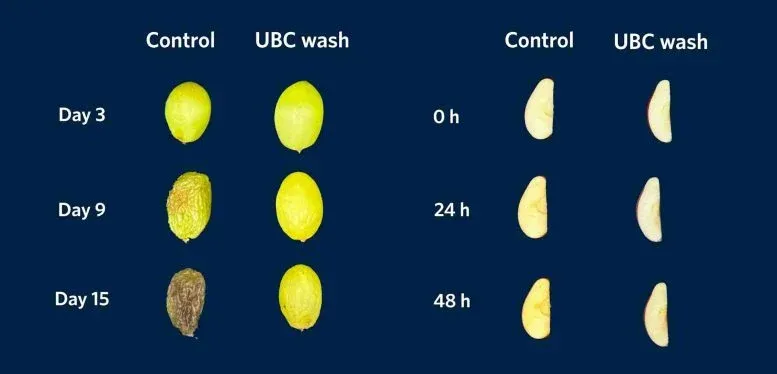
Treated grapes looked fresher after storage. Apple slices stayed lighter for longer. These changes can affect what people buy and eat. Produce that looks dried or browned is often thrown away.
The coating also slowed oxidation and stopped a test bacterium in lab experiments. This suggests the coating does more than just sit on the surface.
Future Applications
For now, this wash would likely be used in post-harvest processing plants. These facilities can control washing time, concentration, and water disposal better than homes. The raw material cost is estimated at less than $0.032 per apple. Researchers are also working on a spray for home use.
More testing is needed on different fruits and vegetables. It also needs to be tested under commercial conditions and go through regulatory approvals.
This new wash redefines what a fruit wash can do. It can clean effectively and then keep working to preserve produce. This helps fruit stay fresh, appealing, and more likely to be eaten.
Deep Dive & References
Dual-Function Metal–Phenolic Network-Capped Starch Nanoparticles for Postharvest Pesticide Removal and Produce Preservation - ACS Nano, 2026