Turns out, the future of food isn't just about high-tech solutions from labs. Sometimes, it's about listening to a farmer who’s been growing 27 different crops on a few acres, without pesticides, for generations.
That’s the big takeaway from what’s now being called a “green evolution,” a stark contrast to the original “Green Revolution.” The latter, kicked off in Texcoco, Mexico, in the 1940s, brought us high-yielding crops and artificial fertilizers. It saved millions from famine, which, let's be clear, is a massive win. But it also pushed out traditional farming and made farmers dependent on expensive, external products. The International Maize and Wheat Improvement Center (CIMMYT), a key player in that revolution, is now rewriting the playbook.
The Future Is Ancient (and Colorful)
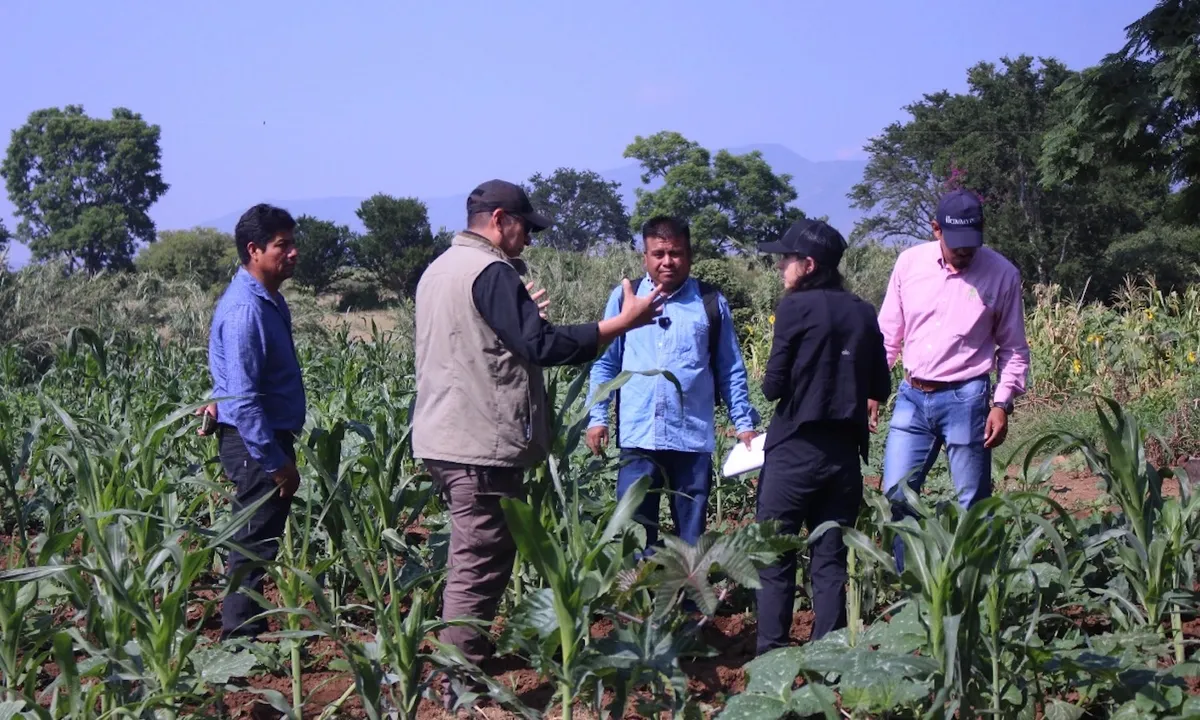
CIMMYT’s new philosophy? Science needs to meet farmers where they are, not the other way around. Jelle Van Loon from CIMMYT puts it plainly: there’s no one-size-fits-all solution for sustainable food. What works for one farmer might be a disaster for another. It’s less about handing down technology and more about sharing knowledge and, crucially, listening.
We're a new kind of news feed.
Regular news is designed to drain you. We're a non-profit built to restore you. Every story we publish is scored for impact, progress, and hope.
Start Your News DetoxTake the milpa system in Oaxaca, Mexico. It’s an ancient practice where maize, beans, and squash grow together, essentially creating a self-sustaining ecosystem. Farmers using milpa can cultivate up to 27 different crops on just a few acres, using no pesticides and minimal (if any) artificial fertilizer. Sunflowers lure in helpful insects, cowpeas help during droughts, and the soil gets healthier. If one crop fails, another might just save the season. It’s resilience, personified.
And talk about biodiversity! Mexico is maize's birthplace, holding an incredible genetic library. CIMMYT’s gene bank stores the world’s largest collection of maize seeds—hundreds of varieties, kept at a frosty -15°C (5°F). These seeds are often vibrantly colored, like tiny jewels, protecting humanity’s future one genetic code at a time.
But equally vital are the small seed banks in farmers’ homes. Francisca Canton and her husband, Jacoba Benitez, both in their late 60s, meticulously store about 50 varieties of maize, legumes, and squash in bottles. It’s “un trabajo duro”—hard work—a year-long process of planting, eating, sharing, selecting, and passing seeds down through generations. Losing these seeds isn't just a loss of food; it’s a loss of identity.
CIMMYT staff now prioritize consistency and presence, building trust over years. Their advice is tailored to the specific plot of land, the specific farmer, the specific conditions. It’s a far cry from the old assumption that one technology could solve everything.
Ultimately, the Green Revolution proved that agricultural science can do incredible things. The “green evolution” is here to teach us that true innovation starts with believing in farmers. As Oaxaca’s agriculture minister, Víctor López Leyva, put it: “Creer en el campo, creer en las campesinas y los campesinos.” Believe in the countryside. Believe in farmers. Because sometimes, the most cutting-edge solution is the wisdom that’s been growing for centuries.