Imagine a problem so persistent it requires hand-weeding, even after herbicides and careful planting. For grass seed farmers, that's annual bluegrass – a tiny, unwelcome guest that can contaminate valuable tall fescue crops and send seed-cleaning costs through the roof.
But what if the solution was as simple as a haircut? A really high haircut?
Early research from Oregon suggests that harvesting tall fescue at a lofty 28 centimeters (that's 11 inches, for the metric-averse) instead of the traditional 5 centimeters (a mere 2 inches) could dramatically reduce annual bluegrass contamination. The best part? It doesn't seem to consistently impact the amount of tall fescue seed harvested. Let that satisfying number sink in.
The Weed That Hides Below
The genius of this approach lies in the weeds' modesty. Most annual bluegrass seed heads are short. They prefer to hang out below the majestic tall fescue seed heads at harvest time. So, if you just... don't cut that low, you might leave the problem in the field.
We're a new kind of news feed.
Regular news is designed to drain you. We're a non-profit built to restore you. Every story we publish is scored for impact, progress, and hope.
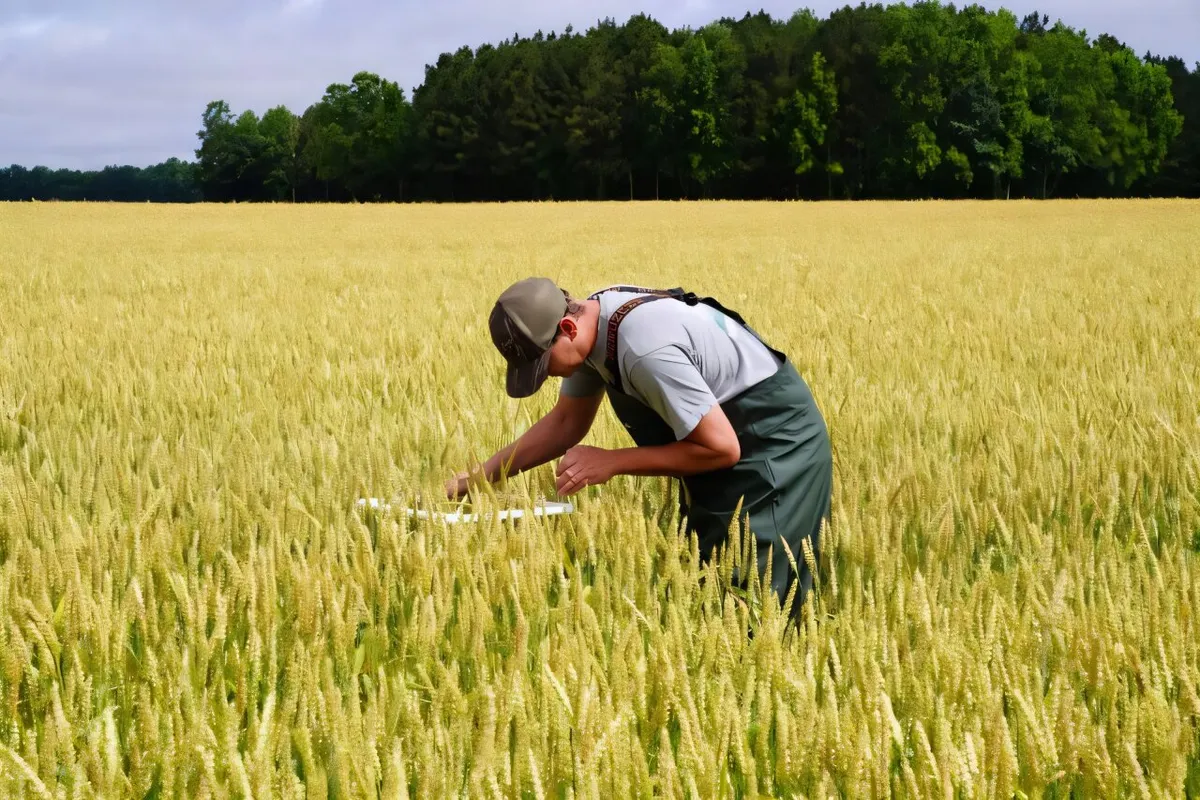
Start Your News DetoxResearchers put this theory to the test in 2024 and 2025. They compared cutting heights (5 cm vs. 28 cm), tried different harvesting machines (a regular swather vs. a combine), and even messed with seed moisture levels, ranging from a damp 45% to a crisp 18%.
In 2024, the annual bluegrass apparently took the year off. But in 2025, the results were clear: less contamination when the crop was cut at 28 centimeters. This suggests that a higher cut could become a powerful ally in the ongoing war against weeds, making seed cleaning much easier and cheaper. Success, it seems, depends on how much the crop leans over and the exact height of those sneaky bluegrass plants, which can stretch up to 40.6 centimeters (16 inches) on a good day.
They also found that cutting with a combine at 28 centimeters and a lower moisture level (27%) actually produced more seed than the old-school swathing method at 5 centimeters and higher moisture. Though, a word of caution: going too low on moisture with a swather at the higher cut seemed to reduce yield, possibly because a faster reel scattered the seeds.
Turns out, machine settings are surprisingly important. Who knew farming was so precise? More research is needed to fine-tune these agricultural haircuts, but the idea of cutting weeds out of the equation (literally) with a simple adjustment is, well, pretty sharp.