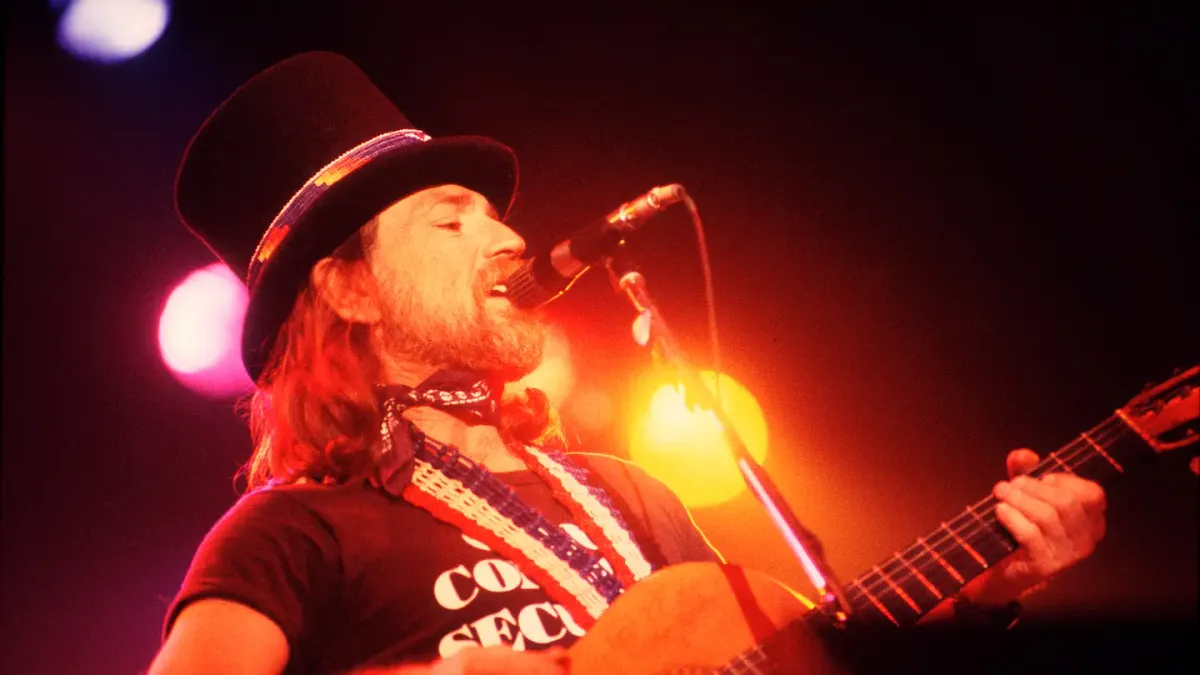
Willie Nelson is a living legend, a red-headed stranger with a guitar named Trigger and a career spanning seven decades. Most of us know him as the voice, the performer, the guy who made bandanas cool again. But before he was selling out stadiums, he was doing something arguably even more impressive: writing some of country music's most enduring hits for other people.
Turns out, many of the songs you hummed along to, thinking they belonged to Patsy Cline or Elvis, sprang from the pen of a young Nelson. Sometimes, his versions didn't even catch on until years after someone else made them famous. Which, if you think about it, is both incredibly generous and slightly maddening.
Here are eight tracks you probably didn't know were pure Willie.
The Hits That Got Away (At First)
"Crazy"
Nelson scribbled "Crazy" in the late 1950s while juggling club gigs and a radio DJ job in Houston. It's got these wild, unexpected chord changes that were practically avant-garde for country music at the time. Patsy Cline, bless her heart, recorded it in 1961 after Nelson personally taught her the tune. Her version? A monster hit, soaring to number two on Billboard's Hot Country chart and even cracking the Hot 100. Nelson's version came later. Of course.
We're a new kind of news feed.
Regular news is designed to drain you. We're a non-profit built to restore you. Every story we publish is scored for impact, progress, and hope.
Start Your News Detox"Funny How Time Slips Away"
This one's been covered more times than a secret government document. Elvis Presley put his spin on it for his 1970 album, Elvis Country (I'm 10,000 Years Old) – because apparently, that's where we are now. Soul king Al Green even included it on his 1973 Call Me album. But the very first recording? That was Billy Walker in 1961. Willie's own take arrived in 1965.
"Night Life"
Aretha Franklin, the Queen of Soul herself, delivered a stunning rendition of "Night Life" in 1967. Seven years earlier, country singer Ray Price already had a hit with it. Nelson, inspired by his commute to a job in Pasadena, Texas, wrote it in the late '50s. B.B. King and Dolly Parton have also taken a swing at it. Because when Willie writes a song, everyone wants a piece of it.
"Hello Walls"
Faron Young is practically synonymous with this ode to lost love, taking it to the top of Billboard's country chart for nine weeks in 1961. It was an early, undeniable win for Nelson's songwriting career. Willie eventually released his own version, decades later, on his 1996 album Twisted Willie. Better late than never, right?
"Pretty Paper"
This country Christmas classic, about a poor street vendor, hit number 10 on Billboard's Adult Contemporary Chart for Roy Orbison in 1963. Nelson wrote it that same year, inspired by a real person he spotted outside a department store in Fort Worth. Orbison, reportedly quite ill during the recording, needed 12 takes to get it just right. The things we do for holiday cheer.
"Yesterday's Wine"
This song is the title track of what Nelson considers one of his best, most underrated albums from 1971. His record company, RCA, apparently found it "too spooky and far out." Which, if you know Willie, is pretty much the highest compliment. While his own version didn't light up the charts, Merle Haggard and George Jones took a duet version to number one in 1982. Sometimes, you just need two legends to make another legend's song a hit.
"Family Bible"
Claude Gray scored the first hit with "Family Bible" in 1960. Nelson, ever the entrepreneur, had previously sold the song for a cool $50 and a restaurant tab. Yes, you read that right. Fifty dollars. Inspired by his grandmother, who often read from the Bible after supper, it's a reminder that some of the most profound inspirations come from the simplest moments.
"My Own Peculiar Way"
Perry Como was the first to record this Nelson tune in 1965. Nelson's own version, the title track of his ninth studio album, arrived a few months later. Many have covered it since, but let's be honest, Willie's particular way is usually the best way.
So next time you hear one of these classics, take a moment to appreciate the man who penned it. Because before he was the voice, he was the quiet genius behind the curtain, making everyone else sound good. And sometimes, that's the wildest legacy of all.