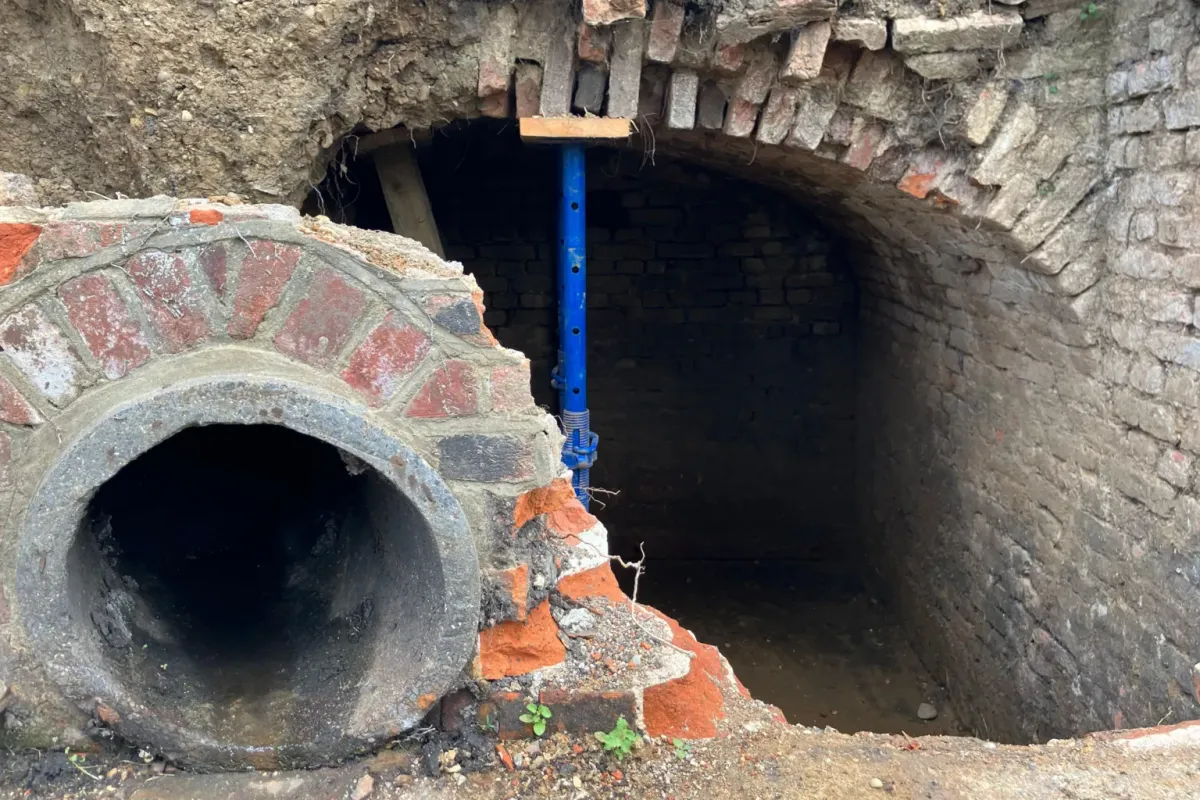
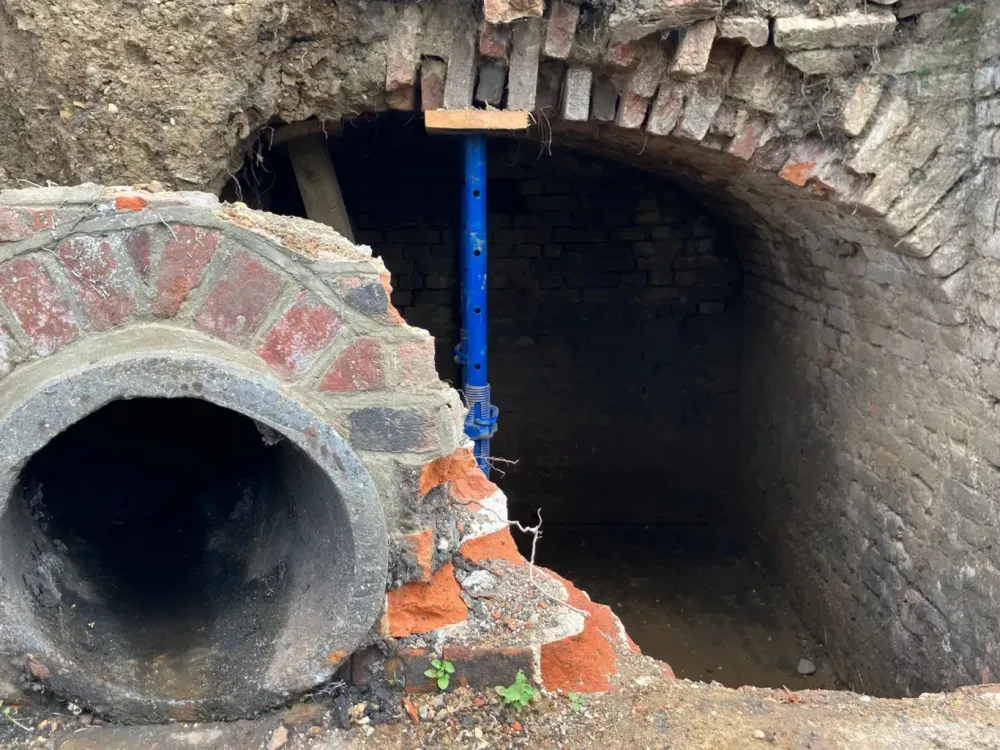
Turns out, an English boarding school in Chelmsford has been sitting on a royal secret for centuries. Workers at New Hall School, while fixing a rather charming landscape feature known as a “ha-ha” (yes, that’s its actual name for a sunken fence designed to keep livestock out without obstructing the view), stumbled upon something far more interesting than a ditch: a tunnel entrance.
Inside, they found Tudor-era pottery, bones, and glass bottles. Because apparently, that’s just how history rolls in England — you dig a little, and suddenly you’re in Henry VIII’s basement.
The Palace That Became a School
New Hall School is named after New Hall, a house Henry VIII acquired in 1517. He bought it from the very family that would later give him Anne Boleyn, which is a conversational tidbit for the ages. Henry then promptly rebuilt the place into the lavish Palace of Beaulieu, making it one of his preferred pads in the 1520s.
We're a new kind of news feed.
Regular news is designed to drain you. We're a non-profit built to restore you. Every story we publish is scored for impact, progress, and hope.
Start Your News DetoxAfter his rather dramatic reign concluded, the palace’s royal luster faded. Elizabeth I eventually gave it the boot from royal ownership. Fast forward to the 1700s, and most of the grand structure was demolished, save for a north wing that got a serious facelift. Then, in 1798, a group of nuns moved in, opening New Hall School there in 1799. Today, it’s a Catholic boarding school, which, if you think about it, is quite the pivot for a former royal party palace. It even boasts Henry VIII’s actual coat of arms in its chapel, just to remind everyone who used to own the place.
The discovery has, predictably, caused a stir. Sarah Garside, the head of history, told the BBC it’s a “unique and exciting place to teach history.” Paul Goulding, head of the sixth form, added that seeing history so tangibly is a rare treat. So far, researchers have only explored a small section. They suspect these tunnels were likely service corridors and storage for the palace. More archaeological work is, of course, on the docket. Because who wouldn't want to see what else Henry VIII left behind?