Ever notice a pattern on your shirt and wonder where it came from? Chances are, it's got a passport full of stamps and a history that stretches back centuries. We're talking about Indian motifs, those intricate designs that traveled the world, charming everyone from French kings to Scottish weavers, and ended up basically everywhere.
From a bamboo-pen creation to patterns inspired by swaying mango trees, these designs aren't just pretty; they're tiny history lessons woven into fabric. And sometimes, they even got a name change along the way, because, fashion.
The OG Influencers of Fabric
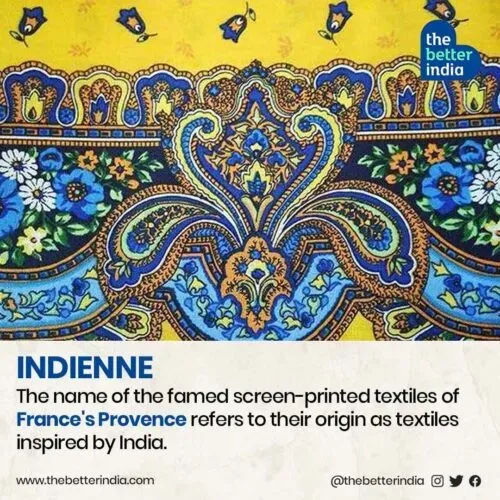
Take "Indienne," for instance. Stroll through any market in Provence, France, and you'll be surrounded by these nature-inspired prints. Their name literally means "the Indians," which is a pretty clear hint. Armenians, ever the savvy traders, started importing these fabrics from India to Marseille. Then King Louis XIV decided he needed them for his royal wardrobe. Naturally, everyone else wanted them too, so the Armenians just started copying the designs themselves. Sunflowers and pastel shades took over Provence, and a fashion trend was born.
We're a new kind of news feed.
Regular news is designed to drain you. We're a non-profit built to restore you. Every story we publish is scored for impact, progress, and hope.
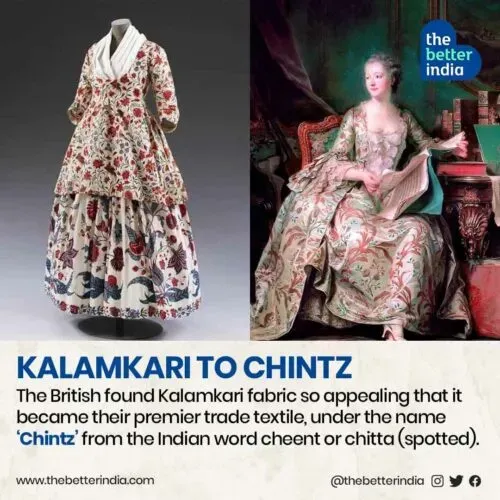
Start Your News DetoxThen there's Chintz, which sounds like something you'd say when you sneeze, but is actually a British re-branding of the Indian word cheent, meaning "spotted." These patterns, often depicting folk tales and tree motifs, pleased the British so much they basically renamed them.
Ikat has roots so ancient, it shows up in 5th-century wall frescoes in the Ajanta Ellora caves. Its name, from a Malay Indonesian word meaning "to tie," hints at its unique creation. Instead of weaving the design directly, threads are tied and dyed before weaving. It's like pre-planning your art, but for fabric. Which, if you think about it, is both impressive and slightly terrifying.
And who could forget Seersucker? Its name is pure poetry, coming from the Persian shir-o-shakhar, which translates to "milk and sugar." This fabric gets its signature puckered texture because two different thread colors are woven at different tensions. The result? Alternating smooth and bumpy stripes, perfect for looking effortlessly rumpled.
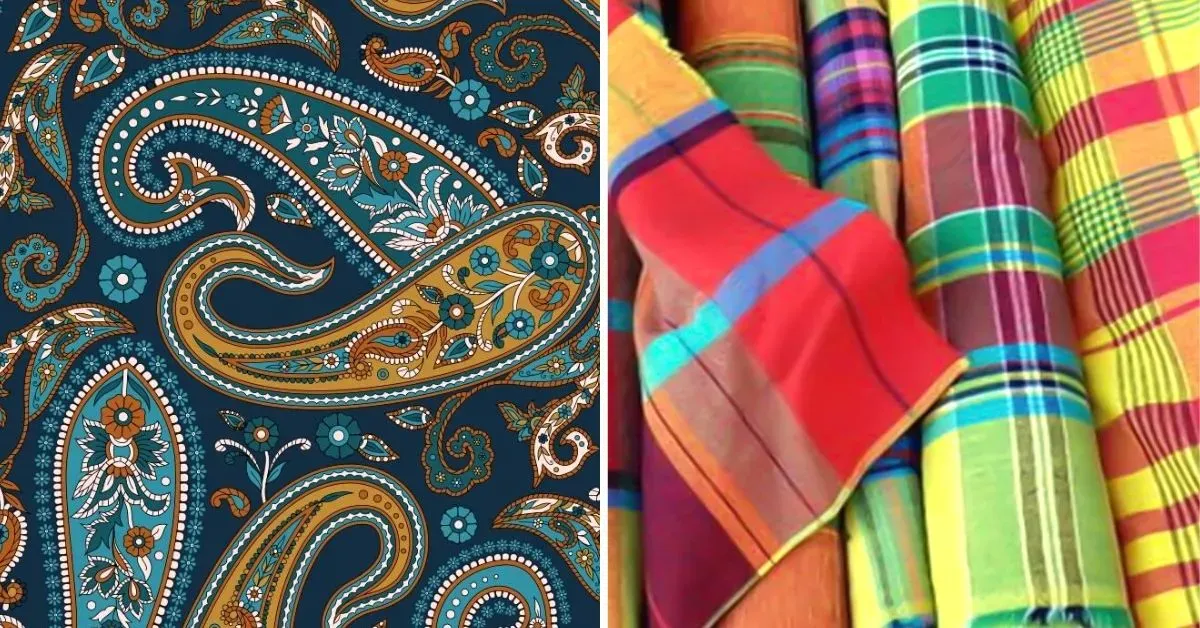
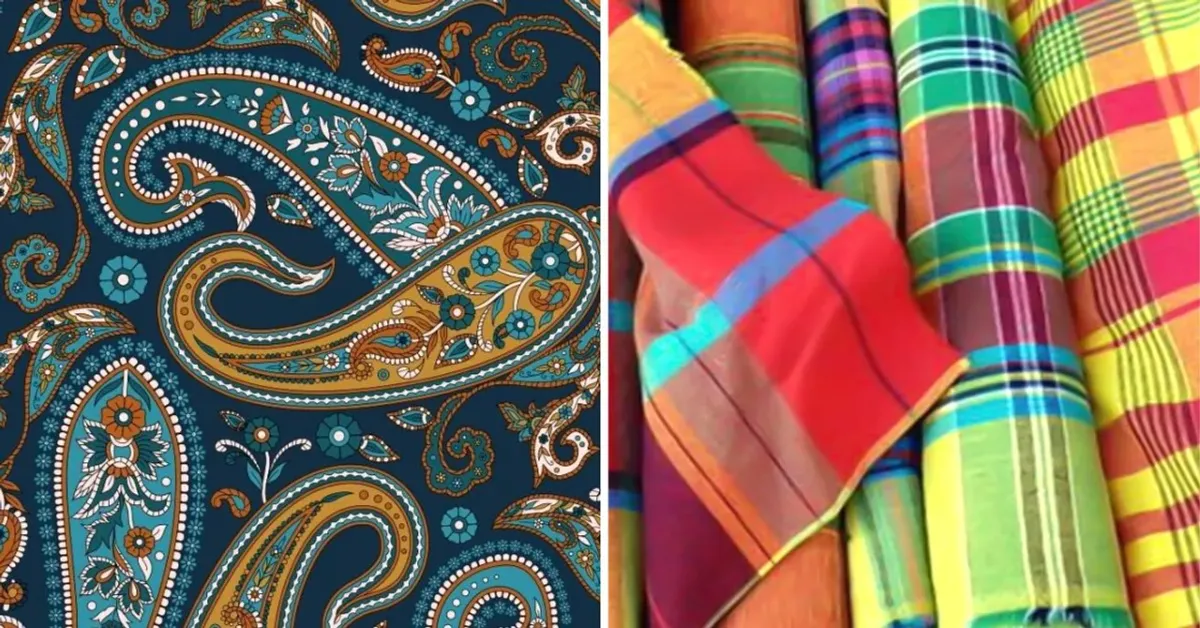
Next up, Madras Plaid, a delicate pattern dating back to the 12th century. The yarn is hand-dyed in a concoction of dye, salt, soda, and water before weaving. Because it's so fragile and not combed before weaving, the fabric ends up with a charmingly bumpy texture. It's the kind of fabric that refuses to be perfectly smooth, and we respect that.
Finally, the mighty Paisley. That distinctive teardrop shape, often seen on bandanas and fancy ties, is packed with symbolism: a tree for eternity, a seed for fertility, and designs reminiscent of the Chinese yin-yang. The legend says these pine cone-like patterns originated in Persia, but the name? It comes from Paisley, a town in West Scotland, where they churned out these prints like nobody's business. From ancient Persia to a Scottish mill town, these patterns really get around. And look good doing it.