You probably know Winslow Homer for his dramatic oil paintings, all stormy seas and rugged coastlines. But a new exhibition at the Portland Museum of Art in Maine wants you to know he was also a low-key printmaking wizard. And by low-key, we mean he taught himself the entire process, then used it to blow up his own iconic works.
Take Saved (1889), an etching that reworks his famous oil painting, The Life Line (1884). While the original had sails and a shoreline, Saved strips it all away. Suddenly, it's just an unconscious woman and her rescuer, dangling from a breeches buoy (a fancy new rescue device back then) against a backdrop of crashing waves and dark, indifferent rocks. All the drama, none of the distractions. Curator Ramey Mize argues this etching wasn't just a side project; it was central to Homer's artistic evolution.
The Unexpected Return of an Artist
Homer, who famously ditched commercial illustration in 1875 because it felt like a "treadmill existence," wasn't exactly itching to get back into prints. He wanted to paint. But the 1880s saw a resurgence of etching, valued for its artistic merit just as new photographic methods were making perfect reproductions of paintings. Homer, ever the pragmatist, saw an opportunity.
We're a new kind of news feed.
Regular news is designed to drain you. We're a non-profit built to restore you. Every story we publish is scored for impact, progress, and hope.
Start Your News DetoxThe exhibition, "Winslow Homer: Painter, Etcher," kicks off with his early Harper’s Weekly Civil War reports, the stuff that made him famous. Then it jumps to his self-taught etching phase, where he’d revisit his painted subjects, but twist them to fit the new medium. This wasn't about copying; it was about reinvention.
What makes this show sing is the peek behind the curtain. The PMA has gathered oil paintings, watercolors, studies, and multiple proofs – basically, all his etchings – so you can watch Homer's brain at work. He was constantly exploring the possibilities of burin and wax, acid and copper, ink and paper, all from his home studio in Prouts Neck, Maine, sending plates back and forth to his New York printer. Because apparently, that's how you got art done on the rugged Atlantic coast.
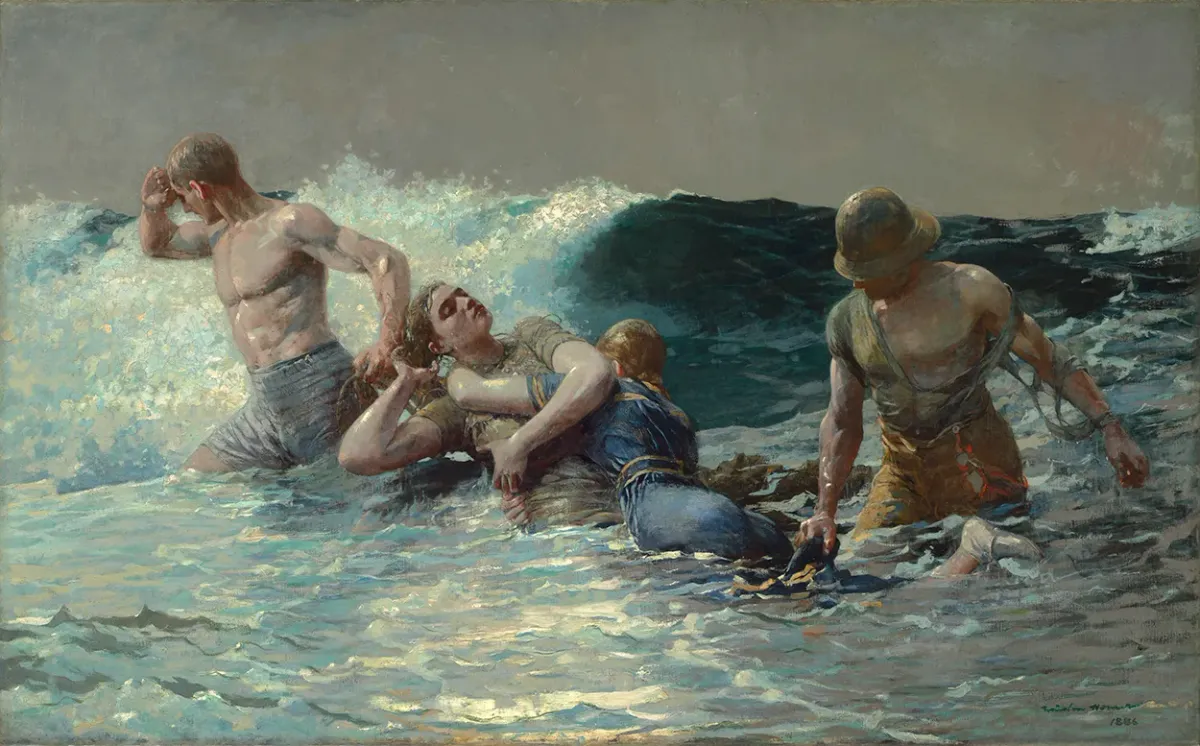
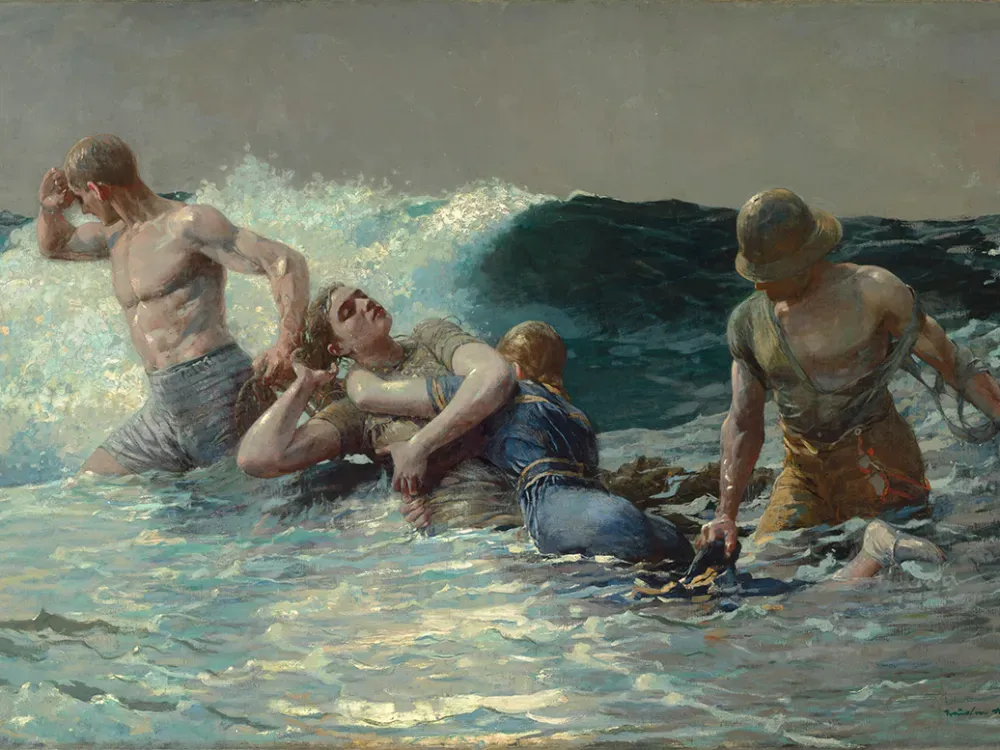
One particularly cool piece is Two Heads (Study after Undertow) (circa 1886), a rare example of Homer literally "sketching" in print. A quick-thinking handyman saved the plate from the trash, and now we get to see Homer experimenting with line thicknesses, scraping areas, adding tone with sulfur tint, and preserving highlights with varnish. It’s like peeking over his shoulder as he figures it all out.
These discoveries even influenced Fly Fishing, Saranac Lake (1889), his only etching not based on a previous painting. When he turned an early watercolor into a print, he simplified the background and made the figure heavier, but kept the water's shimmering, reflective quality and the tension of the fishing line. He was so proud of this piece that he signed the proof twice: "Winslow Homer, Painter" on the left, and "Winslow Homer, Etcher" on the right. Because why choose when you can be both?
This show is a scholarly deep dive, yes, but it’s also a treat for anyone who loves seeing an artist's process unfold. It’s Homer, but with a new set of tools, showing us that even masters are always learning, experimenting, and sometimes, just having a blast making art.