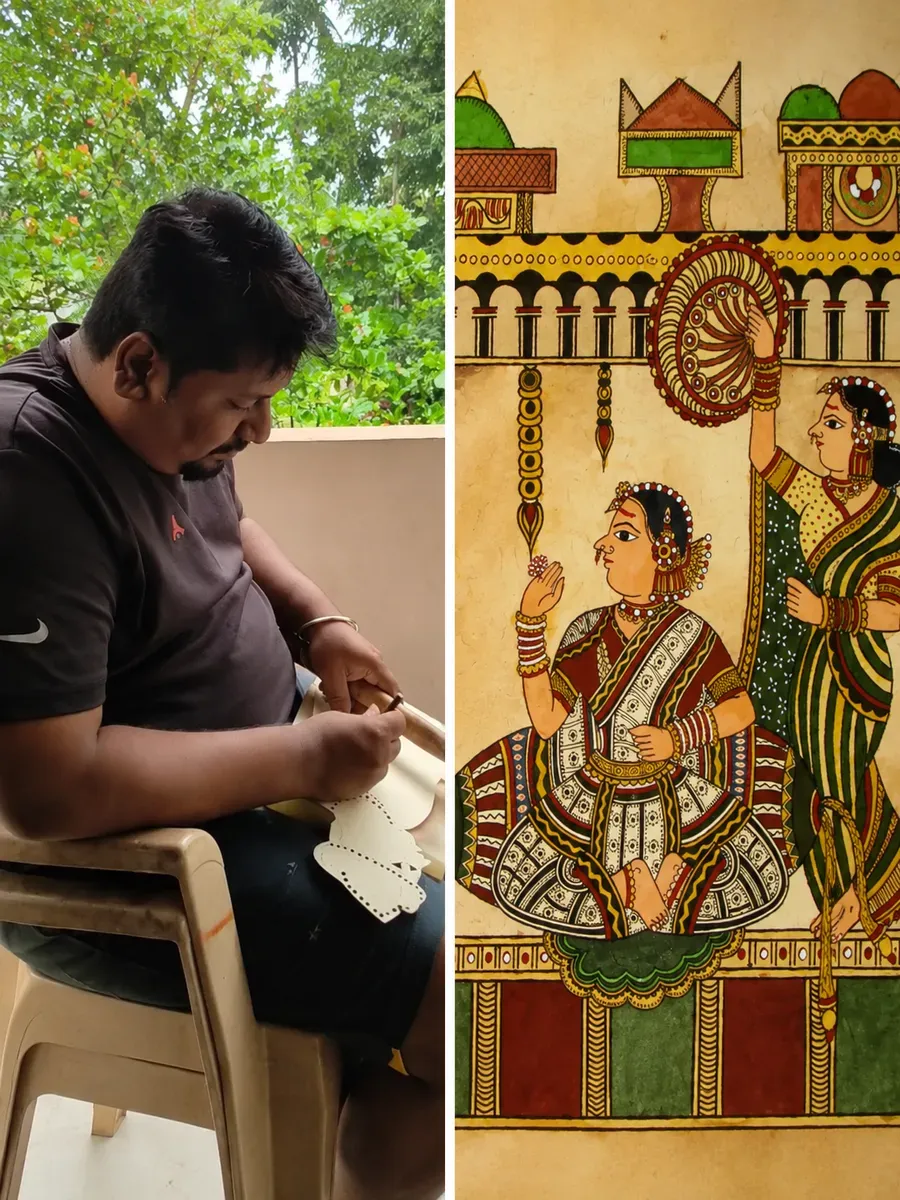
Once upon a time, in the villages of Maharashtra, if you wanted the news, a good story, and maybe a little espionage, you called a Chitrakathi artist. These nomadic storytellers, part of the Thakar community, didn't just entertain with hand-painted illustrations and epic tales; they were also, apparently, Chhatrapati Shivaji Maharaj's eyes and ears across the land. Which, if you think about it, is a pretty genius way to run an intelligence network.
But like many things that involve actual craftsmanship and not just viral dance routines, this 400-year-old art form nearly vanished. Artists who once brought the Ramayana and Mahabharata to life, supported by royalty (who even supplied them with handmade paper), eventually found themselves treated as beggars. They couldn't eat in villages, couldn't drink from community wells. So, naturally, many packed up their paintbrushes and found less discriminatory ways to make a living.
The Last Line of Defense
Enter the Gangavane family. They decided that 400 years of storytelling, spycraft, and stunning visuals shouldn't just fade into memory. They are, quite literally, the last Thakar family keeping Chitrakathi alive. In 2006, Parshuram Gangavane did what any dedicated preserver of culture would do: he converted his cowshed into a museum. Because where else would you house centuries of heritage?
We're a new kind of news feed.
Regular news is designed to drain you. We're a non-profit built to restore you. Every story we publish is scored for impact, progress, and hope.
Start Your News DetoxHis dedication didn't go unnoticed. In 2021, he snagged the Padma Shri award, a pretty significant nod for turning a cowshed into a cultural beacon. Today, the Gangavanes are a whirlwind of activity, putting on performances, hosting exhibitions, and running workshops. They're even training the next generation in the Gurukul style, ensuring the art has a future beyond their incredibly dedicated family.
Their big dream? To transform Sindhudurg into a cultural hub, a place where visitors come not just for the beaches, but for the living history, the intricate paintings, and the stories that once informed kings and entertained villagers. It’s a testament to how one family can keep an entire, fascinating, and slightly covert, tradition from becoming just another dusty footnote.