Most people experience Saint Agatha in Catania as a grand, thundering spectacle. Hundreds of thousands pack the streets every February for the city's massive religious festival, a joyful, chaotic crush of devotion. But right next to the cathedral, there's a quieter, more reflective space where that same deep reverence lives all year long.
The Museo d'Arte Sacra isn't just a collection of old paintings; it’s a portal. It’s a journey through the very objects that have shaped Catania's spiritual heartbeat for centuries, meticulously curated to tell a story. Here, among silver reliquaries, beautifully sculpted saints, ancient icons, and ceremonial treasures, you see how inextricably linked Saint Agatha's legend is to the city's identity.
And yes, you can actually get up close to the main event: the magnificent silver fercolo. This is the grand carriage used to parade Saint Agatha through those very packed streets. Seeing its intricate details without being elbow-to-elbow with 300,000 other people? That’s a revelation in itself.
We're a new kind of news feed.
Regular news is designed to drain you. We're a non-profit built to restore you. Every story we publish is scored for impact, progress, and hope.
Start Your News DetoxThe museum’s unexpected tranquility is one of its most striking features. In a city as vibrant and bustling as Catania, the galleries offer a peaceful hush. Some rooms feel like a meticulously set stage; others like forgotten church treasuries, just waiting for their astonishing contents to be rediscovered. It’s a powerful reminder that sacred art here isn’t just dusty history; it’s a living, breathing influence on daily Sicilian life.
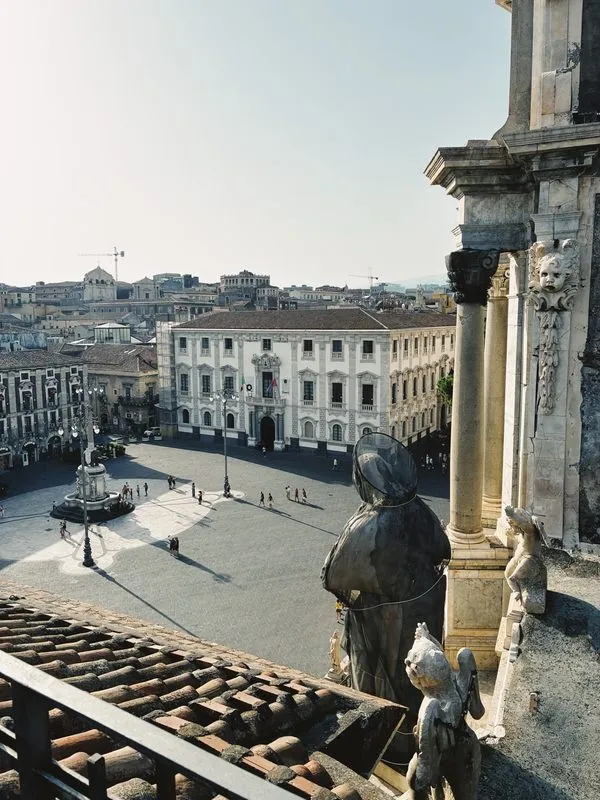
The experience culminates on the museum’s terraces, which offer sweeping, cinematic views. You’ll take in the grand Piazza del Duomo, the historic Porta Uzeda, a sea of Catania’s rooftops, and — of course — the majestic, ever-present Mount Etna. After immersing yourself in the objects that define the city's traditions, that panorama below isn't just a pretty picture. It’s a living tableau, showing how these ancient rituals are still very much woven into the fabric of the landscape itself.