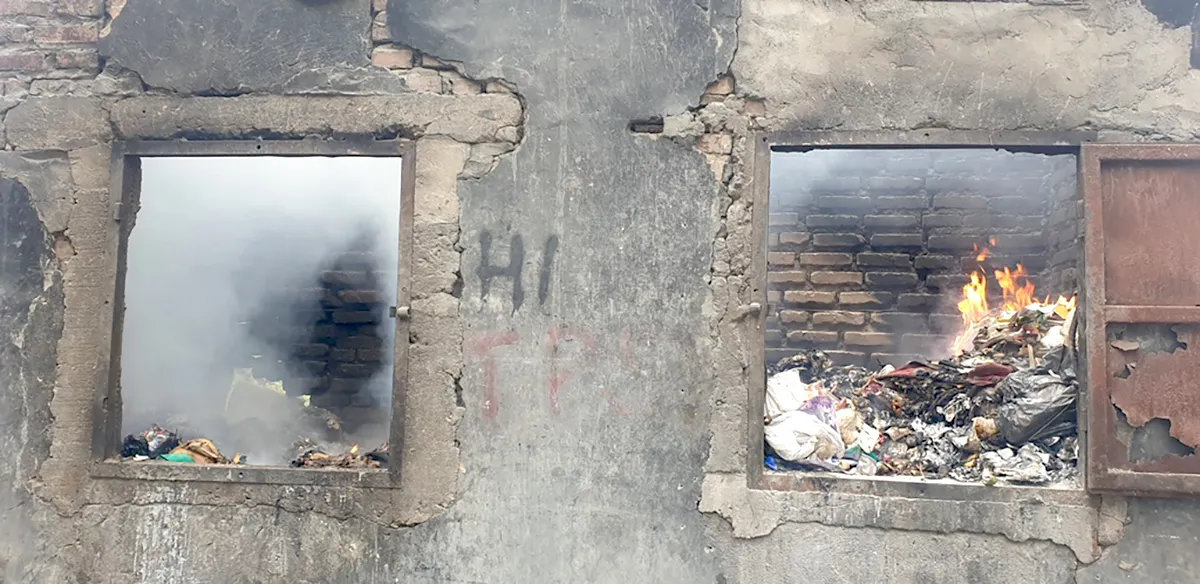
In Jarangdih village, Jharkhand, the morning alarm is the whirring of coal mine machinery. By afternoon, dust hangs so thick you can taste it. The trucks never stop coming.
This isn't a new story for the region. Dhanbad and Bokaro, Jharkhand's two major coal districts, have lived with severe air pollution for decades. But what changed recently is who measured it — and how that measurement forced action.
A group of local women, trained as air quality monitors and calling themselves "paryavaran sakhis" (friends of the environment), spent months mapping 69 sites across rural Dhanbad and Bokaro. What they found was stark: fine particulate matter (PM2.5) in these areas runs seven to nine times above the World Health Organization's safe limit. They identified 26 pollution hotspots — and crucially, they found pollution where people didn't expect it. Not just near mines, but in marketplaces, schools, and hospitals. The places where women, children, and elderly people spend their days.
We're a new kind of news feed.
Regular news is designed to drain you. We're a non-profit built to restore you. Every story we publish is scored for impact, progress, and hope.
Start Your News DetoxWhen the women surveyed 200 residents, over 80% reported health problems linked to the air: respiratory issues, headaches, eyes that water constantly. Rekha Devi, one of the paryavaran sakhis, remembered her surprise at finding high pollution in the market — a place locals had assumed was safe.
What changed when locals led the research
The study itself was collaborative. Researchers from Asar Social Impact Advisors partnered with the women leaders, but the women did the actual monitoring, gathered the data, and presented the findings to stakeholders. That last part mattered more than anyone expected.
Within three to four months of the women presenting their results, Central Coalfields Limited — one of the major operators in the region — took measurable steps. They installed water sprinklers along roads to suppress dust. They started covering coal loads during transport. They set up air quality monitors in public places.
Small actions, yes. But they happened because the dialogue came from inside the community, not from a distant regulator or NGO. "These might be very small actions, but they were entirely possible because of the dialogue the sakhis had with different stakeholders," Devi said.
The research also exposed a harder truth: the region's public health system is inadequate for the scale of the problem. People with serious conditions — asthma, COPD, lung cancer — often have to travel long distances for care. That gap remains. But at least now, the air they breathe on those journeys is slightly cleaner.
The researchers believe this model can scale. If women in other coal regions, mining areas, or industrial zones learn the same monitoring methods, they could replicate this cycle: gather data, present findings, prompt action. It's not a solution to coal pollution itself. But it's a mechanism for communities to stop being passive victims of it.