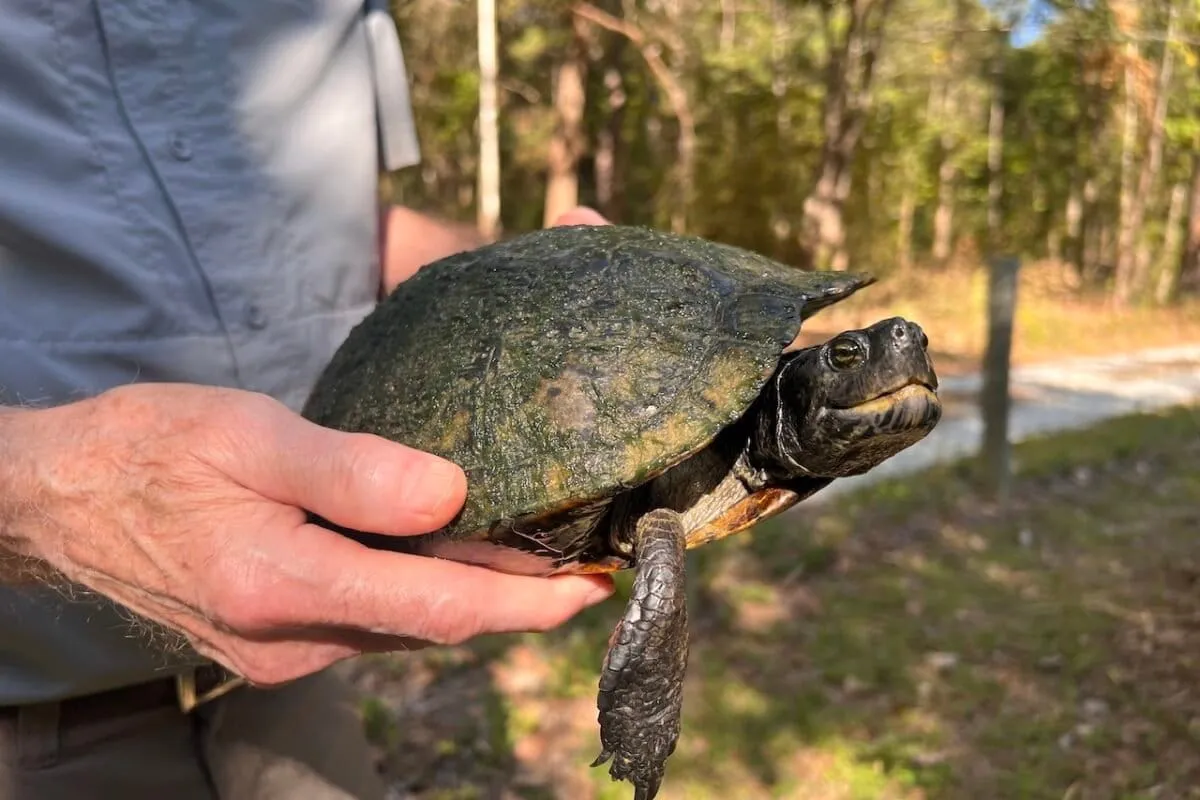
In a converted facility in South Carolina, hundreds of turtles live behind reinforced glass and carefully monitored tanks. They're not here by choice. They're here because their species have nearly vanished from the wild.
The Turtle Survival Center, run by the Turtle Survival Alliance, operates as a biological lifeboat. Founded in 2013, it houses some of the world's rarest freshwater turtles and tortoises — animals pushed to the edge by habitat destruction, wildlife trafficking, and a reproductive timeline that works against them. A female turtle removed from the wild doesn't just represent one loss. It represents decades of offspring that will never exist.
More than half of all turtle and tortoise species now face extinction, according to recent global assessments. The crisis is most severe in Asia, where the collision of three forces has been catastrophic: demand for turtles as food, demand as pets, demand as ingredients in traditional medicine — all meeting deforestation and infrastructure expansion that's erasing the landscapes where these animals live. Many species are harvested faster than they can breed.
We're a new kind of news feed.
Regular news is designed to drain you. We're a non-profit built to restore you. Every story we publish is scored for impact, progress, and hope.
Start Your News DetoxBuying Time
The center's work is fundamentally about delay. Not delay as avoidance, but delay as strategy. Cris Hagen, the center's director, describes it plainly: "We're trying to buy time for these species. We're trying to maintain them in captivity so that if and when we can reintroduce them, we have a chance."
That means maintaining genetically valuable founder animals — the genetic seeds from which future populations might grow. It means breeding species that have already disappeared from their native landscapes, keeping their existence alive in tanks rather than losing them entirely. It means training specialists in the unglamorous work of survival: water chemistry, nutrition, disease prevention, the specific biological quirks of each species.
When authorities seize large shipments of trafficked turtles, the center's knowledge becomes immediately practical. These animals arrive traumatized, often malnourished, sometimes carrying diseases. The difference between rescue and loss is often someone who knows exactly how to care for that particular species.
The Turtle Survival Center doesn't pretend to be a solution. It's a holding action. But holding action matters. These ancient reptiles have survived ice ages and asteroid impacts. Right now, they need a different kind of refuge — one with heated water, veterinary care, and people who understand that a single surviving female might be the difference between extinction and a future reintroduction.
What happens next depends on whether the habitats these turtles once occupied can be restored. The center's real work isn't in the tanks. It's in the possibility that one day, some of these animals might go home.