For decades, Alzheimer's research circled around one culprit: amyloid plaques choking the brain. A new wave of research suggests the disease is more complicated—and that opens more doors to slow it down.
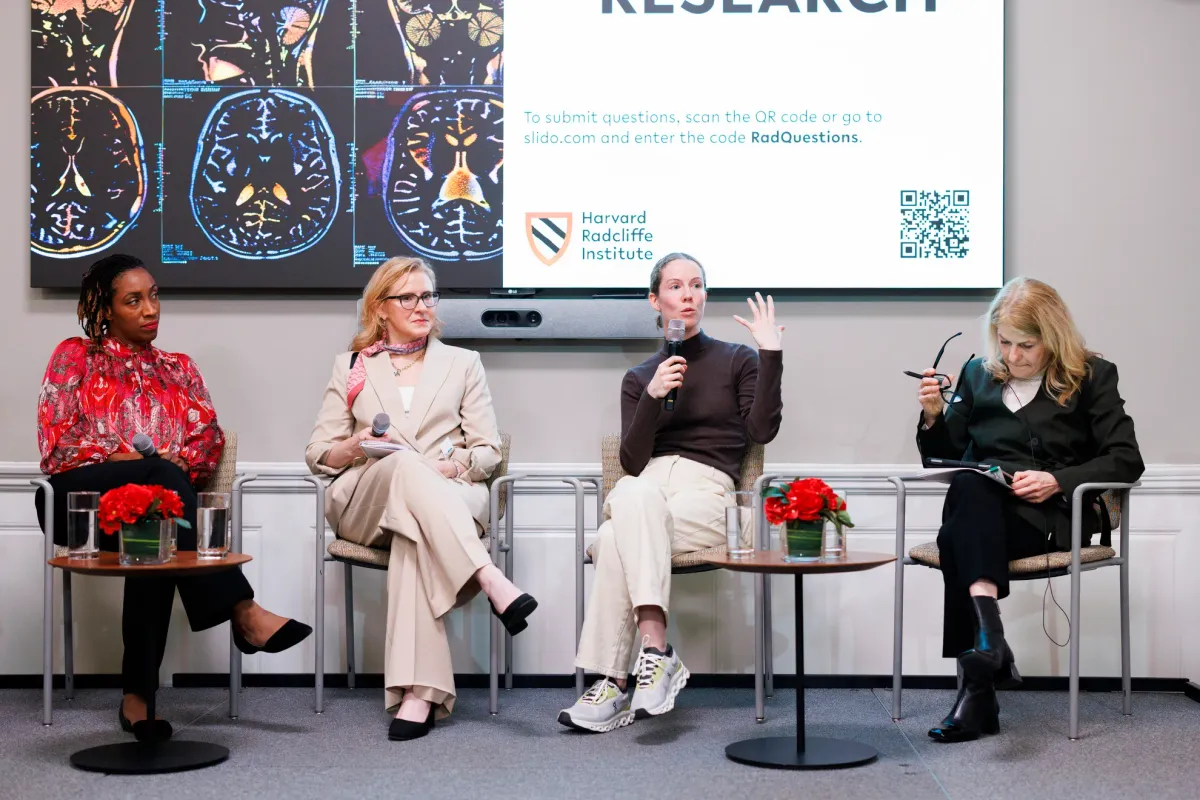
The scale of the challenge is stark. Fifty-five million people worldwide have Alzheimer's today, and that number could nearly triple by 2050. But researchers at Harvard recently gathered to map what one expert called "a moment of real possibility"—a shift from chasing one villain to understanding how multiple biological systems go wrong.
A Shift in Focus: From Plaques to Fat
The first crack in the single-culprit theory came from donanemab, a recently approved drug that reduces amyloid plaques. It works. It just doesn't reverse the disease—only slows cognitive decline. That gap pushed researchers to ask: what else is happening.
We're a new kind of news feed.
Regular news is designed to drain you. We're a non-profit built to restore you. Every story we publish is scored for impact, progress, and hope.
Start Your News DetoxLeyla Akay, director of biology at Boston startup TAC Therapeutics, spent her doctoral work at MIT chasing a different lead: fat metabolism in the brain. She focused on the APOE4 gene, a mutation that dramatically increases Alzheimer's risk, particularly in Black Americans and Hispanic Americans. The gene's job is moving lipids around the brain, but the mutated version does it poorly. Lipids pile up inside brain cells, damaging the myelin coating that insulates nerve fibers—like electrical wiring losing its insulation.
When Akay's lab found that blocking a molecule called GSK3 beta reduced lipid buildup and restored that protective myelin coating, they founded a company to develop it. Early results look promising. The approach doesn't replace amyloid research; it runs parallel to it, attacking a different pathway the disease uses to damage the brain.
Meanwhile, other teams are zooming in on tau, a protein that forms tangles in the brain after amyloid damage begins. Cara Croft at Queen Mary University of London uses mice and naked mole-rats to study how neurons sometimes unravel these tangles and clear them. Her work aims to amplify this natural cleanup process—another potential treatment angle that doesn't depend on stopping amyloid first.
What You Can Actually Do Right Now
Here's the part that matters for your life today: you don't have to wait for these drugs to reach the market. Research from Harvard Medical School shows that three specific diets lower Alzheimer's risk—the Mediterranean diet, the DASH diet, and the MIND diet, which blends elements of both. None of them require extreme discipline. They're built around legumes, fish, olive oil, and vegetables.
Physical activity works too. A study from Massachusetts General Hospital found that people who walked more had measurably lower Alzheimer's risk. Even 3,000 steps per day—the lowest activity level they measured—showed protective effects. "It doesn't have to be all or nothing," says Jennifer Gatchel, an assistant professor at Harvard Medical School. Small, consistent changes produce biological changes in the brain.
The Inequality Piece Nobody Should Ignore
Here's what makes this research moment more complex: Alzheimer's risk isn't evenly distributed. Black Americans face roughly twice the risk compared to non-Hispanic white Americans. Hispanic Americans face 1.5 times the risk. These gaps aren't genetic—they're environmental.
Ganga Bey at the University of North Carolina Chapel Hill studies how social position and chronic stress physically reshape the brain. Inequality creates stress that elevates stress hormones, worsens diet, raises blood pressure, and triggers cascading physiological damage. The disease doesn't discriminate. The world does.
That means prevention—the diets, the walking, the lifestyle changes—works differently across populations if some people face constant barriers to accessing those protections. Making Alzheimer's prevention actually equitable means addressing not just individual choices but the structural stressors that make those choices harder for some people.
The research momentum is real. We now have multiple biological pathways to target, prevention strategies that work without a prescription, and growing recognition that equity matters. That's not a cure yet. But it's the beginning of a conversation that extends beyond the lab.