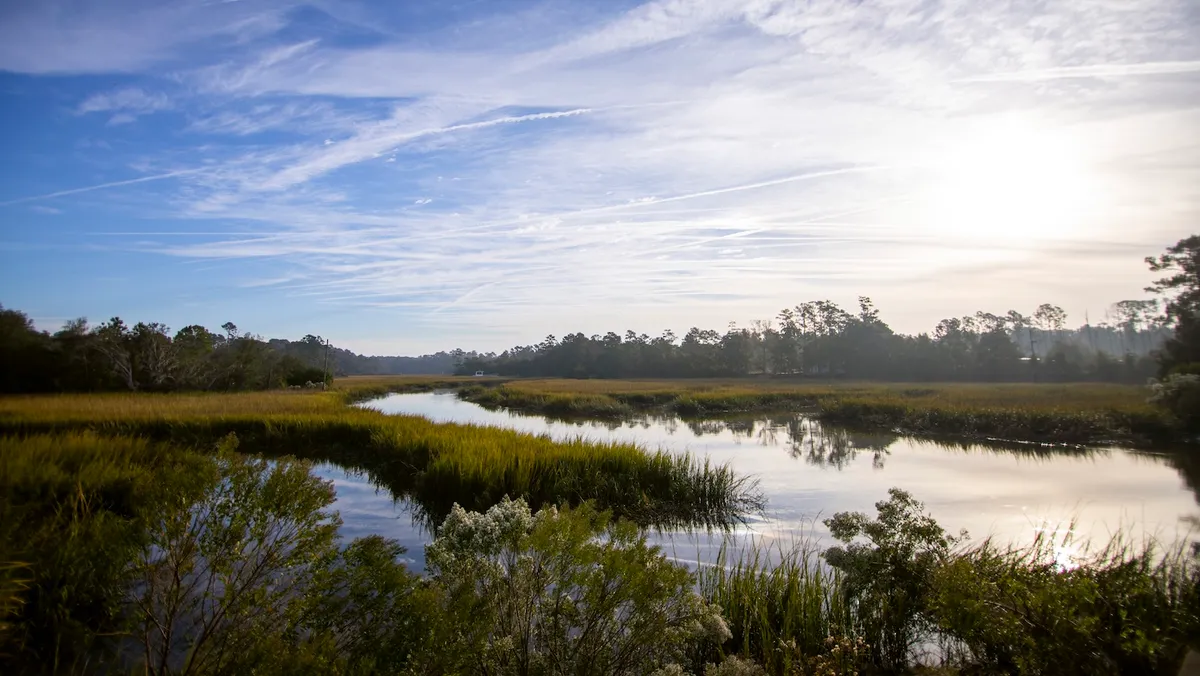
Decades ago, someone decided the best place to dig a massive hole for I-95 was right next to a tidal creek in Midway, Georgia. Today, that hole is a public park, and the creek still dutifully shows up twice a day, every day, bringing the ocean's tide with it. What's left is a textbook example of what happens when nature meets human ambition, and nature decides it's had enough.
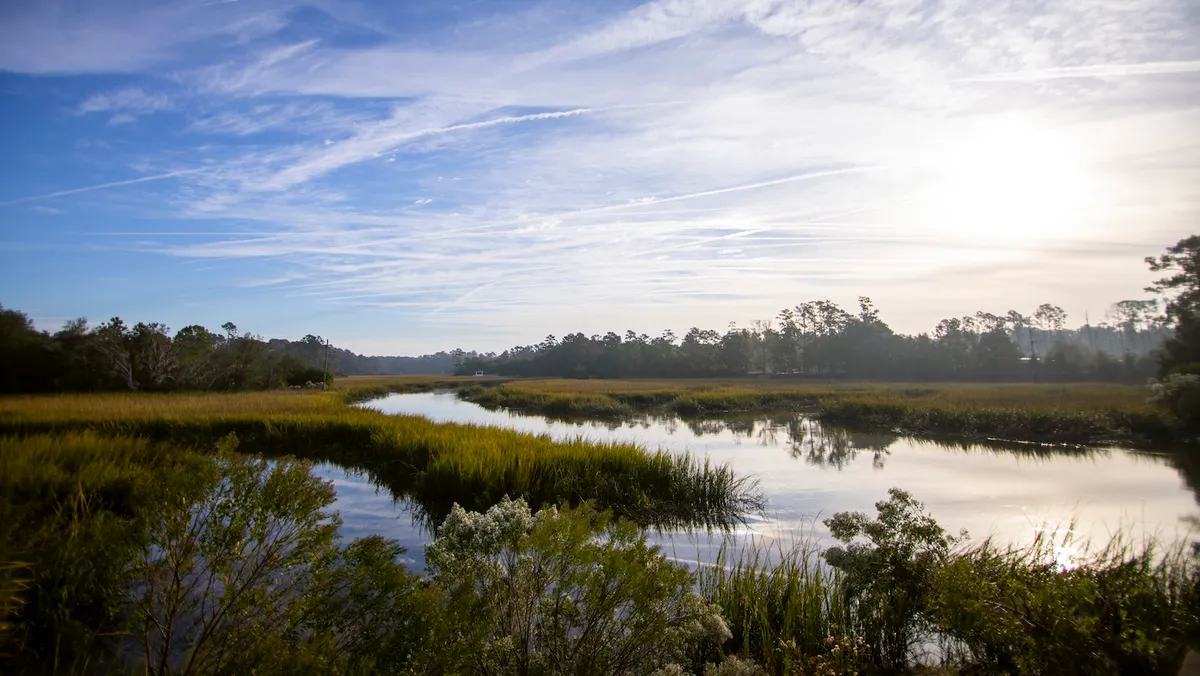
On one side of the creek, lush marsh grass hugs the solid ground. On the other? Not so much. Saltwater has been busy, eroding the banks and turning that deep pit into a shallow mud flat, dotted with new marsh islands. But these newcomers are hitting a wall — or rather, a muddy bank, where the tide just cuts them off. Phil Odom, who chairs Liberty County's planning commission, points out the obvious: "We’ve lost about six, eight feet right here."
Giving Marshes Room to Breathe
Now, local leaders are trying a different tack. Instead of fighting nature with concrete seawalls (a lesson learned, perhaps, from the I-95 project itself), they're bringing in the marsh grasses. The idea? Let their roots do the work, holding the soil in place. Shannon Marino from Zulu Marine, a company specializing in "living shorelines," sums it up: "It should just look like nature." Because apparently, that's where we are now — actively trying to make things look natural again.
We're a new kind of news feed.
Regular news is designed to drain you. We're a non-profit built to restore you. Every story we publish is scored for impact, progress, and hope.
Start Your News DetoxThis isn't just about aesthetics. Georgia boasts over a third of the connected marsh habitat in the entire Southeastern U.S. These hundreds of thousands of acres are storm shields, natural filters, and state-protected treasures. But here's the kicker: protecting what's there isn't enough when the sea itself is on the move.
The Great Marsh Migration
Scientists predict Georgia's sea level could climb by one to two meters in the next 75 years. This means the marshes need to pack their bags and head inland. Lori Sutter, a wetland scientist from the University of North Carolina, notes that marshes are surprisingly good at this. "They’re able to persist in this environment where they’re flooded twice a day, every day," she says. They just need, you know, space to do it.
That's where the new action plan comes in. A coalition of conservationists, scientists, government agencies, and coastal communities have teamed up to identify over 56,000 acres in Georgia that are prime real estate for future marsh migration. These are areas currently open for development, which, if you think about it, is both impressive and slightly terrifying.
Courtney Reich, coastal director for Georgia Conservancy, calls it a "vast area to conserve." Her group, working with folks like Phil Odom, is leading Georgia's efforts under the South Atlantic Salt Marsh Initiative, a multi-state project to protect these vital coastal ecosystems. The plan isn't a binding law, but a guide, nudging landowners and officials to consider the long game. "Do we want to build up to the edge of the water or do we want to leave room?" Reich asks. A fair question, considering the tide isn't waiting for an answer.
Phil Odom, an avid fisher, has seen the coast transform over 75 years. Saltwater creeping in, dead trees left behind, new marshes popping up where they weren't before. Climate change is just hitting the accelerator on this natural, slow-motion ballet. If Georgia's marshes can't adapt and migrate, the state's coast will be left holding the bag, and probably a lot more water.