Dallas's Katy Trail, a 3.5-mile urban greenway, will host a new public art biennial starting in Spring 2027. The KTX Biennial will feature artworks displayed for up to 18 months. This is the approved length for temporary public art in Dallas.
New York-based curator Jovanna Venegas will organize the first KTX Biennial. The Katy Trail runs through Uptown, Knox, and Highland Park neighborhoods. It is free and open to the public from 5 AM to 11 PM. The trail began in 1997, converting old rail lines into green space. It now attracts about 2 million visitors each year.
Bringing Art to the Trail
Amanda Dillard Shufeldt, art director of the Katy Trail, noted that the trail is a beloved city landmark. It made sense as a location for a public art program. The biennial builds on an existing program launched in 2021 by the Friends of the Katy Trail. This earlier program served as a pilot for the biennial.
We're a new kind of news feed.
Regular news is designed to drain you. We're a non-profit built to restore you. Every story we publish is scored for impact, progress, and hope.
Start Your News Detox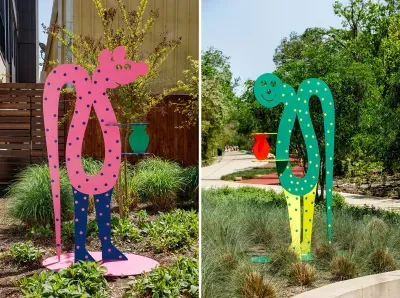
Amy Bean, executive director of Friends of the Katy Trail, explained that they needed to prove financial support and public enthusiasm for the project. People wanted the art to blend into the natural environment. Bean observed that visitors have come to enjoy the surprise of sculptures along the trail.
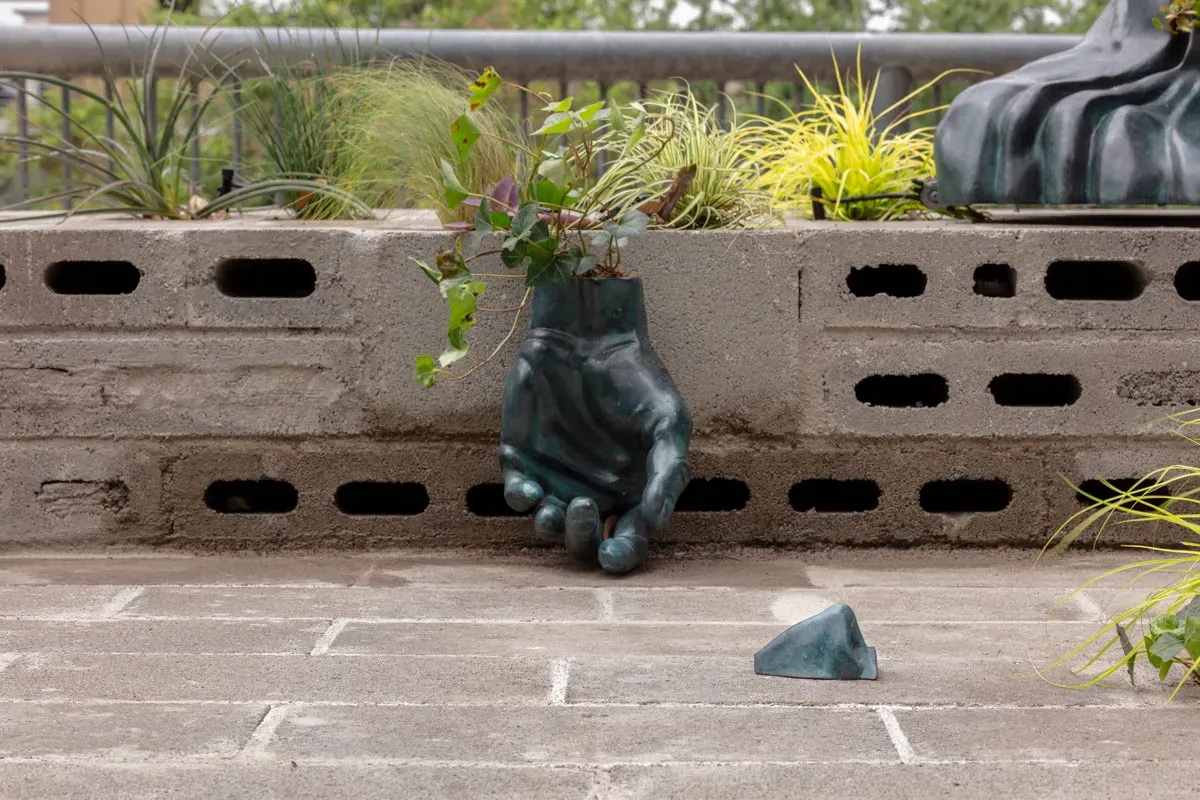
Guest 2* (left) and Guest 3, installed along the Katy Trail in Dallas. Photo Kevin Tadora*
The success of the pilot program led to plans for expansion. Dillard Shufeldt said the city's policy allowing temporary art for 18 months naturally fit a two-year cycle. This led to the decision to create a biennial. They realized they needed to formalize the program and hire an experienced curator for a more cohesive experience.
A committee nominated and selected Venegas. Dillard Shufeldt noted that Venegas showed a clear vision. Her background, network, and experience made her the right choice.
A Curator's Vision
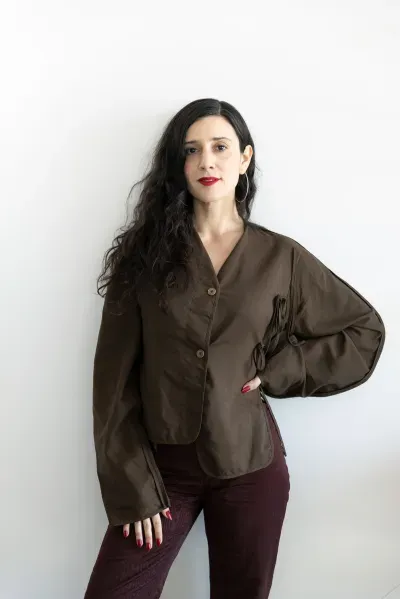
Venegas, a curator at SculptureCenter in New York, was drawn to the KTX Biennial. Her previous work at SculptureCenter and the San Francisco Museum of Modern Art focused on commissioning new art. Dillard Shufeldt added that Venegas's enthusiasm for working in a non-traditional setting was clear. She would approach the project thoughtfully and innovatively.
Venegas is currently developing the artist list and commissions for the first KTX Biennial. She plans to include sculptors and artists experienced in outdoor public art. She is also considering artists who work in painting, possibly for murals, and performance art to activate different parts of the trail.
The first edition, though untitled, will explore "the imaginative and plural ecologies framework of the forest." It will examine the visible and invisible aspects of shared space. This concept is inspired by Ursula K. Le Guin’s 1971 short story, "Vaster than Empires and More Slow." The story is about a crew observing a planet covered entirely by a forest.
Venegas looks forward to how the public will interact with the art at different times of day. She is also considering how some commissions might be especially activated between dusk and dawn. She is interested in the potential for distinct worlds to meet on the Katy Trail: the visitor's world and the worlds created by artists.