Alma Allen just landed one of the art world's biggest honors: representing the United States at the 2026 Venice Biennale. And he's doing it on his own terms.
The sculptor, who's been quietly building a practice in Tepoztlán, Mexico since 2017, just signed with Galerie Perrotin — a heavyweight gallery with eight locations spanning Paris, London, Hong Kong, New York, Seoul, Tokyo, Shanghai, and Los Angeles. It's a significant move, but it came after something messier: both of his previous galleries dropped him the moment he accepted the Biennale commission.
Allen's path to Venice is genuinely unusual. He didn't arrive there through the typical pipeline of major museum shows and prestigious commissions. His exhibition history is solid but modest — a 2023 show at the Museo Anahuacalli in Mexico City, a 2018 exhibition at the Palm Springs Art Museum. Five museums hold his work. That's it. And yet the American Arts Conservancy, a nonprofit newly tasked with overseeing the US Pavilion, chose him anyway.
We're a new kind of news feed.
Regular news is designed to drain you. We're a non-profit built to restore you. Every story we publish is scored for impact, progress, and hope.
Start Your News DetoxRowena Chiu, a director at Perrotin's London gallery, explained the appeal in a way that hints at why Allen stands out: "We see him as an artist who has had a quiet and consistent practice over many years. He comes from a family without means — he is a completely self-made person. He feels that art is something that should be able to transcend current politics."
The Difficult Context
Allen's selection happened against serious political turbulence. The Trump Administration has cut federal funding to the National Endowment for the Humanities and the National Endowment for the Arts, cancelled grants, and pressured major institutions like the Smithsonian to reshape their exhibitions and eliminate diversity initiatives.
Allen himself faced an "orchestrated campaign" — his words — from art dealers, curators, and museum directors trying to convince him to walk away from the Biennale. He named David Resnicow, a prominent communications strategist who represents many major institutions and past US Pavilions. Resnicow pushed back, saying he'd only raised concerns about whether the American Arts Conservancy could actually pull off the project.
But Allen didn't retreat. "I love the difficult context," he told the New York Times. "Honestly, it makes the work more interesting. If I could choose, I would always find a bit of a fraught situation to do work in."
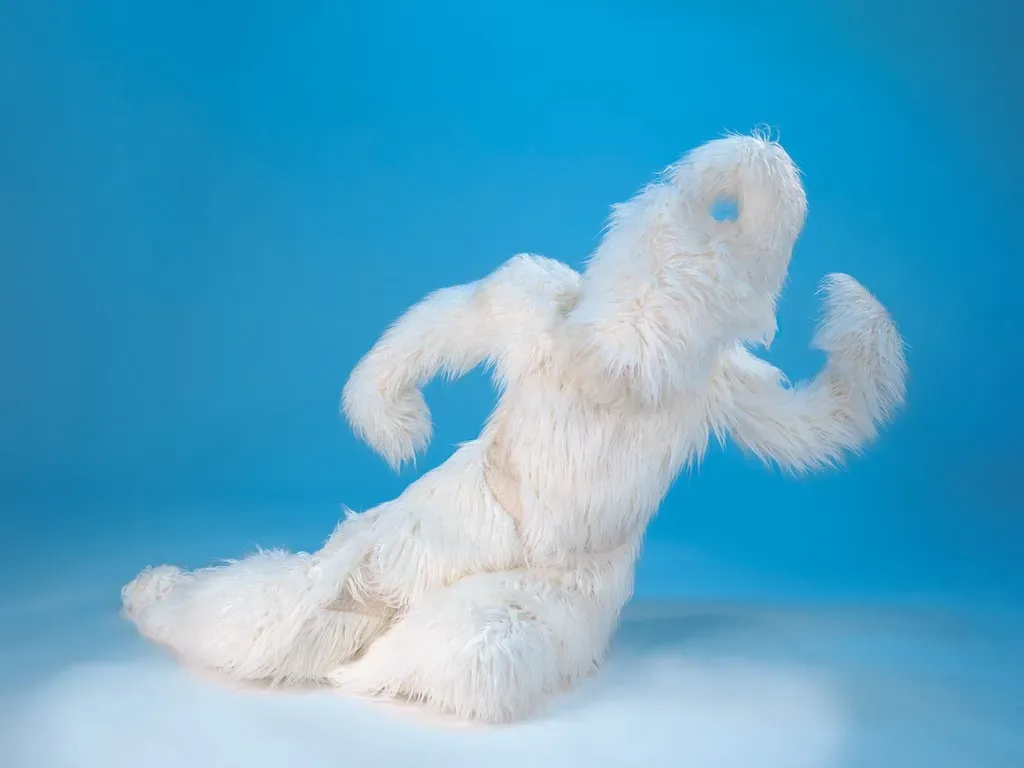
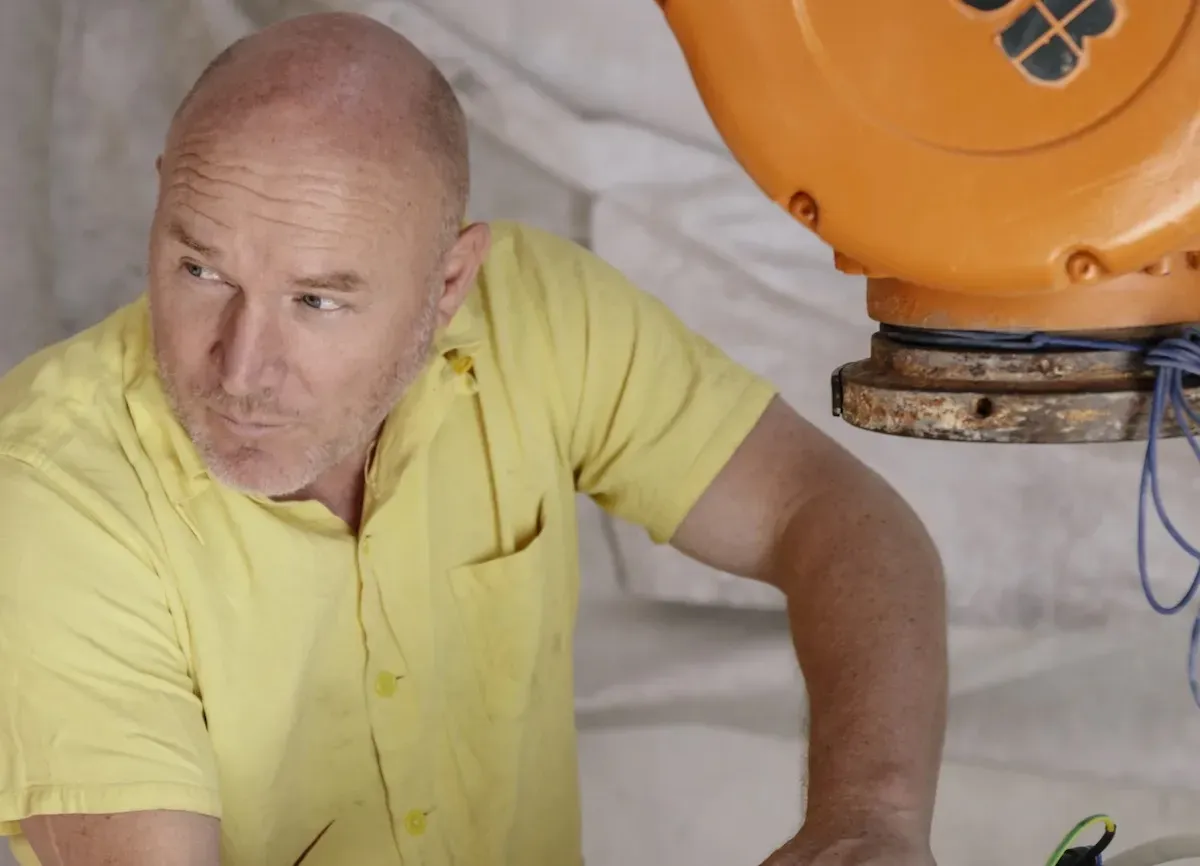
It's the kind of statement that either sounds naive or genuinely principled, depending on who's reading it. Allen's work — large-scale sculptures in stone, wood, and bronze, recently expanded to include pieces made with a self-built robotic device — suggests he means it. He's been making art his own way for decades, in Joshua Tree and then Mexico, without waiting for permission from the gallery world.
Now Perrotin will handle the logistics for the US Pavilion while Allen brings seven or eight new works to Venice alongside pieces he describes as "abstract expressions of his personal history." His first show with the gallery opens in Paris this fall.