Lilly from Connecticut did what curious kids do: she picked up the phone and dialed. Except the number she chose was 911, and when the dispatcher answered, she realized her mistake.
Instead of letting it slide, her parents saw an opportunity. They sat down with Lilly and talked about what 911 is for — emergencies, real danger, people who need help right now. Then they helped her do something harder than most adults manage: admit she was wrong.
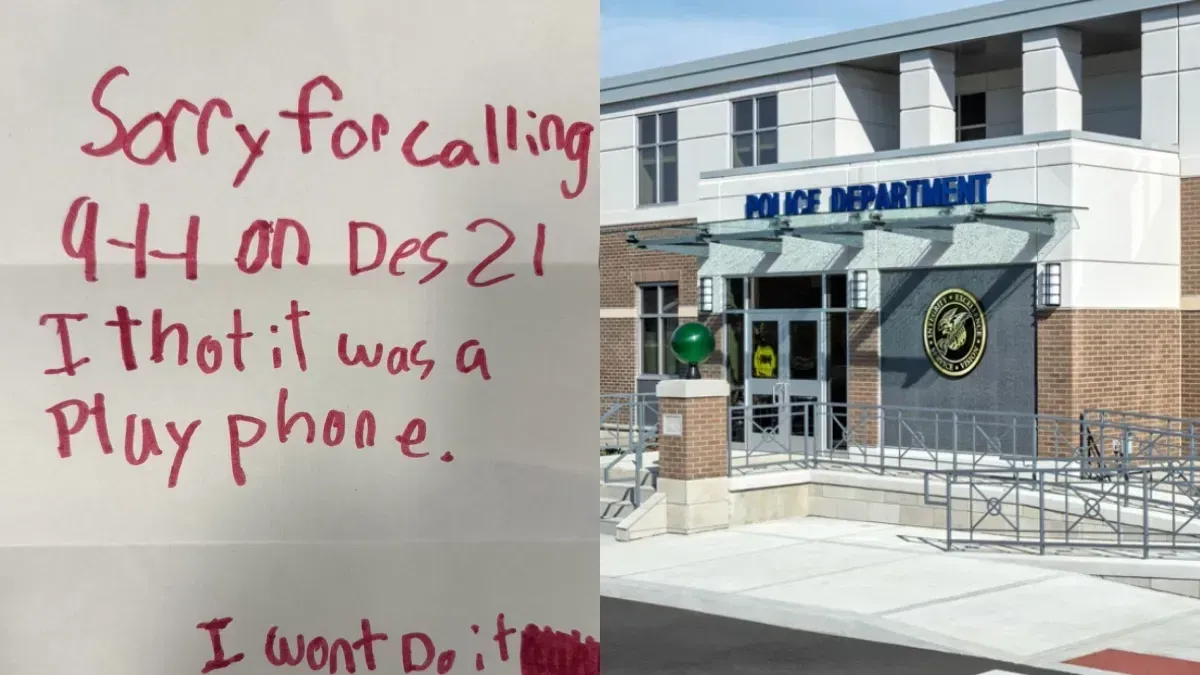
Lilly's handwritten apology arrived at the North Haven Police Department on lined paper in careful, uneven letters. "Sorry for calling 9-1-1 on Des 21 I thot it was a play phone," she wrote. "I won't do it again."
We're a new kind of news feed.
Regular news is designed to drain you. We're a non-profit built to restore you. Every story we publish is scored for impact, progress, and hope.
Start Your News DetoxIt's a small moment, but it captures something worth noticing. The police department could have treated it as a nuisance — 911 centers field thousands of accidental calls every year, many from young children. Instead, they responded to Lilly's letter with their own message: "Lilly, We got your letter. It's ok. Things happen…"
When the department shared the exchange on Facebook, something unexpected happened. The post spread widely, and the comments revealed why people were moved. Parents recognized themselves in the story — the anxiety of a child making a mistake, the relief of an institution responding with grace instead of punishment. People shared their own childhood 911 stories, the nervous laughter of looking back at something that felt catastrophic at the time.
What made this moment resonate wasn't the mistake itself. It was the response. Lilly's parents modeled accountability without shame. The police department modeled forgiveness without dismissiveness. And Lilly learned that when you mess up, you can own it — and people will still believe in you.
That's the kind of lesson that sticks.