A Boy's Secret and a Kneecap's Journey
In 1956, 11-year-old George Box visited Glastonbury Abbey in Somerset, England. The abbey was undergoing an archaeological dig, unearthing the remains of 13th-century abbots. Young George, perhaps feeling a bit mischievous, took a kneecap and a piece of medieval tile from the site.
Lucy Newman, collections manager for Glastonbury Abbey, noted that both items were "very easy to pick up and put in a pair of schoolboy shorts." George kept his secret for decades.
The Return of a Relic
George confessed his youthful prank to his wife later in life. They agreed the kneecap should eventually return to the Abbey. After George's death, his widow contacted the Abbey last year. This summer, she brought the kneecap back during a trip to scatter his ashes.
We're a new kind of news feed.
Regular news is designed to drain you. We're a non-profit built to restore you. Every story we publish is scored for impact, progress, and hope.
Start Your News DetoxNewman believes George waited until after his death due to embarrassment. His widow described him as a "scallywag." He kept the bone and tile throughout his life, even taking them to Australia when he moved there in 1970. He displayed them in a glass cabinet with other archaeological finds.

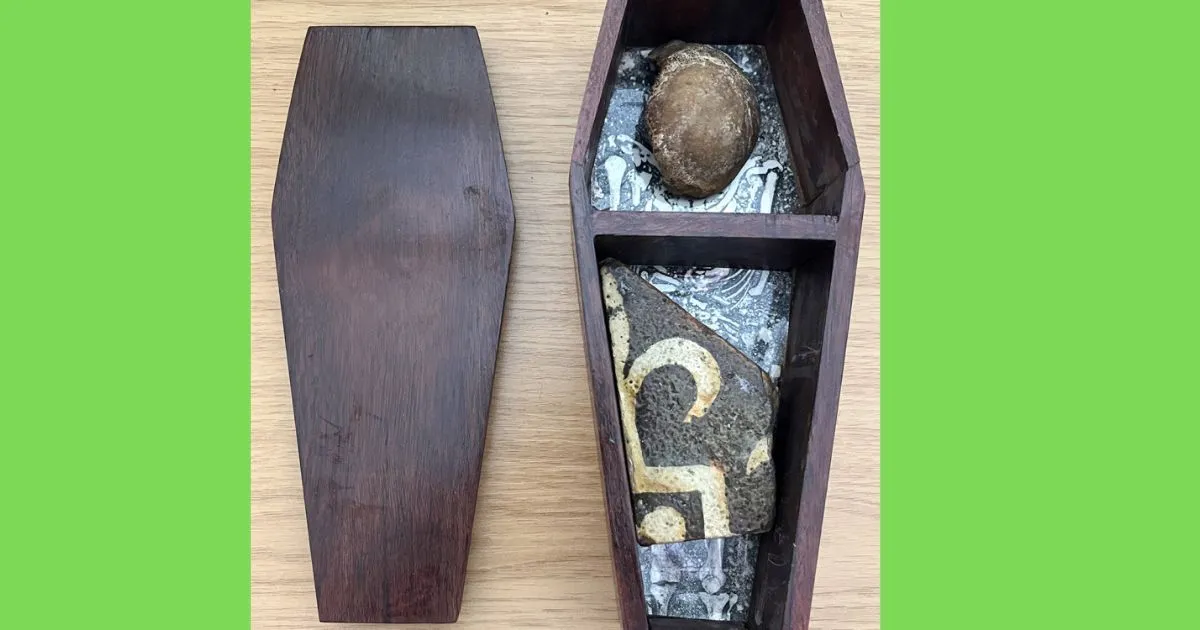
Before its return, George even made a special box for the artifacts. This box was similar to medieval reliquaries, which held saints' bones.
Abbey staff tried to identify the kneecap's owner. Based on the 1956 excavations, it could belong to Abbot Amesbury, Abbot Petherton, or Abbot John of Taunton. These abbots died between 1250 and 1290. All three have since been reburied. Staff decided not to re-excavate, as it could damage the remains. The bone's exact owner remains a mystery.
The kneecap's journey has become part of the Abbey's history. Glastonbury Abbey was built in the seventh century C.E. and became England's wealthiest monastery. It is famous for the supposed discovery of King Arthur and Queen Guinevere's remains in 1191. Historians now suggest this discovery was fabricated to attract pilgrims after a fire in 1184.
The Abbey noted how surprised medieval monks would be to know one of their kneecaps traveled to Australia and back. The kneecap and tile are now on display in the Glastonbury Abbey museum.