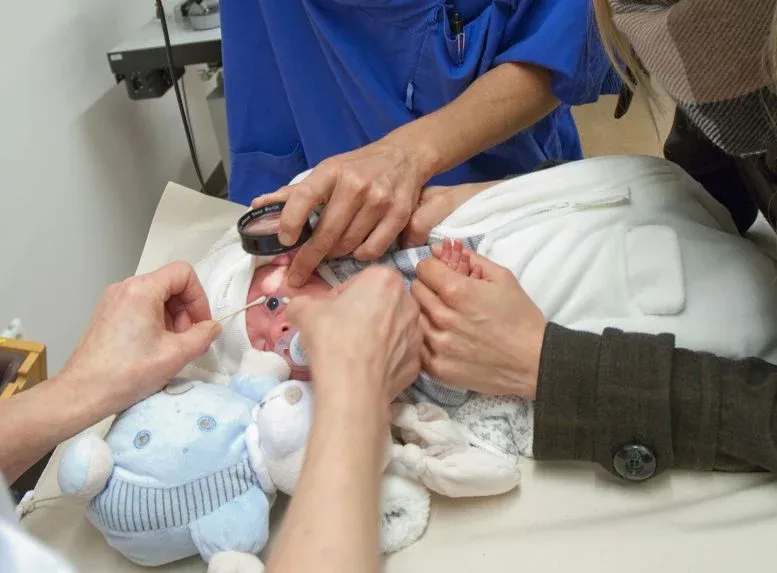
For babies born very early, a condition called retinopathy of prematurity (ROP) can cause abnormal blood vessel growth in their eyes. This can lead to blindness. Now, a new study suggests that simple eye drops might help prevent severe ROP.
Researchers in Sweden conducted the first trial of its kind. They tested whether cortisone eye drops could slow ROP and reduce the need for more invasive treatments.
A New Hope for Premature Babies
ROP causes blindness in about 35,000 children worldwide each year. Current treatments involve laser therapy or injections directly into the eye. These methods are invasive and can be damaging. Babies who need them are at high risk for lasting vision problems.
We're a new kind of news feed.
Regular news is designed to drain you. We're a non-profit built to restore you. Every story we publish is scored for impact, progress, and hope.
Start Your News DetoxThe new study, led by the University of Gothenburg and Sahlgrenska University Hospital, focused on dexamethasone eye drops. The results suggest these drops could lower the chance that ROP gets bad enough to need aggressive treatment.
The DROPROP study included 100 infants born before 30 weeks of pregnancy. All had a serious form of ROP that hadn't yet reached the stage requiring treatment. The babies were randomly given either dexamethasone eye drops or a placebo.
In the group that received dexamethasone, 20% needed ROP treatment. In the placebo group, 38% needed treatment. This means the eye drops reduced the relative risk by 47%.
Ann Hellström, a professor at the University of Gothenburg, called the results "very promising." She noted that the treatment is simple, cheap, and non-invasive. It significantly reduced the need for lasers and eye injections in fragile premature babies.

The researchers also watched for side effects. They found no major differences between the two groups and no clear signs of serious hormonal or metabolic issues.
This trial, funded by the Swedish Research Council, is the first double-blind study to test dexamethasone eye drops for ROP. It took place at 14 hospitals across Sweden.
Looking Ahead
The team plans to follow up with the children long-term. They want to see how their vision develops and if any delayed effects from the treatment appear.
Hellström emphasized the global need for simpler ROP treatments, especially where specialized care is hard to find. She believes that if eye drops can prevent severe ROP, it could save the sight of many children worldwide.
Deep Dive & References