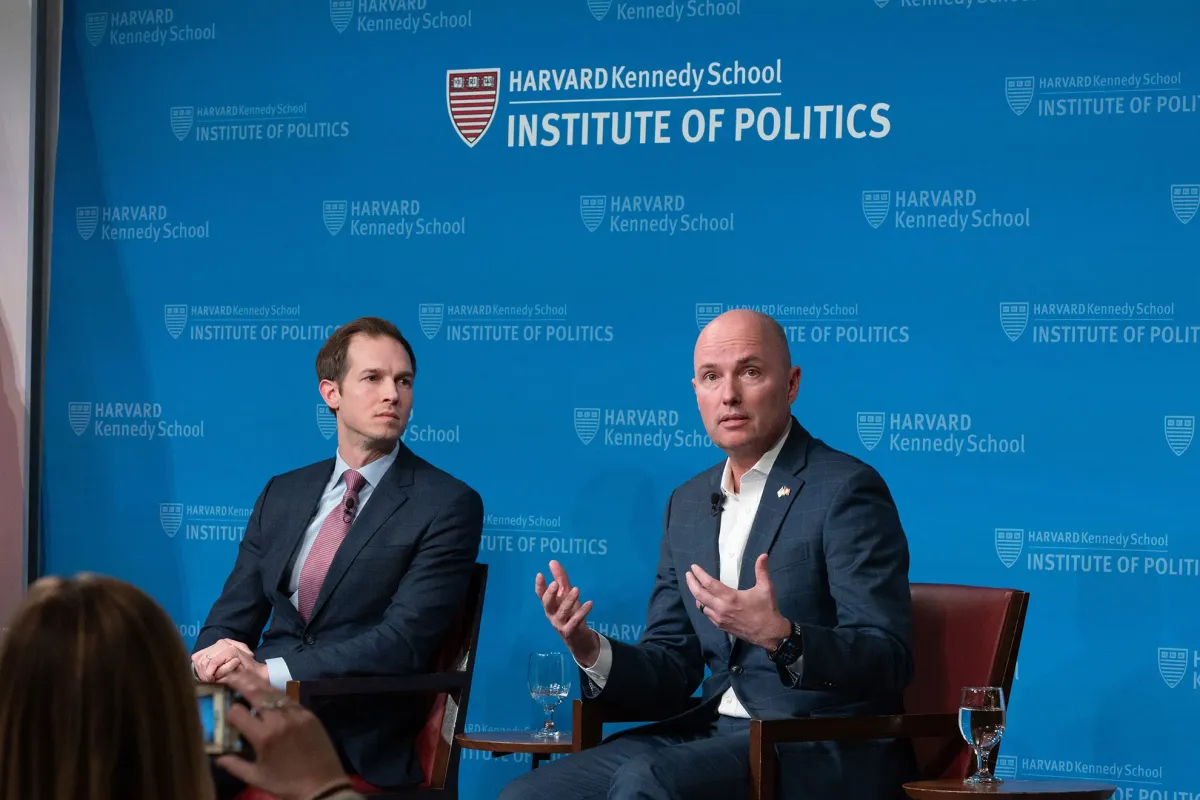
A Republican governor and a Democratic congressman walked into Harvard Kennedy School and found common ground. Not on tax policy or healthcare. On social media.
Spencer Cox of Utah and Jake Auchincloss of Massachusetts don't agree on much. But both have watched the same thing happen in their states: algorithms designed to keep people angry are fragmenting the country into tribes of outrage.
"We don't have any real friends, but we can hate the same people together on social media and so that becomes our tribe," Cox said during their discussion. It's a small observation with a sharp edge. Auchincloss pushed the thought further: without a shared sense of reality, there's no shared sense of the future, no common humanity to appeal to.
We're a new kind of news feed.
Regular news is designed to drain you. We're a non-profit built to restore you. Every story we publish is scored for impact, progress, and hope.
Start Your News DetoxWhat makes this moment worth noting isn't that two politicians agree—it's what they're agreeing on. Neither is staking out a fringe position. Both are responding to a problem their constituents actually feel. The developmental harms social media poses to young people are no longer speculative. The way algorithmic feeds reward divisiveness over nuance is documented. The connection between information ecosystems and political violence is increasingly hard to deny.
Utah has moved fastest. In 2024, the state passed laws requiring age verification or parental consent for minors on social platforms, and banning AI-generated deepfakes. It's a model that takes regulation seriously without trying to control speech itself—focusing instead on how platforms operate and who they can access.
Auchincloss has proposed something he calls "social media temperance"—treating platform access like alcohol restrictions, with age limits and liability rules that hold companies accountable for the spread of misinformation. It's not about shutting down speech. It's about changing the incentive structure so platforms don't profit from rage.
But the most revealing moment came when both leaders identified the real lever for change: voters. "We've got to find ways to reward the 'boring stuff' where we actually accomplish things instead of just the people who are really good at making you mad," Cox said. That's the actual insight. Algorithms didn't invent political division—they just monetized it. The fix isn't technical alone. It's behavioral. When voters start rewarding politicians for collaboration over performance outrage, the incentive to feed the algorithm collapses.
Neither Cox nor Auchincloss is claiming this solves polarization. But they're naming something specific: the infrastructure that turns disagreement into tribalism, and proposing concrete responses. That's how change usually starts—not with sweeping consensus, but with two people from opposite sides of the aisle agreeing that the current system is broken enough to fix.