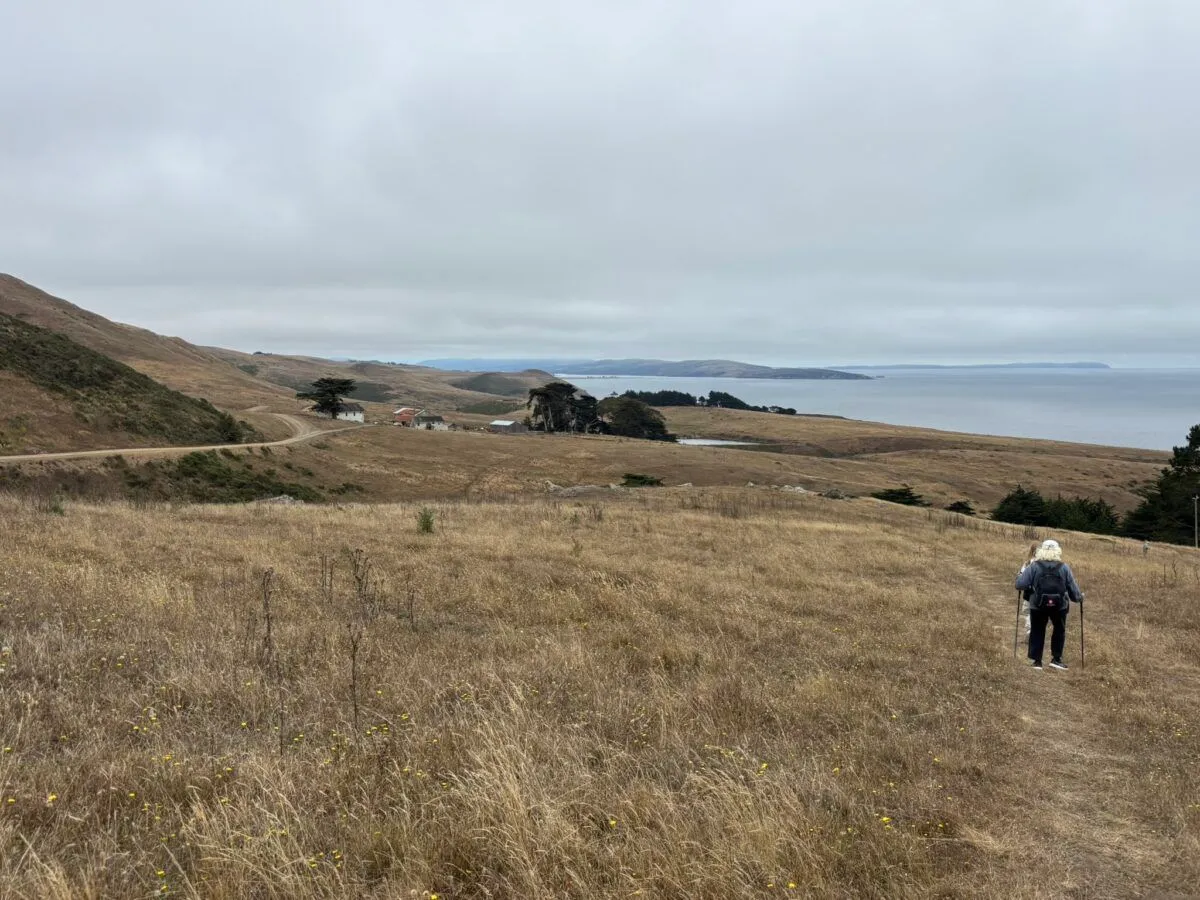
For the first time since the early 1900s, you can walk across 547 acres of windswept bluffs and beach on California's Sonoma Coast. The Estero Americano Coast Preserve — a stretch of nearly untouched landscape that's been privately held for generations — officially opened to the public in November 2025.
The story of how this happened is quietly instructive. In 2015, the Wildlands Conservancy purchased the property for $3.8 million. What followed was ten years of unglamorous work: building trails, securing permits, restoring habitats, managing erosion. No ribbon-cutting ceremony. Just the slow, necessary labor of preparing a wild place to welcome people without damaging it.
What you'll find there
The preserve now offers roughly five miles of hiking trails. If you want something mellow, the 1.6-mile walk down to the beach takes you below dramatic bluffs to a stretch of sand most people have never seen. The 1.9-mile route to the highest point gives you expansive views across the Pacific and the surrounding coastal prairie.
We're a new kind of news feed.
Regular news is designed to drain you. We're a non-profit built to restore you. Every story we publish is scored for impact, progress, and hope.
Start Your News DetoxSpring is when this place really reveals itself. Wildflowers — colorful irises, poppies, native grasses — blanket the hillsides. Misti Arias, general manager of the Sonoma County Ag + Open Space district, has been doing this work for 30 years. "I've never seen anything like it," she said. That's not hyperbole. That's someone with three decades of experience genuinely moved by what they're looking at.
You can hike, picnic, walk a leashed dog, birdwatch, or — during the right season — watch gray whales migrate offshore. Cycling, horseback riding, and camping aren't permitted, a deliberate choice to keep the preserve accessible without overwhelming it.
The Wildlands Conservancy is already thinking ahead. They're working toward an official kayak pullout so people can explore the Estero Americano Estuary from the water. It's the kind of incremental expansion that suggests they're taking the long view: how do you open a place to people while keeping it whole.
This matters because public access to wild coastline is increasingly rare in California. Every acre that stays in private hands is an acre fewer people can touch, breathe in, or remember. A century of private ownership meant a century of absence. Now that's changed.