A 2022 Instagram video showed something that shouldn't exist in one of Earth's most protected marine reserves: a massive black floating device tangled around a decomposing whale. The object, called a "plantado" locally, is a fish aggregating device (FAD) — a tool industrial tuna fleets use to concentrate fish for easier harvesting. Walter Borbor, a Galápagos fisher and social media documenter, posted the image to draw attention to a growing problem.
These devices have become central to global tuna fishing. Since the 1980s, drifting FADs have transformed the industry by making catches more efficient. Over the past 25 years, they've become the primary method for catching tuna worldwide. At the same time, Ecuador's tuna fleet alone has grown by roughly 50 percent. The result: more and more abandoned FADs are drifting into the Galápagos Marine Reserve from international fleets operating outside its boundaries.
The cost of efficiency
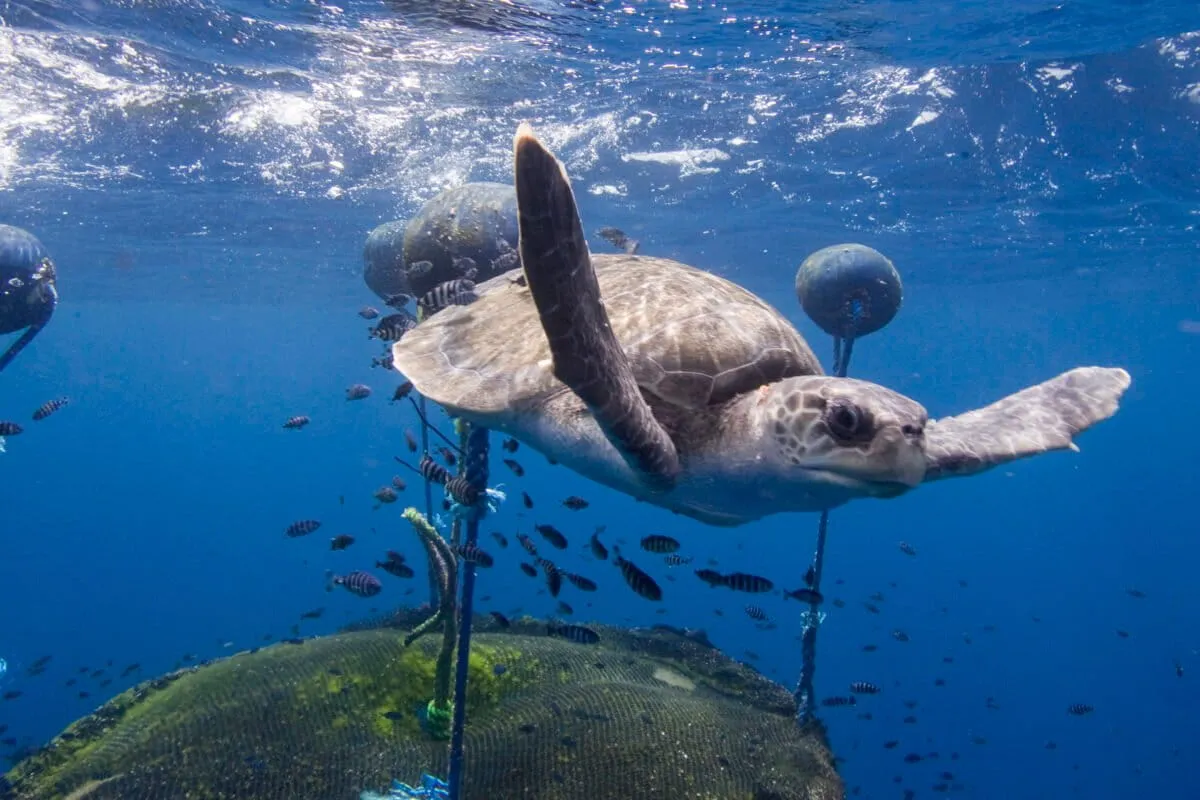
An abandoned FAD isn't just a piece of lost equipment. As it breaks down, it sheds plastic into the water. It damages coral reefs that took decades to establish. It collides with small artisanal fishing boats. Inti Keith, a researcher with the Charles Darwin Foundation—a science organization based in the Galápagos—regularly documents the wildlife toll: sharks, turtles, sea lions, and seabirds entangled in the netting, or found dead inside.
We're a new kind of news feed.
Regular news is designed to drain you. We're a non-profit built to restore you. Every story we publish is scored for impact, progress, and hope.
Start Your News DetoxThe problem is visible enough that it's sparked action. Galápagos agencies and conservation organizations are now working together to better track these devices and remove them from the water. The tracking systems are improving, and collection operations are becoming more coordinated. But there's a catch: the real solution requires controlling where FADs are deployed in the first place — outside the marine reserve, in international waters where enforcement is far more complicated.
For now, the Galápagos is learning to respond to a problem created elsewhere, one abandoned device at a time.