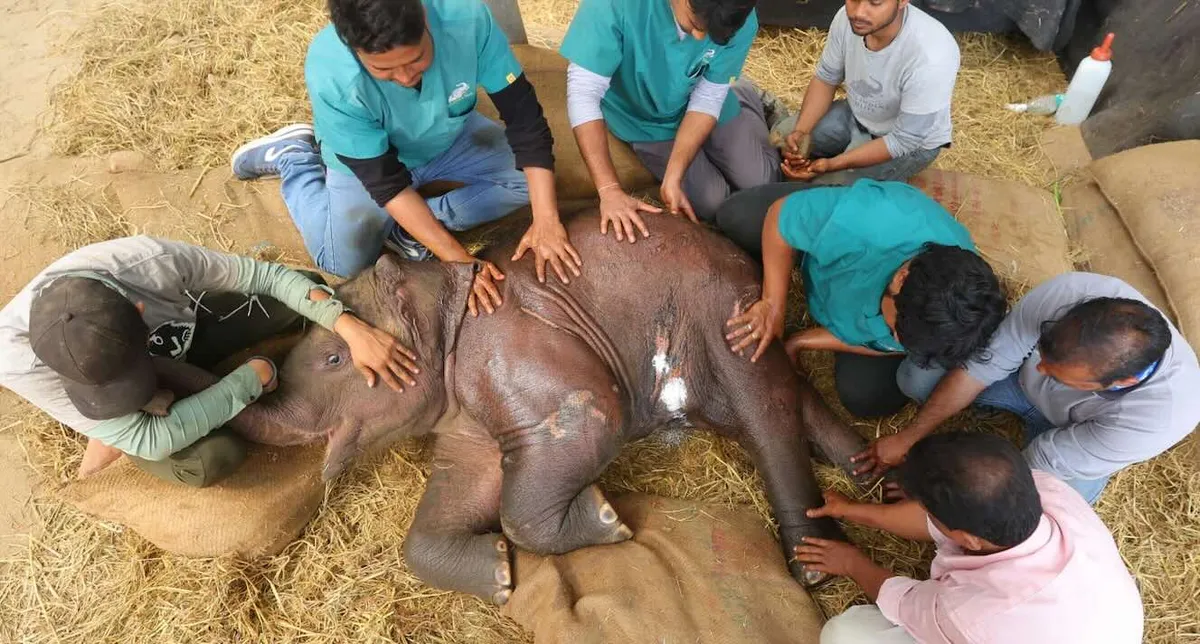
Wildlife SOS, India's largest wildlife rescue organization, discovered something unexpected while searching for ways to help Bani, a paralyzed elephant calf: acupuncture works.
Bani had been left unable to walk after a tragic accident. Conventional treatments weren't cutting it. So the veterinary team at Wildlife SOS's Elephant Conservation and Care Centre in Mathura began experimenting with alternatives—ayurvedic oil massages, hydrotherapy, and eventually acupuncture needles.
They connected with Dr. Porrakote Rungsri, a veterinary acupuncture specialist at Chiang Mai University, and Dr. Huisheng Xie, founder of the Chi University of Traditional Chinese Medicine in the USA. Under their guidance, Bani's caregivers learned to adapt acupuncture techniques for elephants. It worked. Bani regained mobility.
We're a new kind of news feed.
Regular news is designed to drain you. We're a non-profit built to restore you. Every story we publish is scored for impact, progress, and hope.
Start Your News DetoxFrom One Calf to Twelve Centers
That single success has rippled across Wildlife SOS's 12 rescue and rehabilitation centers in India. The organization now uses acupuncture as a standard part of treatment for elephants recovering from years of captivity or labor.
Many of these animals arrive with overstimulated pain pathways—their bodies conditioned by abuse, malnutrition, and untreated injuries to exist in chronic discomfort. Conventional medicine alone couldn't always reach that. Acupuncture has proven effective at something modern veterinary medicine sometimes struggles with: calming a nervous system that's learned to hurt.
For elephants like Holly and Zara, who suffer from severe joint and foot disorders like osteoarthritis, veterinarians use techniques like electro-acupuncture and dry needling to improve blood flow and reduce inflammation. For Raju and Taj, rescued from captivity and struggling with long-term digestive problems, fine needles inserted into acupuncture points related to digestion, combined with moxibustion (burning mugwort to stimulate circulation), have restored bowel health.
What's striking isn't that acupuncture works—it's that Wildlife SOS didn't stop after helping one elephant. A year ago, they held a workshop at their Mathura Care Centre to train others in the technique. The goal is simple: more people learning to integrate this approach means more rescued elephants getting relief.
The organization describes it plainly: acupuncture has become "a valuable therapy that works well alongside modern veterinary medicine in ways previously thought impossible." It's not a replacement for conventional care. It's a complement—filling gaps that needles and scalpels alone can't reach.