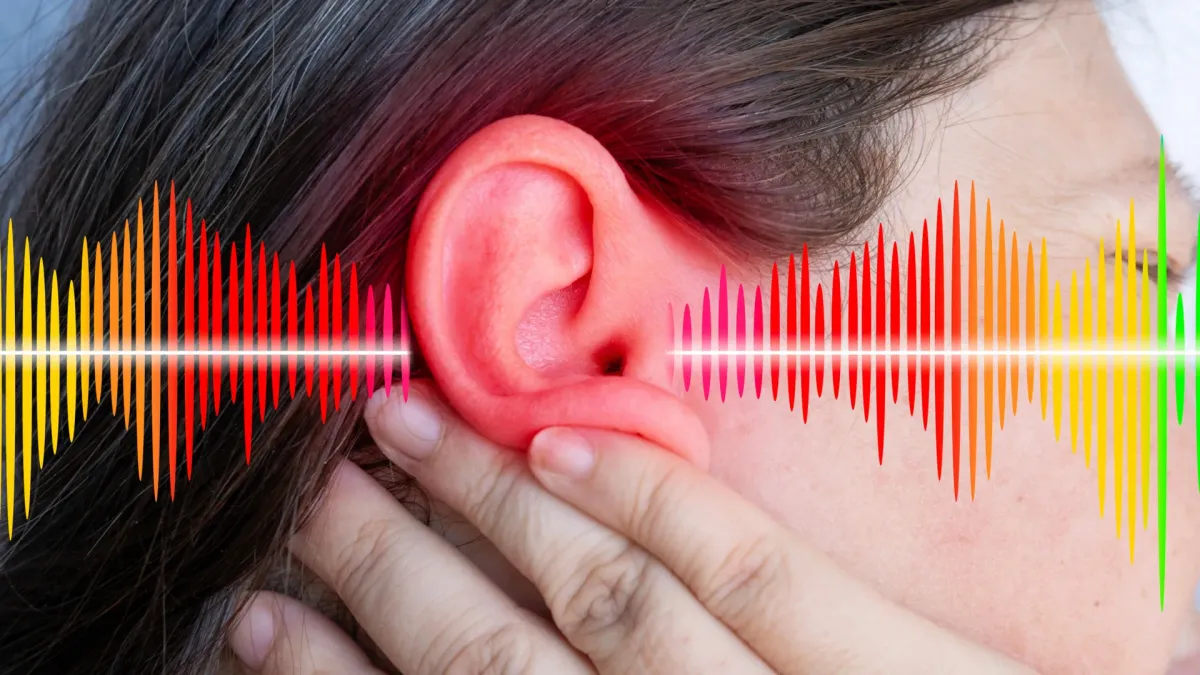
Imagine a world where your phone doesn't just listen to your endless monologues about what to eat for dinner, but also subtly screens for cancer. It sounds like something out of a sci-fi flick, but new research suggests that AI could soon pick up on tiny vocal changes that signal early-stage disease, making diagnosis a whole lot less invasive.
Turns out, your voice box, or larynx, is a pretty chatty organ when it comes to your health. Laryngeal cancer is no joke, affecting over a million people globally in 2021. And like most cancers, catching it early is the golden ticket to better outcomes. Currently, that usually means a lovely little scope down your throat and a biopsy – not exactly a walk in the park.
But a study in Frontiers in Digital Health is changing the tune. Scientists found that even minuscule shifts in your voice can point to vocal fold lesions. These can be harmless, like a perpetually annoyed nodule, or they can be the quiet whispers of cancer starting to form. And that, dear reader, is where AI steps in.
We're a new kind of news feed.
Regular news is designed to drain you. We're a non-profit built to restore you. Every story we publish is scored for impact, progress, and hope.
Start Your News DetoxThe AI Ear to the Ground
Dr. Phillip Jenkins, a postdoctoral fellow at Oregon Health & Science University and a lead author, is part of the 'Bridge2AI-Voice' project, an initiative by the US National Institute of Health to throw AI at some of medicine's trickiest problems. His team poured over 12,523 voice recordings from 306 people, dissecting everything from pitch and tone to volume and clarity.
They weren't just listening for a good singing voice. They were hunting for specific metrics: jitter (those tiny pitch variations), shimmer (amplitude changes), and the harmonic-to-noise ratio. Think of the latter as the ratio of structured sound to all the background noise your voice makes. Like trying to hear a clear note over a static-filled radio.
What they found was fascinating: clear differences in the harmonic-to-noise ratio and pitch among men with no voice issues, men with benign lesions, and men with laryngeal cancer. While the same distinct patterns weren't as clear in women in this particular study, the researchers are optimistic that a larger dataset will reveal them.
Basically, your voice's harmonic-to-noise ratio could become a crucial early warning system, especially for men. Jenkins believes that with more ethically sourced, massive datasets, voice could soon be a legitimate biomarker for cancer risk in your doctor's toolkit.
So, while your phone might still struggle to understand your mumbled commands in the morning, give it a few years. It just might be listening for something far more important.