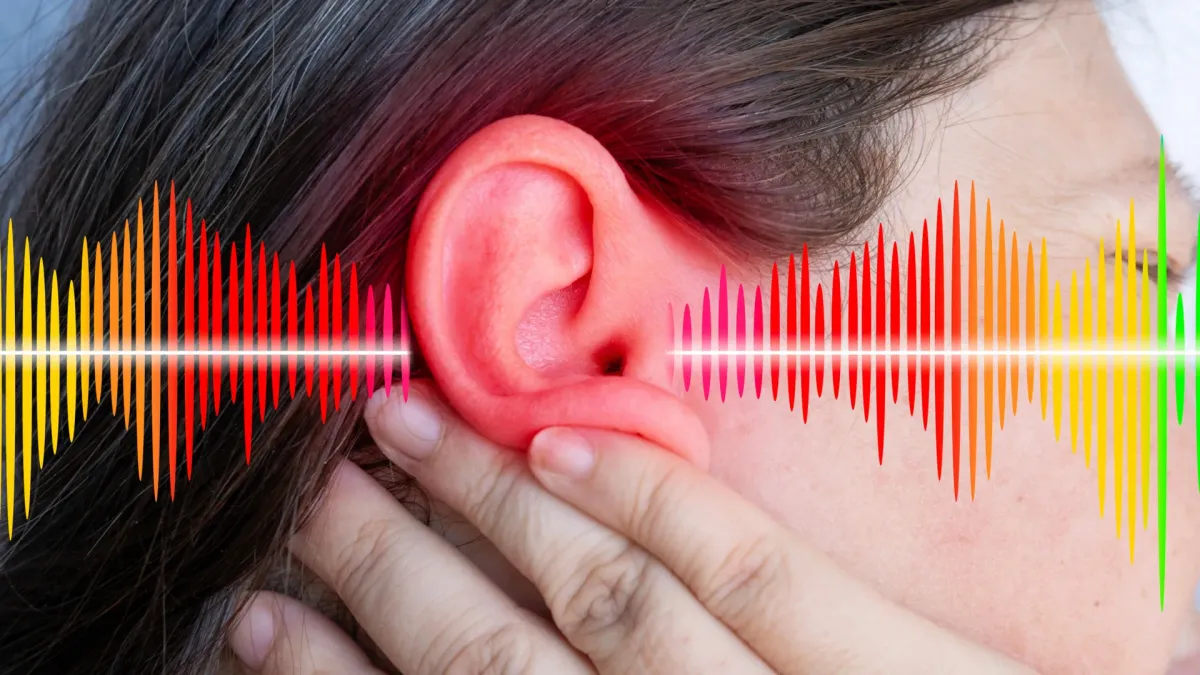
Imagine being born into silence, and then, weeks after a single injection, the world starts making noise. That's the reality for a group of patients in a new, groundbreaking study where gene therapy is giving people born deaf the chance to hear.
Researchers basically slipped a working copy of a crucial hearing gene directly into the inner ear. Ten patients, from toddlers to young adults, all saw their hearing improve. Some started making rapid gains in just one month. Let that satisfying number sink in: all ten.
The OTOF Fix
This trial, a collaboration between Karolinska Institutet and several Chinese hospitals and universities, targeted a specific genetic glitch. All ten patients had a form of deafness tied to mutations in the OTOF gene. Normally, OTOF is responsible for producing a protein called otoferlin, which is essential for sending sound signals from your ear to your brain. Without it? Silence.
We're a new kind of news feed.
Regular news is designed to drain you. We're a non-profit built to restore you. Every story we publish is scored for impact, progress, and hope.
Start Your News DetoxThe fix involved a synthetic adeno-associated virus (AAV) — basically a harmless delivery truck. This AAV carried a functional version of the OTOF gene straight into the inner ear via a single injection through a tiny membrane at the base of the cochlea. Which, if you think about it, is both impressive and slightly terrifying. But mostly impressive.
Rapid Results, Strongest in Kids
The effects were quick. Most patients started picking up sounds within a month. Six months in, everyone showed clear improvement. On average, the quietest sound they could detect went from a thunderous 106 decibels (think jackhammer) to a conversational 52 decibels. That’s a significant difference.
Unsurprisingly, the kids saw the most dramatic changes. One seven-year-old girl regained almost full hearing, chatting with her mom just four months post-treatment. Even adults, for whom the world of sound might have been a distant memory, saw meaningful improvements.
“This is a huge step forward in the genetic treatment of deafness,” said Maoli Duan, a consultant at Karolinska Institutet. “It can be life-changing for children and adults.” It also appears to be safe; the most common side effect was a minor dip in a type of white blood cell, with no serious issues reported.
And OTOF is just the beginning. Researchers are already looking at tackling other, more common genes that cause deafness. Because apparently, giving people the gift of hearing is just the warm-up act.