For over a million years, humans have been playing with fire. Turns out, fire has been playing with us too — and not in a fun, campfire-song kind of way.
New research suggests that our constant, clumsy dance with flames has quietly reshaped human biology, influencing everything from how we heal a scraped knee to how our bodies fight off infection. Essentially, all those minor burns you've accumulated over a lifetime? They might have left an imprint on your DNA.
The Fiery Hand of Evolution
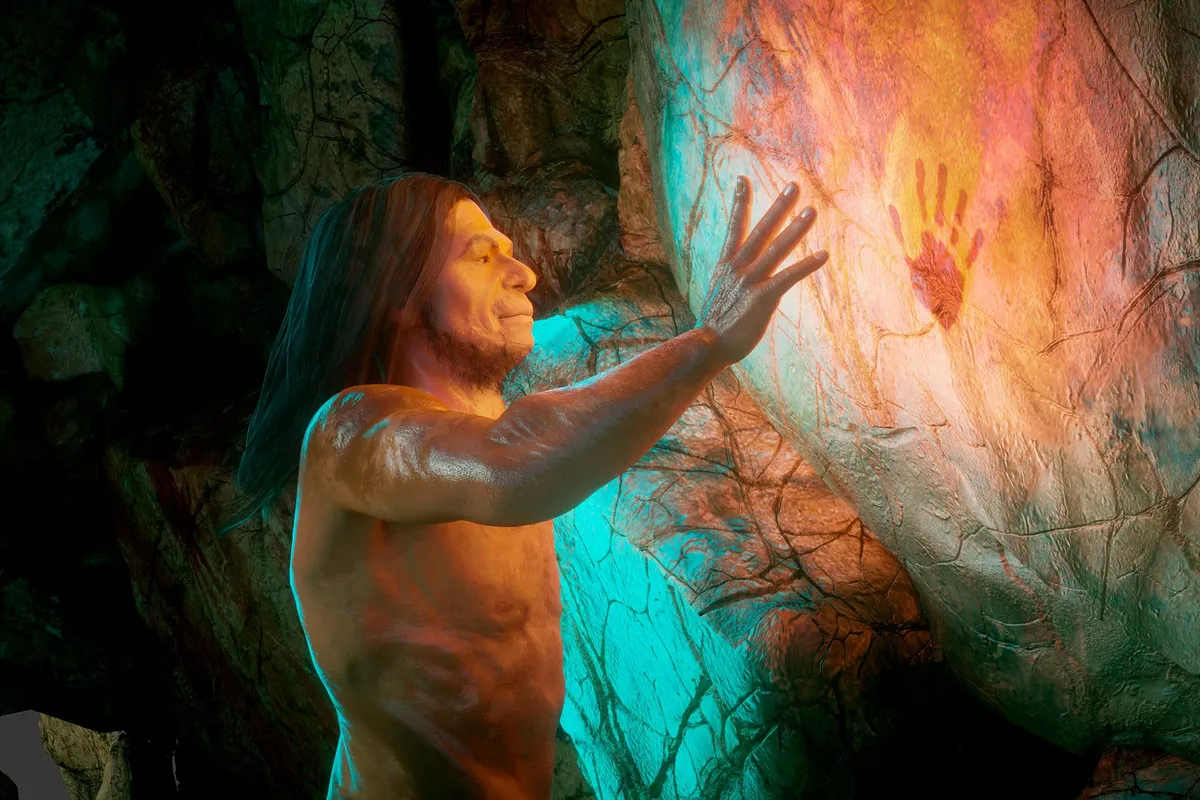
Controlling fire was a game-changer for humanity. It meant cooked meals, cozy warmth, and eventually, the ability to forge tools and binge-watch Netflix. But this cozy relationship came with a catch: a constant, low-grade risk of getting burned. Unlike most animals, who wisely steer clear of anything hot enough to singe their fur, humans made fire a daily essential.
We're a new kind of news feed.
Regular news is designed to drain you. We're a non-profit built to restore you. Every story we publish is scored for impact, progress, and hope.
Start Your News DetoxThis led to a rather unique evolutionary pressure. While a severe burn is still devastating, minor burns became a regular occurrence. And according to a study in BioEssays, led by researchers at Imperial College London, our genes adapted to this fiery reality. We developed traits that are subtly different from our primate cousins, traits that help us manage—and sometimes mishandle—burn injuries.
The Double-Edged Sword of Healing
The theory goes like this: natural selection favored traits that helped our ancestors survive frequent, smaller burns. Think faster inflammation to wall off damage, quicker wound closure to keep out nasty bacteria (especially before antibiotics were a thing), and heightened pain sensitivity to make us, you know, stop touching the hot stuff. All great for a minor mishap.
However, these very same mechanisms might be a significant part of why severe burns are so incredibly dangerous for humans. That super-charged inflammatory response that's good for a small singe? In a major burn, it can go into overdrive, leading to excessive scarring, organ failure, and a whole host of complications. It's like our bodies are optimized for a thousand papercuts, but not for falling into a bonfire.
Dr. Joshua Cuddihy, the study's lead author, points out that burns are a uniquely human injury. No other species cuddles up to high temperatures and risks getting toasted quite like we do. From our preference for hot dinners to the glowing screens in our pockets, fire (and its descendants) is woven into the fabric of human existence. This pattern, he says, likely stretches back over a million years.
By comparing human genetic data with that of other primates, the researchers found several genes linked to burn responses that show accelerated evolution in humans. These genes are crucial for wound repair, inflammation, and immune defense – all vital for bouncing back from skin damage. It's compelling evidence that burn exposure wasn't just a hazard; it was a major evolutionary force.
Reshaping How We See Scars
This isn't just an interesting historical footnote. This new perspective, a collaboration between burn specialists, evolutionary biologists, and geneticists, could fundamentally change how we approach burn injuries and treatments today. It might even explain why animal models often fall short when trying to understand human burn responses. After all, a mouse hasn't spent a million years accidentally scorching its paws on a cooking fire.
Professor Armand Leroi from Imperial College London calls this "a new form of natural selection that depends on culture," a previously unknown piece of what makes us human. It suggests that our cultural innovations (like, you know, fire) didn't just change our behavior; they changed our very biology. Which, if you think about it, is both impressive and slightly terrifying. Pass the aloe.