A new look at a 500-million-year-old fossil has revealed the earliest known chelicerate. This group of arthropods includes modern-day spiders, scorpions, ticks, and horseshoe crabs.
Chelicerates are known for their pincer-like appendages, called chelicerae. These have evolved into various tools, like spider fangs or scorpion mouthparts. The newly studied fossil shows clear claws, pushing back the evolutionary timeline for these creatures by millions of years.
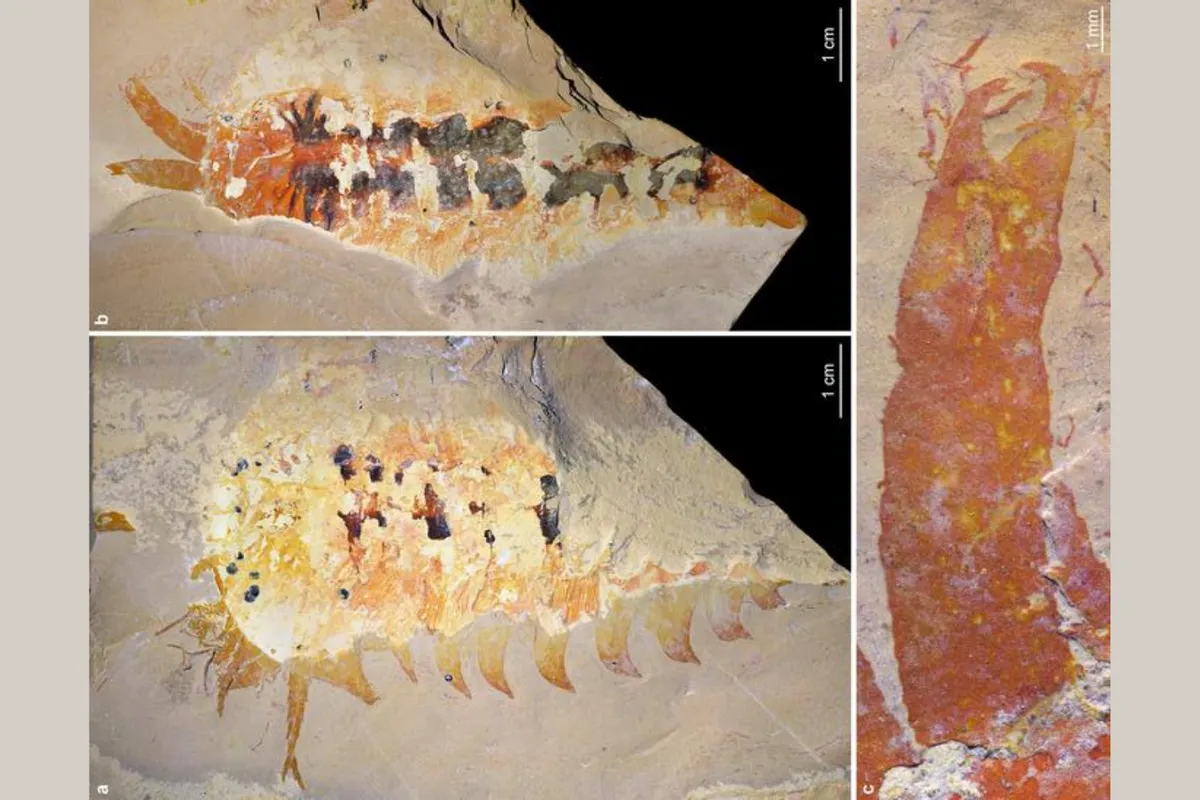
Megachelicerax cousteaui and a close-up of one of its pincers, or chelicerae Rudy Lerosey-Aubril
We're a new kind of news feed.
Regular news is designed to drain you. We're a non-profit built to restore you. Every story we publish is scored for impact, progress, and hope.
Start Your News DetoxUncovering an Ancient Predator
Amateur fossil collector Lloyd Gunther found the specimen in Utah's Wheeler Formation about 500 million years ago. He donated it to the University of Kansas Biodiversity Institute and Natural History Museum in 1981.
In 2019, Rudy Lerosey-Aubril, an invertebrate paleontologist at Harvard University, was cleaning the fossil. He noticed a claw sticking out of its head. This was a significant discovery, as it was the oldest chelicera ever found.
Before this, the oldest clear chelicerate was about 480 million years old. Researchers believed older ones existed during the Cambrian Period (541 to 485.4 million years ago). However, previous fossil candidates lacked obvious pincers, making them hard to confirm.
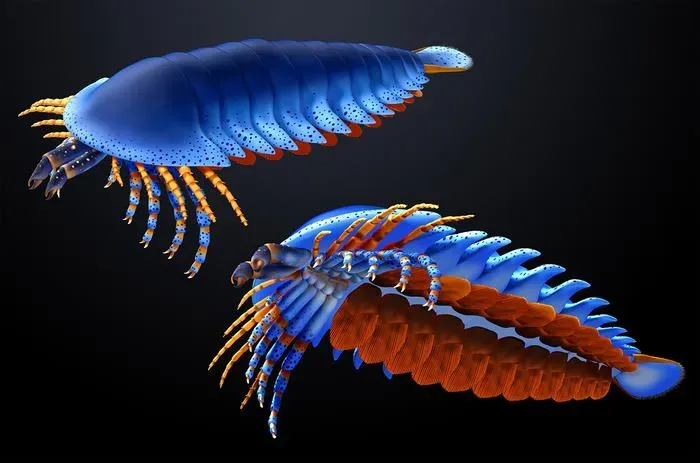 Artistic reconstruction of Megachelicerax cousteaui Masato Hattori / Harvard University
Megachelicerax cousteaui: A Detailed Look
The newly described creature is named Megachelicerax cousteaui. It measures about 3.3 inches long and 2 inches wide. Under a microscope, scientists saw it had a head shield and nine body segments. It also had six pairs of limbs for feeding and sensing, plus respiratory structures similar to gills in modern horseshoe crabs. The pincers are on two appendages near its mouth.
The name Megachelicerax combines Greek words for "large," "claw," and "horn," referring to its big chelicerae. The species name cousteaui honors French explorer Jacques-Yves Cousteau.
Javier Ortega-Hernández, another paleontologist at Harvard, noted that this fossil shows arthropods in the mid-Cambrian already had complex body plans, similar to modern forms. However, chelicerates didn't become ecologically dominant until millions of years later, when they moved onto land.
Ongoing Discussions
Not all researchers agree that M. cousteaui is the earliest discovered chelicerate. Jean-Bernard Caron, a paleontologist at the Royal Ontario Museum, reported a slightly older arthropod in 2019 with smaller chelicerae.
However, Lerosey-Aubril believes M. cousteaui offers stronger evidence due to its large, clear pincers. He states that the debate about chelicerates existing during the Cambrian Period is now settled. This discovery highlights that this group may have been more diverse earlier than previously thought.
Deep Dive & References: The oldest known chelicerate from the mid-Cambrian of Utah - Nature, 2026