For anyone who's ever wondered what the Earth was like before, say, the invention of TikTok, scientists have just pulled a rather impressive trick: they've peered 3 million years into our planet's past, all thanks to some very, very old ice.
Turns out, Earth has been on a slow, steady cool-down for all that time. And here's the kicker: it wasn't because greenhouse gases took a nosedive. Which, if you think about it, complicates things rather wonderfully for climate models.
We knew the planet was a much toastier place 3 million years ago. Imagine palm trees in Alaska, or shorelines stretching from Georgia to Virginia. The problem was, no one could quite figure out why it was so warm, or what exactly prompted the big chill. Good, continuous climate records from that deep past were harder to come by than a quiet toddler.
We're a new kind of news feed.
Regular news is designed to drain you. We're a non-profit built to restore you. Every story we publish is scored for impact, progress, and hope.
Start Your News DetoxThe Ice Whisperers of Allan Hills
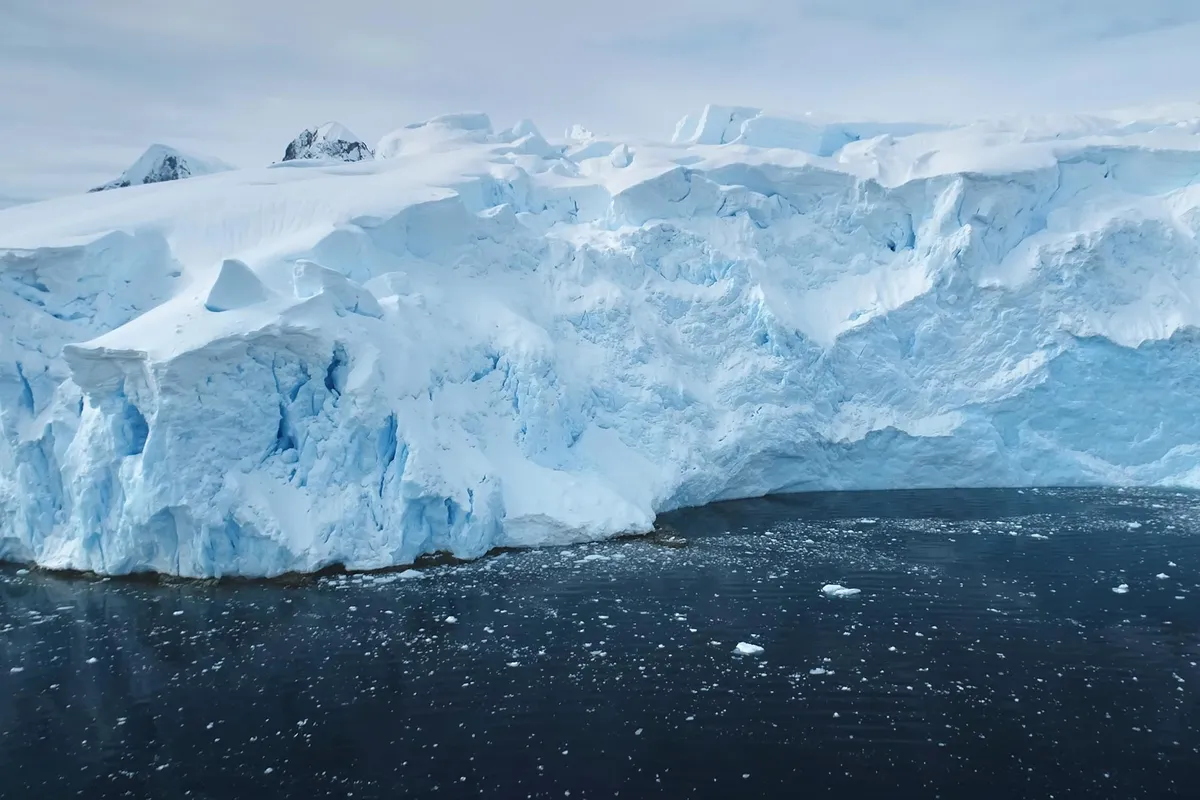
Enter the National Science Foundation Center for Oldest Ice Exploration (COLDEX). These folks, based out of Oregon State University, have made it their mission to find the most ancient ice Antarctica has to offer. Because apparently, that's where the good stories are.
Lead researchers Julia Marks-Peterson and Sarah Shackleton dove into new samples from Allan Hills, a rugged spot on the edge of the East Antarctic Ice Sheet. Here, ancient ice gets all squished and twisted by mountains, making it less of a smooth timeline and more of a series of climate "snapshots." Think of it as a very old, slightly jumbled photo album of Earth's past.
Shackleton's team focused on noble gases trapped in air bubbles within the ice. These gases are like tiny thermometers for the oceans. Their big reveal? Global ocean temperatures dropped by a solid 3.6 to 4.5 degrees Fahrenheit over the last 3 million years. And interestingly, surface waters and deeper waters cooled at different rates. Because, of course, the ocean likes to keep things interesting.
Meanwhile, Marks-Peterson and her team tackled the greenhouse gases themselves. They measured atmospheric carbon dioxide and methane directly from these ancient ice samples. Their conclusion? For much of the last 3 million years, CO2 levels likely stayed below 300 parts per million, eventually dropping to around 230 ppm by 1 million years ago. Methane stayed pretty stable, too.
Let that sink in for a moment. Today, atmospheric CO2 is averaging 425 ppm, and methane is at 1,935 parts per billion. The contrast is rather stark. These findings suggest that greenhouse gases, while certainly a major player now, weren't the sole drivers of that ancient cool-down. Other factors like Earth's reflectivity, changes in plant life or ice cover, and even ocean currents likely played a bigger role.
So, what does this mean? For one, it gives us a much sharper picture of how Earth's climate system works, especially in warmer periods. For another, COLDEX scientists are already eyeing even older ice — they've found samples as old as 6 million years. Because when it comes to understanding our planet, sometimes you just have to go really, really deep. And cold. Very, very cold.