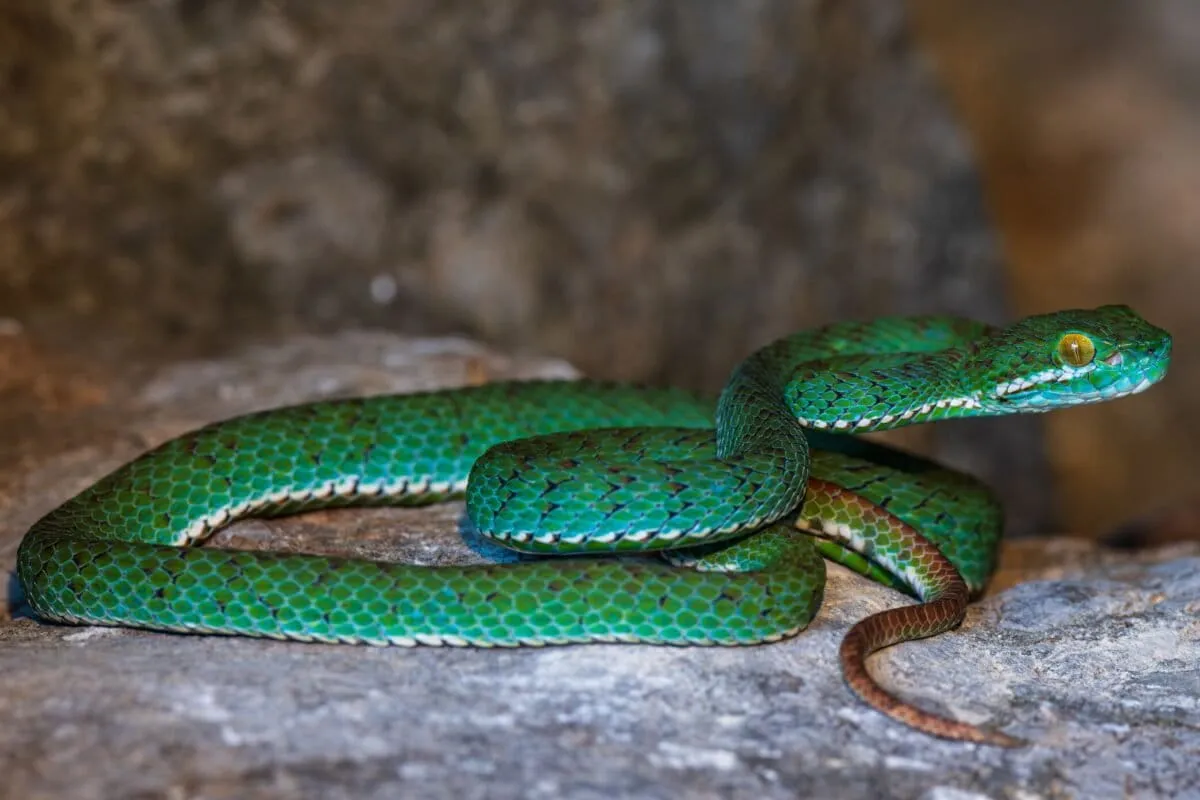
Turns out, some of the most exciting biology labs aren't sterile rooms with beakers, but rather ancient, rocky outcrops in northern Cambodia. Scientists just announced they've unearthed at least eleven new species hiding in these unique karst ecosystems, including a snake so vibrant it looks like it belongs on a mood board.
Over three years, researchers scoured 64 caves and ten hills across Battambang and Stung Treng provinces. Their focus? Karst landscapes – those dramatic, rocky areas riddled with caves that act like natural, isolated fortresses for evolution. Conservation group Fauna & Flora, which compiled the findings, noted that these creatures are essentially “trapped” by their surroundings, leading to some truly unique adaptations.

Meet the New Neighbors
Among the most eye-catching discoveries is a striking turquoise pit viper (Trimeresurus sp. nov.). Spotted in July 2025 (yes, you read that right — the future is now, apparently, or perhaps a typo that just adds to the mystery), this snake was found at the protected natural site of Phnom Prampi and is currently awaiting its official scientific name. Because even a fabulous viper needs proper paperwork.
We're a new kind of news feed.
Regular news is designed to drain you. We're a non-profit built to restore you. Every story we publish is scored for impact, progress, and hope.
Start Your News DetoxThen there's Clostophis udayaditinus, a land snail so tiny it's less than two millimeters wide. It’s the first of its genus ever found in Cambodia. Not to be outdone, a new dark orange millipede was discovered lurking in a cave, one of three new species in its genus. Each little nook and cranny of these isolated rock formations acts like a micro-laboratory, as biology professor Lee Grismer put it, leading to species found absolutely nowhere else on Earth. Which, if you think about it, is both impressive and slightly terrifying for their continued existence.