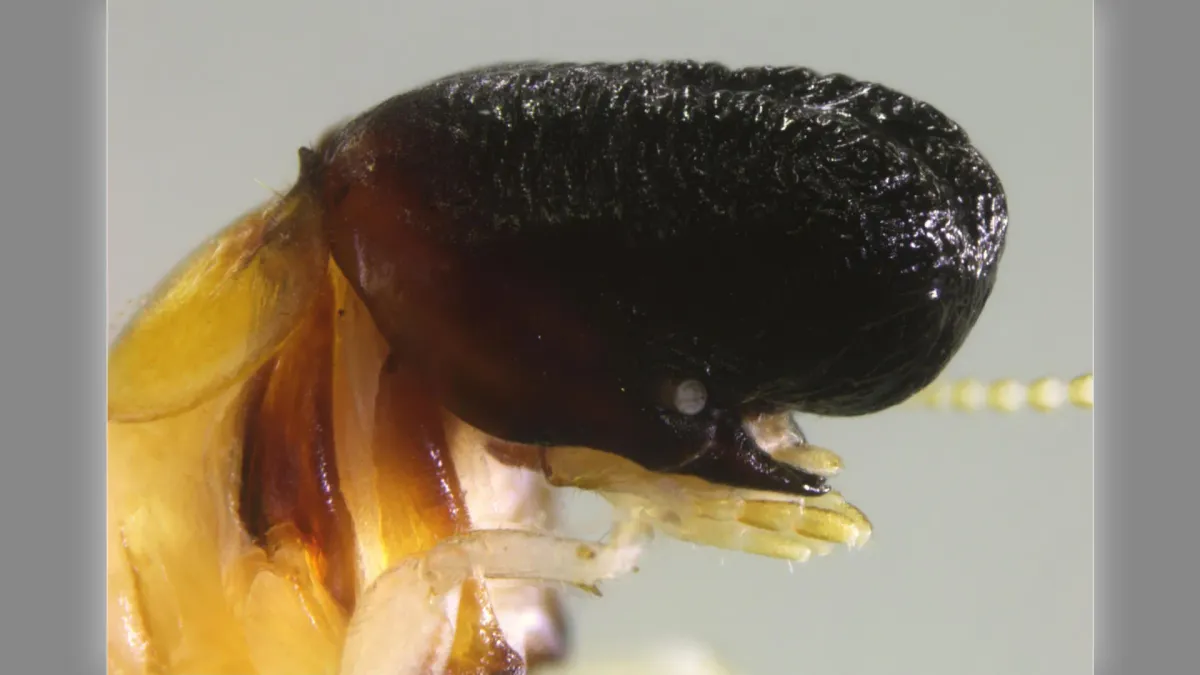
Deep in a South American rainforest, scientists have unearthed a new termite species that looks like, of all things, a miniature sperm whale. Yes, you read that right. This little insect, officially named Cryptotermes mobydicki, boasts a long, rounded head and surprisingly hidden mouthparts, immediately bringing to mind its much, much larger marine namesake. Because apparently, that's where we are now.
When researchers first laid eyes on it, they were so perplexed by its appearance, they genuinely thought it might be an entirely new type of insect. Which, given the sheer number of insects on this planet, is quite a statement.
The Head-Scratching Head
Rudolf Scheffrahn, an entomology professor at the University of Florida, led the team that stumbled upon this bizarre creature. He pointed out the termite's distinctive head shape, complete with mandibles tucked away, as the spitting image of a sperm whale. He even noted the similar positioning of the whale's eye and the termite's antenna socket. It's almost like nature decided to play a tiny, six-legged joke.
We're a new kind of news feed.
Regular news is designed to drain you. We're a non-profit built to restore you. Every story we publish is scored for impact, progress, and hope.
Start Your News DetoxThis discovery brings the total count of known Cryptotermes species in South America to a satisfying 16. Genetic tests confirm that Cryptotermes mobydicki is indeed related to other species found in places like Colombia, Trinidad, and the Dominican Republic, helping scientists piece together the grand, evolutionary puzzle of these tiny wood-munchers.
The initial colony was found tucked away inside a dead tree, roughly eight meters off the ground. Its unique physique is a stark reminder of both the incredible diversity within the termite world and just how many organisms in tropical regions are still waiting to make their grand debut.
Scheffrahn emphasized that every new species found is a win for biodiversity, especially when you consider that we only know about 3,000 of the estimated gazillions of termite species worldwide. It makes you wonder what else is out there, just waiting for its close-up.
And for the homeowners among us, a spot of good news: Cryptotermes mobydicki is a drywood termite that prefers its rainforest home and isn't interested in your house. Unlike some of its more invasive cousins, this tiny Moby Dick is staying put.