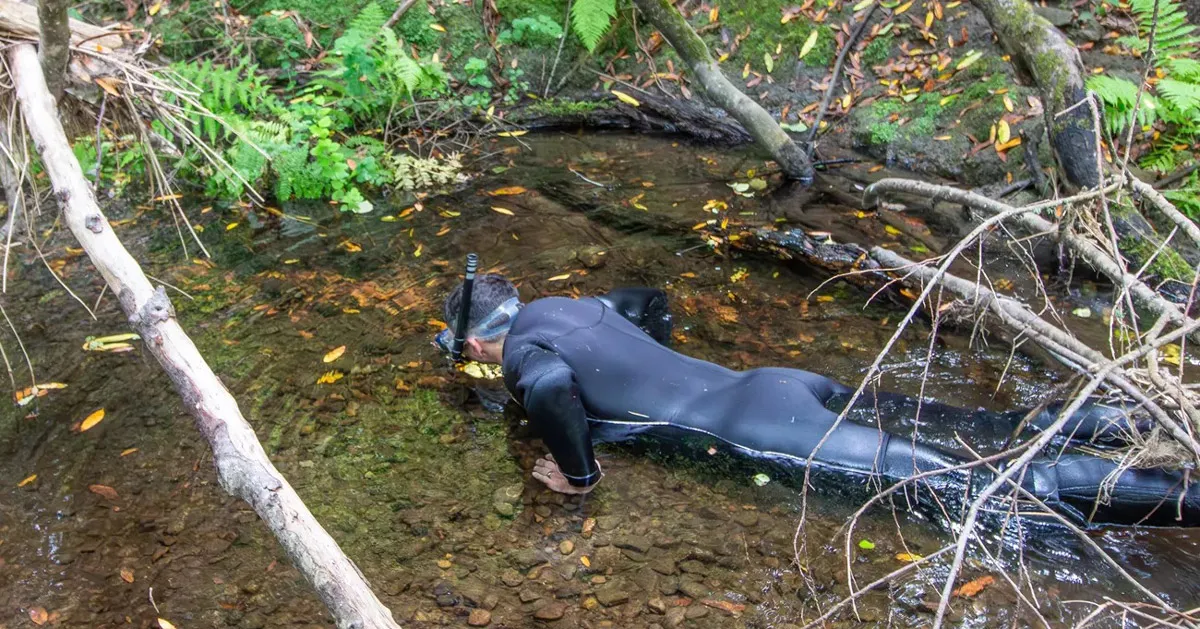
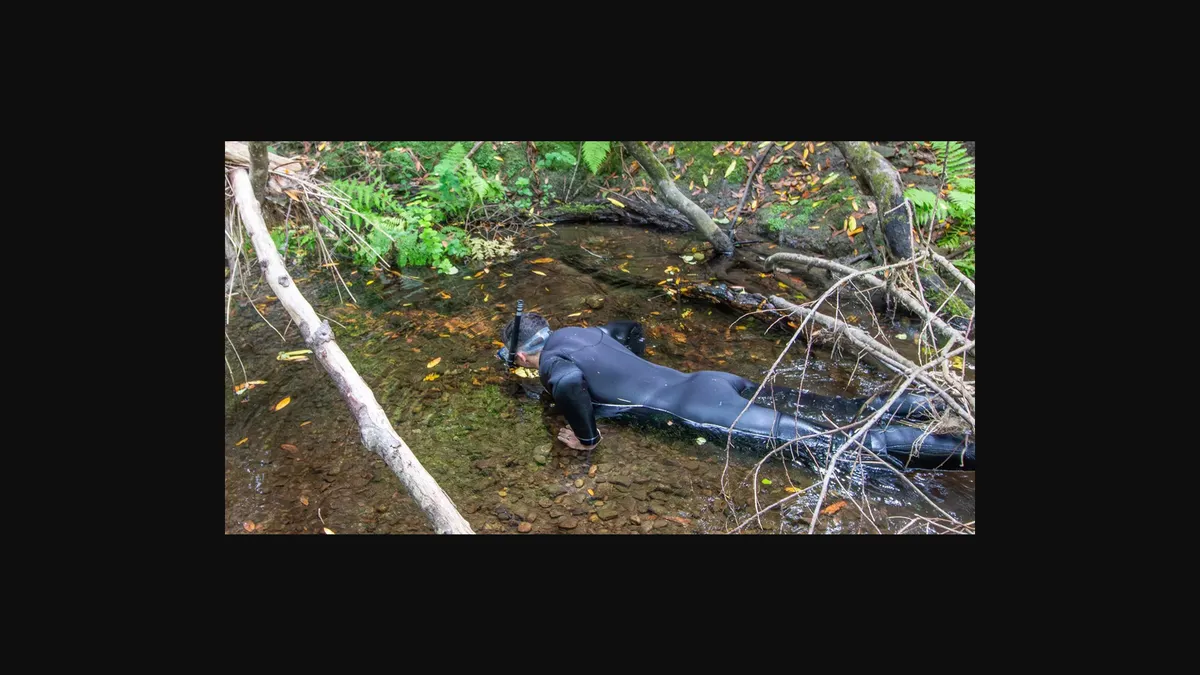
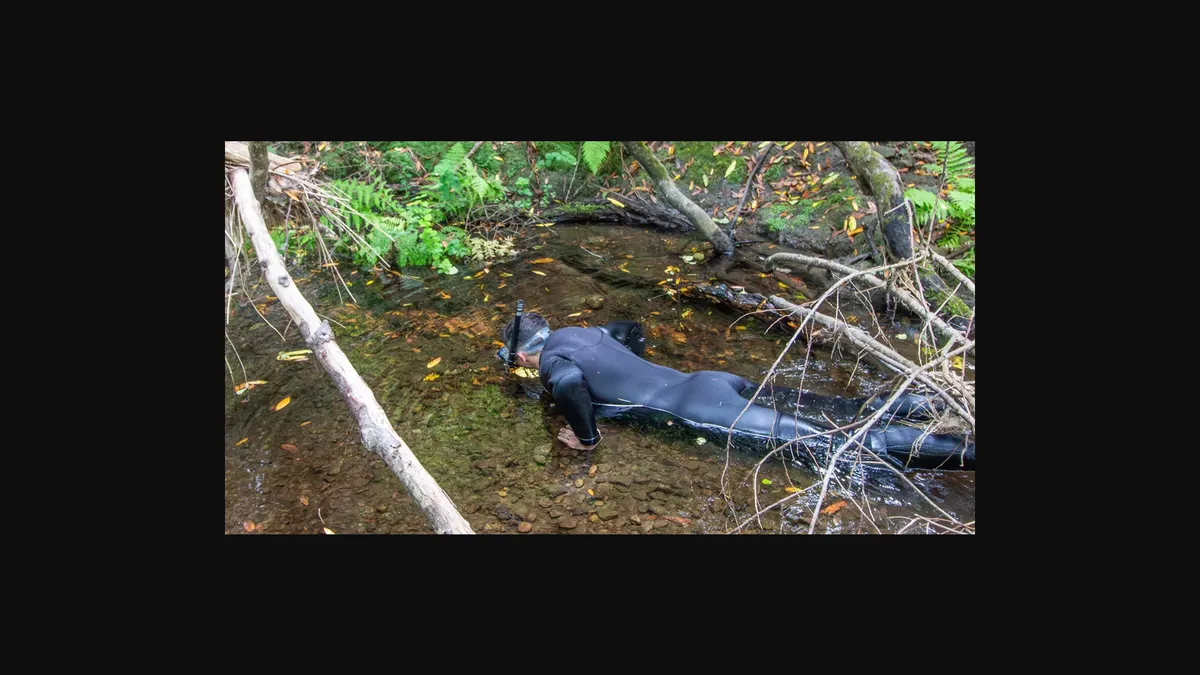
Michael Reichmuth, a fisheries biologist for the National Park Service (NPS), often snorkels in the cold waters of the San Francisco Bay Area. He usually surveys endangered juvenile coho salmon. After more than 20 years on the job, he has seen many interesting things.
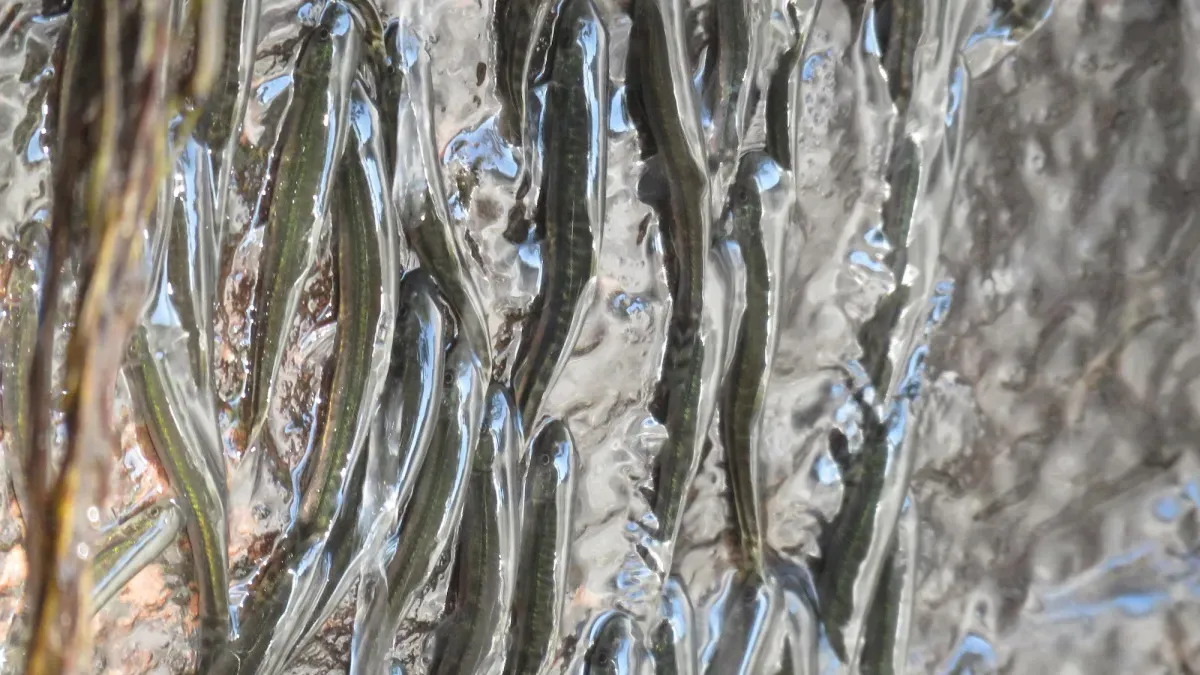
Last September, Reichmuth was snorkeling in Olema Creek, a stream in Point Reyes National Seashore. There, he photographed a group of newly hatched California giant salamanders. This was the first time these creatures had ever been photographed in the wild.
Patrick Kleeman, a biologist and amphibian expert with the United States Geological Survey, confirmed the rare sighting. He noted that the location in a small stream known for California giant salamanders made it the most likely species. Newts are the only other local long-bodied amphibians, but their back patterns would look different at this life stage.
We're a new kind of news feed.
Regular news is designed to drain you. We're a non-profit built to restore you. Every story we publish is scored for impact, progress, and hope.
Start Your News DetoxScientists believe the salamanders were recently hatched because many were tightly clustered together. They also had large, whitish yolk sacs. These sacs feed the larvae for months until they can find their own food.
Understanding the Elusive Salamander
The cluster of Dicamptodon ensatus larvae is a rare find. It will help park scientists learn how to protect the species. The California giant salamander is not federally endangered. However, California lists it as a "Species of Special Concern." This is due to its limited range and sensitivity to environmental changes.
The International Union for Conservation of Nature also calls the species "near threatened." This classification shows how little is known about them. The NPS explained that their population might be declining, but scientists lack enough data to be sure. Many questions remain about their distribution, habitat needs, movements, and early life stages.
Reichmuth and his team had never seen such young larvae before. But they do occasionally spot juveniles while snorkeling or doing other field work. In spring 2023, they found a 10-inch adult.
California giant salamanders can grow up to a foot long. They are the biggest terrestrial salamander species in North America. Despite their size, they are hard to study. They rarely fall into traps set by scientists. Most information comes from studying similar giant salamanders.
Kleeman noted that few records of any giant salamander species involve eggs or nests. Scientific literature also has no observations of wild California giant salamander larvae. He said it was interesting that Reichmuth found them at all, given how little is known about this life stage.
New Insights for Conservation
Capturing these salamanders on camera gives scientists more data. This photo, along with Reichmuth's account, helps scientists understand giant salamander nesting habitats. It also adds to knowledge about the timing of their larval development. This information is vital for research and conservation.
The NPS encourages park visitors to get curious. Visitors cannot snorkel in park creeks like Reichmuth. However, they might still see California giant salamanders. If they do, they can upload photos to an ongoing inventory. This helps scientists gather more data.