TikTok just quietly removed 20 accounts after a BBC investigation exposed a wild trend: AI-generated videos of Black women. These weren't just any videos; they were used to funnel people to websites packed with explicit content.
This isn't some fringe thing. It's part of a growing, seriously problematic pattern on Instagram and TikTok. Critics are calling it out for being racist, exploitative, and just plain misleading, thanks to the stereotypes and language these fake accounts use.
The AI Avatar Problem
The BBC teamed up with researchers from Riddance, an independent AI publication, and what they found was pretty nuts. Tons of accounts on both platforms were pushing highly sexualized digital characters, or avatars, of Black women.
We're a new kind of news feed.
Regular news is designed to drain you. We're a non-profit built to restore you. Every story we publish is scored for impact, progress, and hope.
Start Your News DetoxHere’s the kicker: these images and videos were made by AI but weren't labeled that way. That's a straight-up violation of platform rules. Most of these sneaky accounts lived on Instagram, but about a third were also on TikTok. Meta, which owns Instagram, says it's now investigating.
These avatars often sport skimpy clothes, exaggerated body shapes, and sometimes unnaturally dark skin tones that scream "digitally altered." Account names often throw in words like "black," "noir," "dark," and "ebony." Some even mention white men, with phrases like "loves white men." And guess what? Many of these accounts follow and like each other, like a creepy, automated club.
The BBC and Riddance pinpointed 60 such accounts, mostly on Instagram, all linking to paid explicit content elsewhere. While those third-party sites admitted the imagery was AI, the Instagram accounts kept it a secret. They also found tons more similar AI avatars not tied to paid content.
Stolen Lives, Fake Faces
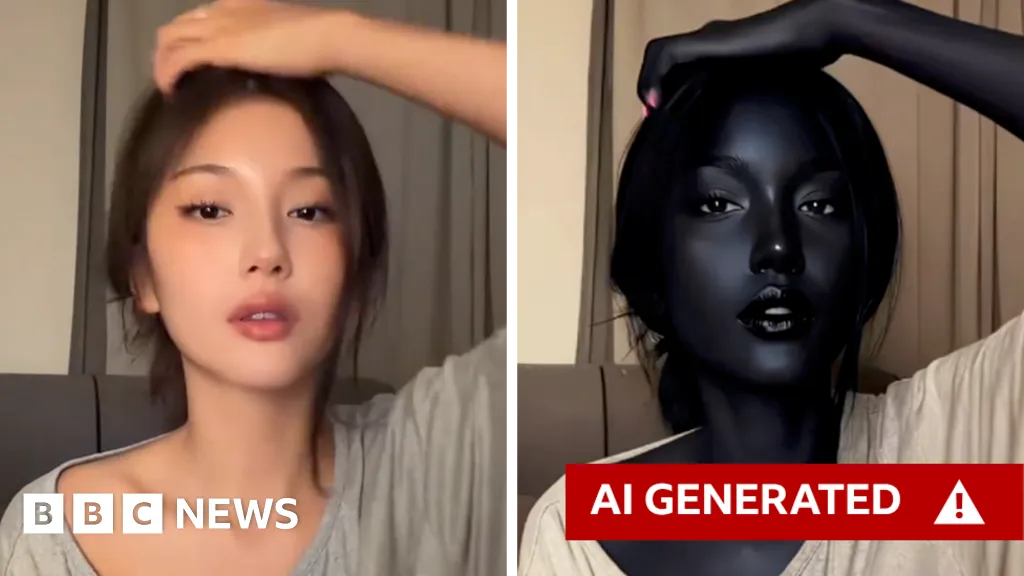
One TikTok account that got shut down took things a step further: it stole videos from real people. This account, fronted by an AI character, blew up to three million followers in no time.
It lifted and tweaked videos from Riya Ulan, a model in Malaysia. The AI avatar's face, with its artificially darkened skin, was slapped onto Riya's body, copying her movements, clothes, and even the background. "I was angry," Riya told the BBC. "My videos are public, but that doesn't mean they can be stolen and posted as someone else's."
One of these twisted videos racked up over 35 million views on TikTok and a mind-boggling 173 million on Instagram. That’s about 47 times more views than Riya's original post. While the three specific videos copied from Riya weren't sexual, other posts on that AI account showed the same character in revealing outfits or doing provocative things. This account also linked to paid adult content.
Riya said she reported the account repeatedly, but nothing happened until the BBC stepped in. What's wild is that many viewers actually believe these avatars are real, even with their obviously fake features. Some accounts, including the one that stole Riya's content, even denied using AI in their posts.
Why This Matters: Racism and Erasure
Angel Nulani, one of the researchers, didn't mince words: these accounts are racist. She says they're just another chapter in a long, ugly history of exploiting Black people. Nulani pointed out that the use of caricatures, race-play terms, and unrealistic images of Black women shows these creators are all about profit, not people. Jeremy Carrasco, an AI trends expert, called out the "shameless, racist depictions of extremely black people." He explained that AI makes it way too easy to create unnaturally dark skin tones and effects that used to require complex animation. And because avatars aren't real, there are no social consequences for the exploiters. Houda Fonone, a Moroccan model, fears this trend is an "erasure" of real Black women. She argues that features like "silky hair, extremely thin bodies and impossibly flawless skin" suggest that Black beauty is only accepted when it's been "refined." It reinforces stereotypes and replaces genuine stories with artificial ones.
After the BBC shared examples with Meta and TikTok, things moved fast. Two days later, TikTok confirmed they'd "removed content and banned accounts which breach our rules." Within days, 20 accounts on the app were gone. TikTok says it has zero tolerance for content promoting off-platform sexual services and requires users to label realistic AI content. Meta is investigating, and nine Instagram accounts the BBC tracked have also vanished. It's a small win, but a reminder that real reporting can still make a difference.