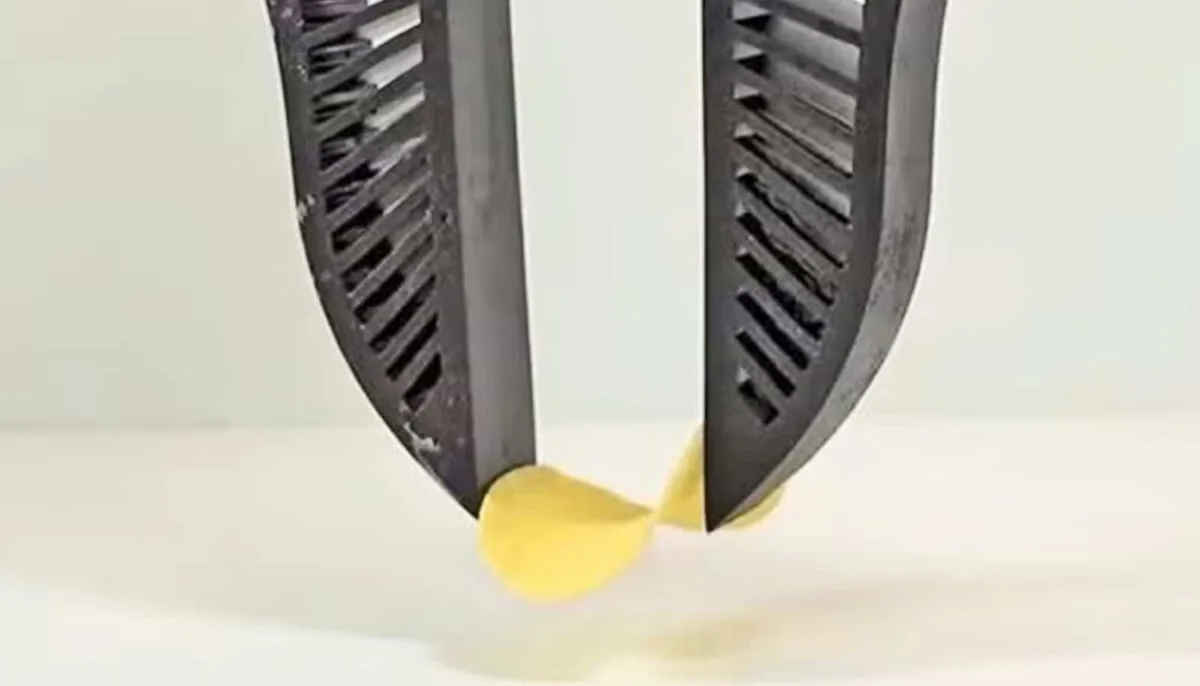
Imagine a robot that can fold your laundry but crumbles a potato chip trying to pick it up. That's been the reality, until now. Researchers just built a robot hand so gentle it can grab a single potato chip or a ripe raspberry without squishing it. Seriously.
This isn't just about snack handling. It's a huge leap for robots doing delicate tasks, think healthcare or handling fragile electronics. Most robots are good with big movements, but small, precise actions? Not so much. They're missing that human touch.
How it Works
The secret is in the robot's fingers, which are inspired by fish fins. They're 3D-printed with tiny air channels inside. When the robot grasps something, the air pressure in those channels changes. Little sensors detect these shifts, telling the robot exactly how much force it's using and if the object is starting to slip.
We're a new kind of news feed.
Regular news is designed to drain you. We're a non-profit built to restore you. Every story we publish is scored for impact, progress, and hope.
Start Your News DetoxThis real-time feedback is the game-changer. It's like your own fingers knowing instantly if you're about to drop something and adjusting your grip without even thinking.
They tested this new gripper, called FORTE, on 31 different items. We're talking everything from slippery jam jars to delicate raspberries and, yes, potato chips. It succeeded 91.9% of the time, which is way better than robots that only use cameras to see what they're doing.
Even cooler? It caught 93% of slips with perfect accuracy. That means it knew exactly when an object was slipping and adjusted its grip, preventing damage. Most robot grippers don't even have slip detection, and none are this fast.
Lillian Chin, a professor at UT Austin, pointed out that humans naturally use just the right amount of force. Too much, and you crush it; too little, and you drop it. These new sensors work almost as fast as human hands do, making that delicate balance possible.
This technology is a big step toward robots having hands as skilled as ours. Think about it: robots could handle fragile foods in processing plants, carefully maneuver medical tools, or assemble tiny electronics without a single dent. It's a pretty wild thought, and it's happening now.