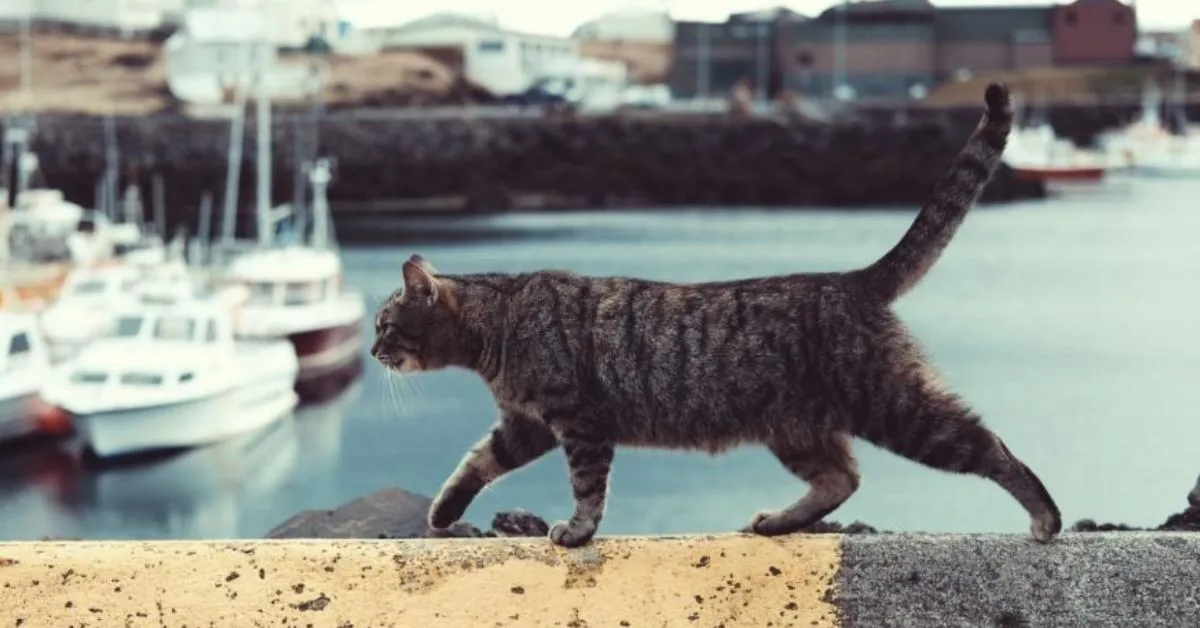
Nineteen cats drowned in Amsterdam's canals in the first six months of 2025. That number alone shifted how the city thinks about its UNESCO-listed waterways—not as romantic backdrops, but as genuine hazards for the animals living alongside residents.
The problem isn't usually deliberate. Cats tumble in by accident, often startled by a dog or person and jumping backwards into the water. Some are thrown in deliberately. Once in the canal, a cat's fur quickly becomes waterlogged and heavy. They're swimmers, yes, but exhaustion sets in fast. And the water carries them far from where they fell, making rescue nearly impossible.
Dutch councillor Judith Krom of the Party for the Animals proposed a deceptively simple solution: small wooden staircases built into the canal walls. These "fauna exit points" would let cats—and stray hedgehogs, frogs, and birds—climb back out. The neighboring city of Amersfoort had already committed to installing 300 such ladders, proving the concept worked.
We're a new kind of news feed.
Regular news is designed to drain you. We're a non-profit built to restore you. Every story we publish is scored for impact, progress, and hope.
Start Your News DetoxThe catch was money. Amsterdam's alderman Zita Pels was interested but had no budget. Krom kept digging and found 100,000 euros in unused municipal funds. The city council approved redirecting it toward the staircases.
Now the Animal Ambulance Amsterdam is mapping high-risk zones. Eelco Miedema, the organization's operational manager, knows the challenge intimately—the flowing water makes locating fallen animals "quite a puzzle." But he's clear on why this matters: "Every cat that can be saved by this is one less cat lost."
Maggie Ruitenberg, a behavior specialist at the Dutch Cat Knowledge Center, points out that cats instinctively swim toward the darkest, most sheltered spots—under bridges, into corners. The staircases don't just provide a way out; they position themselves in exactly the places cats naturally seek. She's also recommended floating platforms to give animals another foothold.
It's a small intervention for a specific problem in one city. But it's the kind of thing that happens when someone notices a pattern, asks why it's accepted as inevitable, and finds the resources to change it.