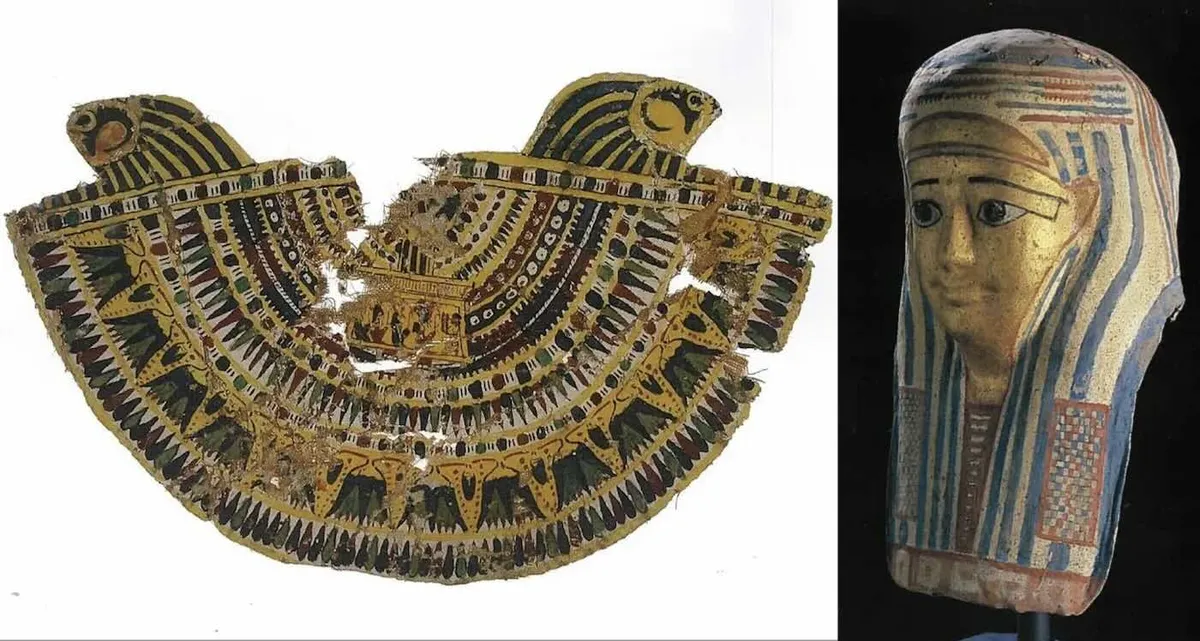
A thief smashed through a window at Queensland's Abbey Museum at 3 a.m. and walked out with four irreplaceable pieces of ancient Egypt. By the next day, they were back.
Miguel Monsalve didn't get far. Police found the stolen items in his camper van near a ferry terminal on Russell Island, just hours after the break-in. What could have been a permanent loss—artifacts that survived millennia in the Nile Valley only to vanish in modern Australia—became instead a story about how quickly a coordinated response can work.
What Was Taken
The four pieces tell different stories of ancient life. There's a cat figurine from 2,600 years ago, when Egyptians revered cats as sacred animals. A funerary mask that once covered the face of a mummified noble. A bead necklace and a 3,300-year-old collar—the kind of objects that archaeologists use to understand how people dressed, what they valued, how they prepared for the afterlife.
We're a new kind of news feed.
Regular news is designed to drain you. We're a non-profit built to restore you. Every story we publish is scored for impact, progress, and hope.
Start Your News DetoxOn the black market, these items could have sold for around $100,000. But their real value wasn't in what a collector might pay. It was in what they teach. The Abbey Museum holds a collection spanning one million years of human history, and these pieces were there to help Brisbane's community understand where we've come from.
That's why the timing mattered so much. Australian climate—the humidity, the temperature swings—would have damaged these objects irreparably within weeks. They're fragile in ways that aren't obvious. A few days exposed to the wrong conditions and the information they carry gets lost forever.
Monsalve now faces serious charges: breaking and entering, willful damage. He's being held without bail. The artifacts are back where they were meant to be, their story interrupted but not ended.
It's a small reminder that not every theft becomes a cold case. Sometimes the system works exactly as it should.