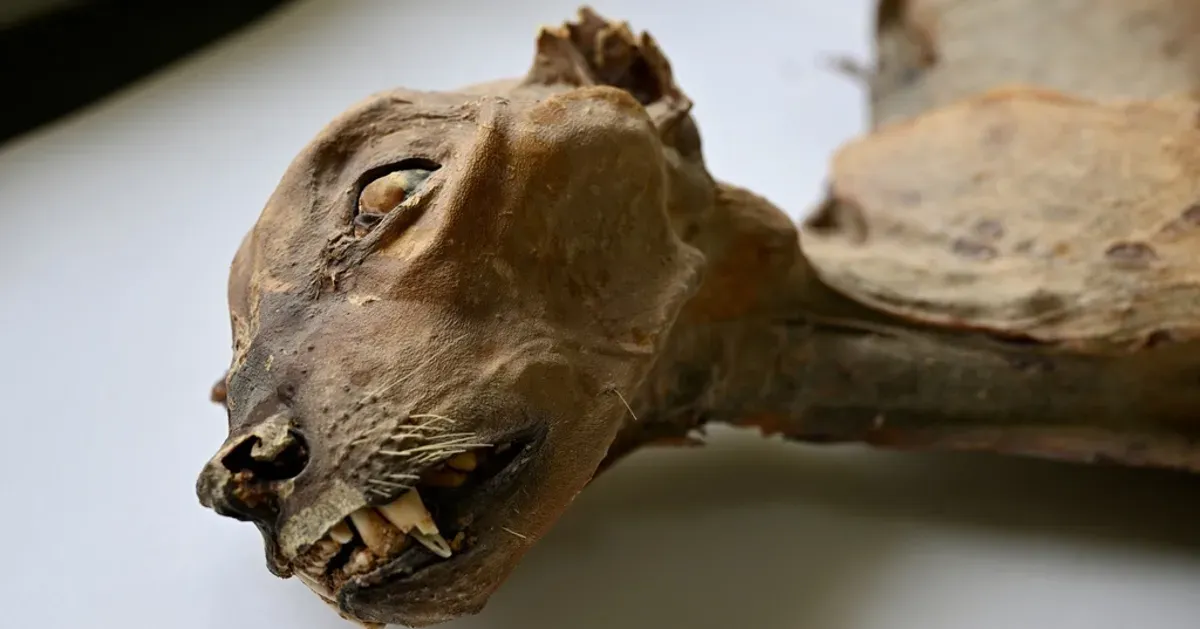
Seven mummified cheetahs pulled from caves in northern Saudi Arabia are telling a story that spans nearly two millennia. Some of these preserved cats are over 1,800 years old — dried and intact enough that researchers can still read their DNA, a first for naturally mummified large carnivores.
The discovery near the city of Arar included not just the seven mummies but bones from 54 other cheetahs, all found in caves where the dry air and stable temperature created conditions that stopped decay in its tracks. It's the kind of preservation usually associated with Egyptian tombs or Siberian ice, not Saudi Arabia's desert caves. "To find such intact evidence of cheetahs that lived long ago in this part of the world is entirely without precedent," said Ahmed Boug, a researcher with Saudi Arabia's National Center for Wildlife.
Scientists still aren't certain why so many cheetahs congregated in these caves — a denning site where mothers raised cubs remains the leading theory. But what they can read from the genetic material is clearer: these ancient cheetahs were most closely related to modern cheetahs living in Asia and northwest Africa, a genetic echo of a time when the species roamed across most of Africa and large swaths of Asia.
We're a new kind of news feed.
Regular news is designed to drain you. We're a non-profit built to restore you. Every story we publish is scored for impact, progress, and hope.
Start Your News DetoxThat range has collapsed. Today, cheetahs occupy just 9% of their historical territory, driven out by habitat loss, unregulated hunting, and the disappearance of prey species. They haven't been seen on the Arabian Peninsula for decades — a gap of centuries between the mummified remains and the present day.
But this genetic snapshot from the past may offer a path forward. As conservation efforts explore reintroducing cheetahs to places they've vanished from, knowing which populations the ancient cats were connected to could help guide which modern cheetahs might thrive if relocated. The mummies aren't just a window into what was lost; they're a map for what might be recovered.