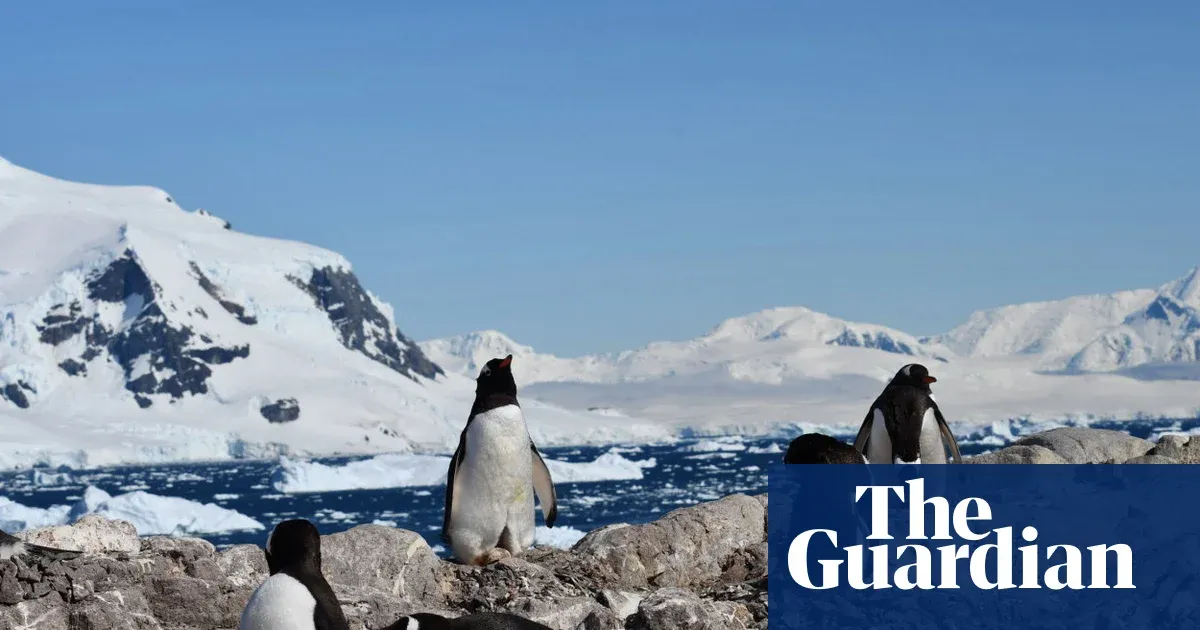
A decade of observations from Antarctica has caught something remarkable: penguins are reshaping their own breeding calendars in real time, apparently racing against a warming world.
Researchers from Oxford and Oxford Brookes tracked three penguin species between 2012 and 2022 and found shifts so dramatic they're rewriting what we thought possible. Gentoo penguins have advanced their breeding season by an average of 13 days—with some colonies shifting by 24 days. That's the fastest change in breeding timing ever recorded in any bird, possibly any vertebrate. Adélie and chinstrap penguins are also breeding roughly 10 days earlier than they used to.
"We are very concerned because these penguins are advancing their season so much, and penguins are now breeding earlier than in any known records," said Dr. Ignacio Juarez Martínez, who led the research published in the Journal of Animal Ecology.
We're a new kind of news feed.
Regular news is designed to drain you. We're a non-profit built to restore you. Every story we publish is scored for impact, progress, and hope.
Start Your News DetoxThe adaptation itself shows something important: these animals aren't passive. They're responding. But the danger lies in what happens when the timing doesn't align. If penguins breed earlier but their prey—fish and krill—haven't shifted their own rhythms, chicks in their most vulnerable weeks could go hungry. It's a mismatch that evolution usually punishes.
The Winners and Losers
Here's where the story gets complicated. Gentoo penguins, a more temperate species, are thriving in these milder conditions. Their colonies are expanding across the Antarctic Peninsula, their numbers growing even in already-established settlements. But Adélie and chinstrap penguins are declining throughout the region, and emperor penguins—the iconic species—are showing similar warning signs.
This isn't just about one species struggling while another succeeds. "Penguins play a key role in Antarctic food chains, including bringing nutrients from deep water up to the surface," Juarez explained. The Antarctic ecosystem is a network with remarkably few connections. Lose several penguin species before the end of the century, as current models predict, and you risk cascading collapse through the entire system.
The research reveals a system under stress, adapting faster than we've ever seen—but adapting unevenly. Some species are keeping pace with climate change. Others are falling behind. And the ecosystem that depends on their balance is watching the ground shift beneath it.
What happens next depends partly on how quickly the ocean itself changes, and whether these penguins can continue to adjust faster than the world around them shifts.