Nearly two thousand years after Mount Vesuvius buried it, the Villa di Poppaea is giving up its secrets. Archeologists working outside Naples have just uncovered a series of frescoes so vivid they feel like windows into a single frozen moment—peacocks in full color, theatrical masks, the ghosts of garden trees preserved in ash.
The villa belonged to Poppaea Sabina, Nero's second wife, and it was built to impress. Situated on the Bay of Naples with views that still matter today, the estate was decorated with the kind of lavish detail that only wealth and power could buy. When Vesuvius erupted in 79 CE, it sealed the villa in volcanic material—and in doing so, locked in the colors and designs exactly as they were.
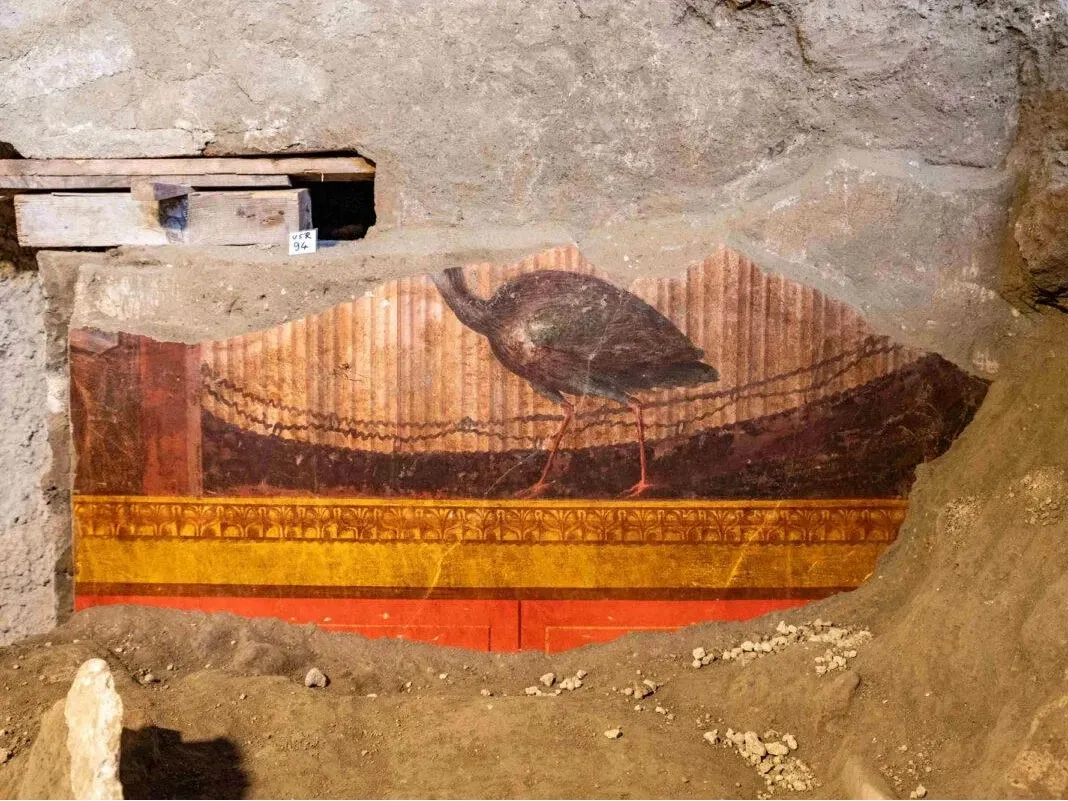
The recent excavation, which began less than a year ago, is methodically opening those rooms again. In the Hall of the Mask and the Peacock, workers have found frescoes painted in the Second Style, a Roman technique that created depth and illusion on flat walls. The imagery is specific and striking: a complete peahen on one section of wall, mirroring a male peacock already found nearby. Fragments of theatrical masks appear alongside them—characters from Atellan Comedy, a form of improvised Roman farce. That mix is notable. Other masks in the room depicted tragic characters, so finding comedy here adds texture to how the space was used and what it meant.
We're a new kind of news feed.
Regular news is designed to drain you. We're a non-profit built to restore you. Every story we publish is scored for impact, progress, and hope.
Start Your News DetoxThe excavation has also revealed something less visible but equally revealing. Using a casting technique that captures imprints left in the ash, archeologists mapped out where trees once lined the villa's garden, part of an ornamental scheme that doubled the colonnade on the southern portico. You can almost see the gardeners arranging them, thinking about symmetry and shade.
Four new rooms have emerged from the dig, including what appears to be part of the thermal baths—the villa's private spa. That brings the known total to 103 rooms. Gabriel Zuchtriegel, director of the Archaeological Park of Pompeii, noted that despite earlier excavations, the true layout and decoration of these spaces remained uncertain until now. "We can already admire" extraordinary details and colors, he said—a careful understatement for what amounts to stepping back into a Roman afternoon.
The work continues. Each room that opens carries the possibility of another layer of detail, another reason someone lived here, another glimpse of how people arranged beauty around themselves when they had the means.