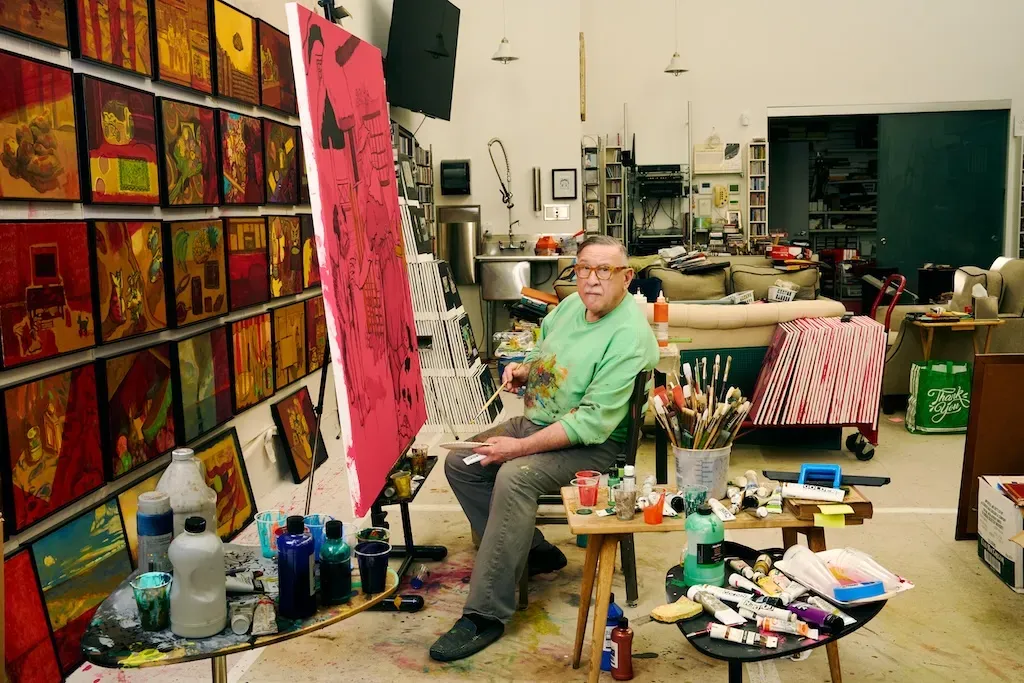
Imagine being a teenage art prodigy, lauded by the gatekeepers of the abstract art world, and then deciding, "Nah, I'm gonna write names on my canvases." That's exactly what Archie Rand did. And now, 44 of those rebellious 'Letter Paintings' from 1968-1971 have been acquired by an Italian football club, Modena FC, for their corporate collection. Because apparently, that's where iconic art lives now.
Back in the late 60s, Rand was training under painter Larry Poons and was the golden boy of critic Clement Greenberg, who saw him as the next big thing in abstract art. But Rand had other plans. Instead of sticking to pure abstraction, he started scrawling the names of musicians, poets, artists, and public figures he admired onto his vibrant, abstract canvases. It was less a pivot and more a glorious, intentional swerve.
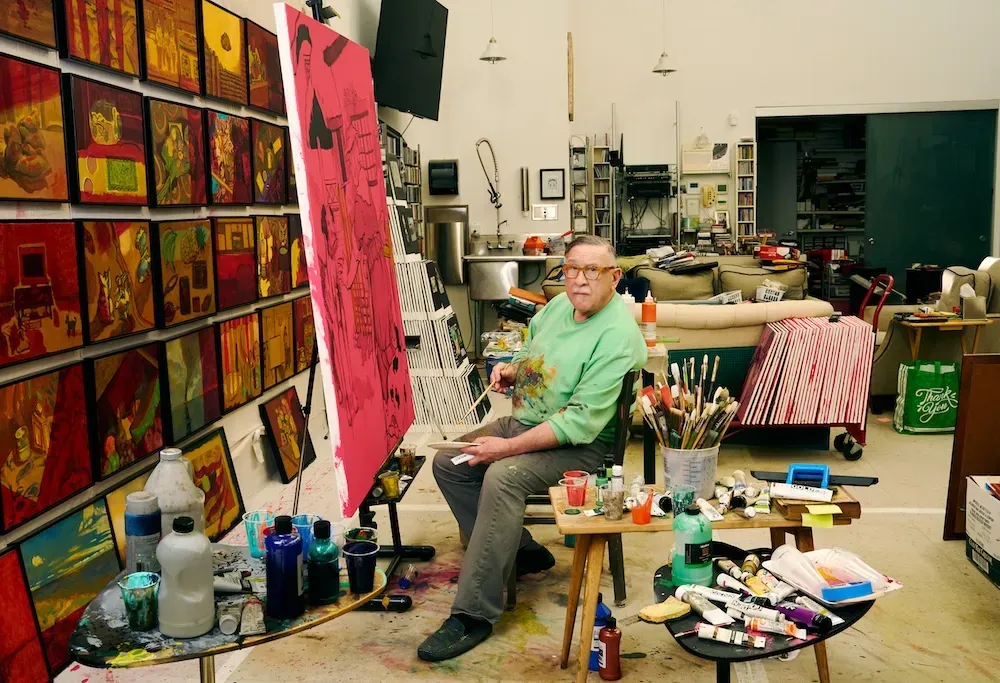
Years later, Rand described these works as "tombstones for the unheralded" – an effort to inject some actual love into modern art, a concept he felt was sorely missing. Which, if you think about it, is both incredibly sweet and a very pointed critique of the art establishment he was supposedly destined to join.
We're a new kind of news feed.
Regular news is designed to drain you. We're a non-profit built to restore you. Every story we publish is scored for impact, progress, and hope.
Start Your News DetoxFrom Carnegie Institute to Italian Football
The series first graced the Museum of the Carnegie Institute in 1983 and was reunited in 1991 at Exit Art in New York. New York Times critic Roberta Smith, clearly a fan, gave it a glowing review, lamenting that the paintings hadn't received their due recognition. She praised their ability to merge the rich textures of Color Field painting with the intellectual heft of Conceptual art, calling them pieces that balanced "reverence and irreverence."
Smith even suggested that Rand's work foreshadowed later movements, specifically Jean-Michel Basquiat's iconic use of musicians' names. So, before Basquiat was doing it, a teenager named Archie Rand was already there, quietly etching his heroes into art history.
Lindsay Jarvis, founder of Jarvis Art, highlighted the significance of this acquisition, noting it speaks to the enduring power and relevance of Rand's work throughout his career. From a rebellious teenager's bedroom to the walls of a football club – it seems some stories just keep getting better.