Cameroon's linguistic landscape is shifting in real time. Over 300 indigenous languages thrive across the country—Lamnso', Oroko, Batanga, and dozens more—each carrying centuries of cultural knowledge. But a generation is losing fluency.
People in their 40s and 50s speak these languages about as well as they speak English or French. Their parents were native speakers first. The gap widens with each cohort, and linguists worry the tipping point is closer than it looks.
"Even for languages with tens of thousands of speakers, it only takes a generation of parents making different decisions—sometimes out of necessity—for a language to lose very many speakers in a short amount of time," says Kathryn Franich, a linguist at Harvard. She's watched this pattern globally, but Cameroon's situation carries particular urgency. Civil war and humanitarian crises have accelerated displacement, which accelerates language shift.
We're a new kind of news feed.
Regular news is designed to drain you. We're a non-profit built to restore you. Every story we publish is scored for impact, progress, and hope.
Start Your News DetoxWhen displacement changes what we speak
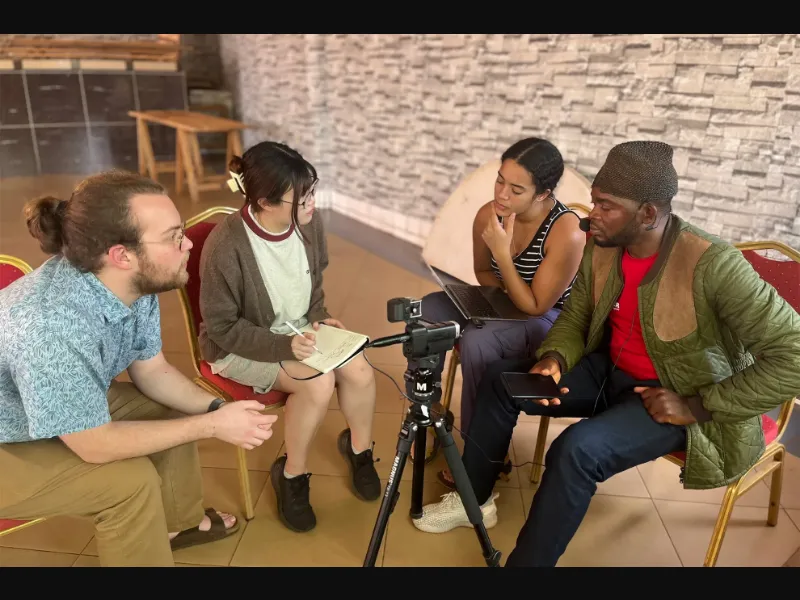
Last January, Franich and her team traveled to Cameroon with undergraduate researchers to understand exactly how forced migration affects language use. They interviewed Cameroonians who'd relocated from their home regions to Yaoundé and cities across the West Region, asking detailed questions about which languages they spoke before and after moving.
The pattern emerged quickly. When people relocate, they often learn the local languages of their new community—partly to fit in, partly because it's practical. Co-workers might adopt Fulani or French as a workplace lingua franca. The indigenous language, once the default at home, becomes something you speak with elders on weekends.
"You could really see how people tended to animate more when speaking in their local language versus speaking in English or French," observed Lexi Williams, an undergraduate research assistant in the study. The emotional weight of a mother tongue is visible even in a conversation.
But economic pressure predates the war. Parents have long faced a choice: prioritize colonial languages for job prospects, or indigenous languages for cultural continuity. Most choose the former. It's rational. English and French open doors. Indigenous languages, in a globalized job market, don't.
Building a record, and a future
Franich's team isn't just documenting loss. With National Science Foundation funding, they're working with local language preservation groups to create written materials and classes for endangered languages like Babanki/Kejom and Medʉmba. The goal is practical: ensure the next generation can write as well as speak.
They're also building a digital archive—personal accounts from people living through displacement and language shift, told in their own words. It's not a museum piece. It's evidence of what's at stake, presented by the people experiencing it.
"There are very few personal accounts of people who are living through this conflict, discussing what they've experienced and what the impact is on their languages," Franich said. "We're hoping that the website is going to provide an accessible way to learn about this through the people themselves."
Language preservation isn't sentimental. When a language dies, a way of understanding the world dies with it—ecological knowledge embedded in plant names, kinship systems encoded in grammar, histories that were never written down. Cameroon's 300 languages represent 300 different ways of being human. The work to keep them alive has begun, but the window is narrow.