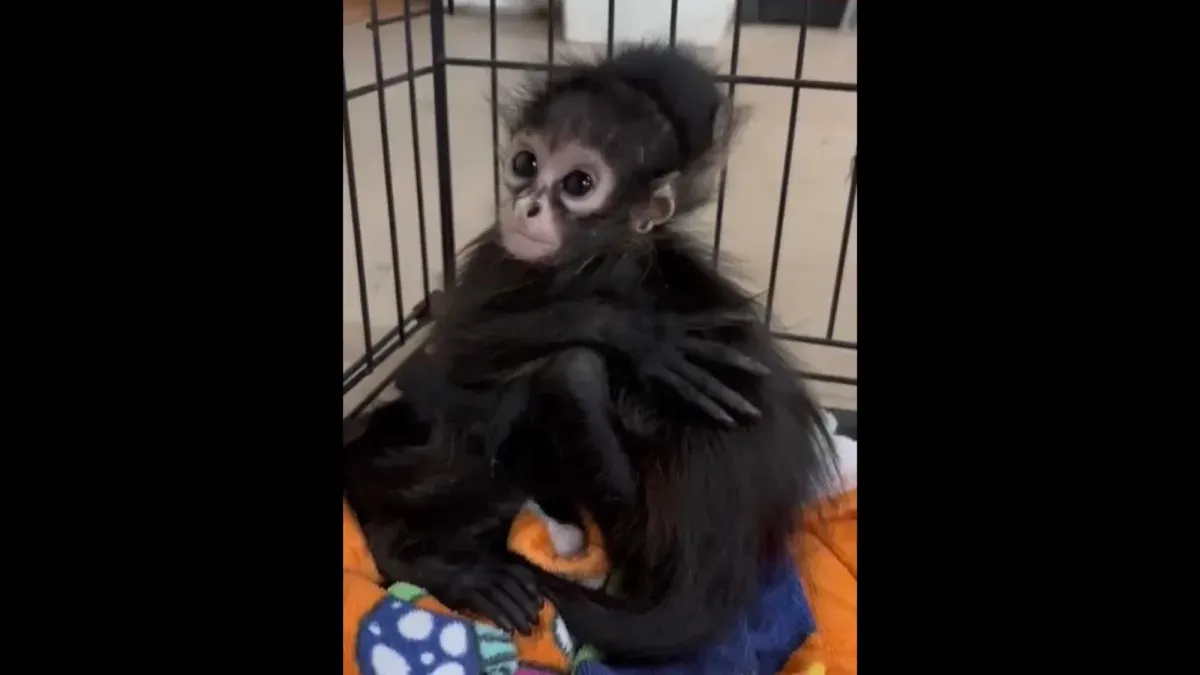
Border Patrol agents in Laredo, Texas, were responding to a human trafficking case when they found two baby spider monkeys crammed into a pet carrier. The driver abandoned the vehicle and fled, but the infants—a male and female, each around two to three months old—were pulled to safety.
The monkeys are now at a rehabilitation facility in San Antonio, where staff are working to undo the damage of their ordeal. The U.S. Fish and Wildlife Service (USFWS) has taken over their care and is partnering with law enforcement to track down the smuggler.
A life interrupted
Spider monkeys are built for life in the canopy. Their arms stretch nearly as long as their bodies, with hook-like hands that let them swing through tropical rainforests across Central and South America—from Bolivia to Mexico. In the wild, they live in close-knit troops and weigh around 13 pounds as adults. In a pet carrier destined for an illegal market, they're terrified, confined, and at serious risk.
We're a new kind of news feed.
Regular news is designed to drain you. We're a non-profit built to restore you. Every story we publish is scored for impact, progress, and hope.
Start Your News DetoxWildlife trafficking doesn't just traumatize animals. It kills them. The stress alone can be fatal, and smuggled creatures often carry diseases that spread to humans. These two monkeys got lucky; they were intercepted before they disappeared into the black market.
Spider monkeys are protected under international law—specifically the Convention on International Trade in Endangered Species of Wild Fauna and Flora—and several species are listed as endangered under the U.S. Endangered Species Act. But protection on paper means little without enforcement. Smuggling wildlife can result in up to 20 years in prison and a $250,000 fine, yet the trade persists because demand remains high and detection is difficult.
The USFWS is using this case to send a message: they're actively hunting smugglers, and they want the public's help. If you spot illegal wildlife activity—suspicious shipments, unusual animal sales, anything that doesn't add up—there's a reporting system at www.fws.gov/wildlife-crime-tips.
For now, these two monkeys have a second chance. What happens next depends on whether rehabilitation can prepare them for reintroduction to the wild, or whether they'll spend their lives in a sanctuary. Either way, they're out of the smuggling pipeline.